NEW YORK CITY: As fears of full-scale famine in the Gaza Strip continue to grow, authorities in South Africa on Wednesday said they had no choice but to ask the International Court of Justice to take urgent action to strengthen the provisional measures it previously ordered Israel to take.
If nothing is done, experts predict that more than 85,000 Palestinians will die of starvation in the next six months.
“The extreme gravity of the situation facing Palestinian men, women, children and babies, and the existential risk the Palestinian people in Gaza … face as a result of Israel’s genocidal military campaign demands further action by the court,” South Africa said in its application.
After considering the original case brought by South Africa accusing Israel of genocide, the court issued a ruling on Jan. 26 that included provisional measures ordering Israeli authorities to take action to prevent and punish the commission of, or the incitement to commit, genocide; to halt the indiscriminate killing of Palestinians; and to immediately facilitate the delivery of humanitarian aid to the people of Gaza.
“Regrettably, Israel has not complied with the court’s binding order but has instead escalated its genocidal acts against the Palestinian people,” the presidency of South Africa said in a statement.
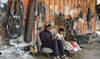
The urgent application to the court on Wednesday was prompted by growing concerns about starvation in Gaza. The UN has warned that unless action is taken, widespread famine in the territory is “almost inevitable.” At least 20 children have reportedly died of starvation in the past week alone. In February, the UN said that more than a quarter of the 2.3 million people in Gaza were “estimated to be facing catastrophic levels of deprivation and starvation.”
South Africa’s latest approach to the court was also motivated by the looming threat of an Israeli military incursion in Rafah, which is the last refuge for more than a million Palestinians displaced from other parts of Gaza during five months of war.
“The situation, then ‘perilous,’ is now so terrifying as to be unspeakable,” the South African presidency said in its request to the court, “justifying, and indeed demanding, the indication of further provisional measures.”
South Africa asked that these additional measures include calls for all warring parties to end hostilities, immediately release all hostages and detainees, comply with their obligations under the Convention on the Prevention and Punishment of the Crime of Genocide, and refrain from any action, in particular any armed action, that might prolong the dispute before the Court or make it more difficult to resolve.
It also urged the court to demand that Israel takes “immediate and effective measures” to ensure that urgently required basic services and humanitarian assistance are provided to help address the risk of famine and starvation, and improve the adverse conditions in which Palestinians are living.
These measures by Israel should include “immediately suspending its military operations in Gaza; lifting its blockade of Gaza; and rescinding all other existing measures and practices that directly or indirectly have the effect of obstructing the access of Palestinians in Gaza to humanitarian assistance and basic services, and ensuring the provision of adequate and sufficient food, water, fuel, shelter, clothing, hygiene and sanitation requirements, and medical assistance including medical supplies and support,” South Africa said.
“Time is running out for the Palestinians. It is already too late for the 30,000 people who have lost their lives in Gaza since the start of the conflict. The world has an obligation to do whatever can be done immediately to stop further suffering and loss of lives.
“The threat of all-out famine has now materialized. The court needs to act now to stop the imminent tragedy by immediately and effectively ensuring that the rights it has found are threatened under the Genocide Convention are protected. The people of Gaza cannot wait.”