MARJAYOUN, Lebanon: An escalation of fighting on Lebanon’s southern border would further strain hospitals already struggling with a lack of money in a national financial crisis, the Middle East chief of The International Committee of the Red Cross said on Wednesday.
Lebanon’s heavily armed Hezbollah party has been exchanging fire with Israel across the border over the last five months in parallel with the Gaza war. More than 50 civilians have been killed in Israeli shelling on Lebanon, along with more than 200 Hezbollah fighters, according to medical and security sources.
Israel says about a dozen of its soldiers and half as many civilians have been killed in shelling from Lebanon into the north of the country.
Doctors in southern Lebanon have sounded the alarm, saying an influx of wounded has pushed the health sector to its limits.
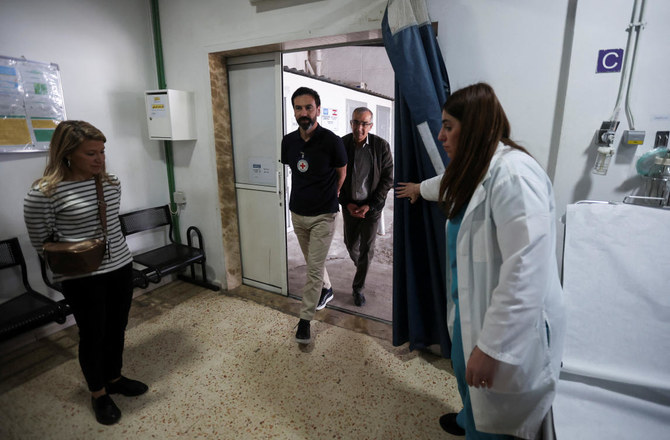
Speaking to Reuters outside Lebanon’s Marjayoun Hospital near the border with Israel, Fabrizio Carboni said Lebanon did not have the needed resources to support its health facilities.
“Then you also have a lot of health personnel who left the country – so, yes, there is a concern,” he said.
“We know should something happen – and we hope the situation will not deteriorate – there will be a need for substantial medical support for the population in the south of Lebanon and all people affected by the conflict,” Carboni said.
Marjayoun Hospital has 14 emergency beds and struggles to operate because of a lack of staff and, crucially, fuel shortages, its director has told Reuters. It runs on its own electricity generators for 20 hours a day, paying up to $20,000 a month for the fuel.
Carboni urged warring parties on the Lebanon-Israel border to respect the protected status of medical staff and facilities, saying it was “very concerning, very worrying” to see cases of rescue workers being killed in shelling.
Seven rescue workers and paramedics have been killed in Israeli shelling over the last five months, according to Lebanon’s health ministry.


![]()
![]()

Red Cross ‘concerned’ for south Lebanon’s hospitals in case of escalation

Short Url
https://arab.news/98ap9
Red Cross ‘concerned’ for south Lebanon’s hospitals in case of escalation
- Doctors in southern Lebanon have sounded the alarm, saying an influx of wounded has pushed the health sector to its limits
- Fabrizio Carboni said Lebanon did not have the needed resources to support its health facilities


Latest updates


© 2026 SAUDI RESEARCH & PUBLISHING COMPANY, All Rights Reserved And subject to Terms of Use Agreement.