

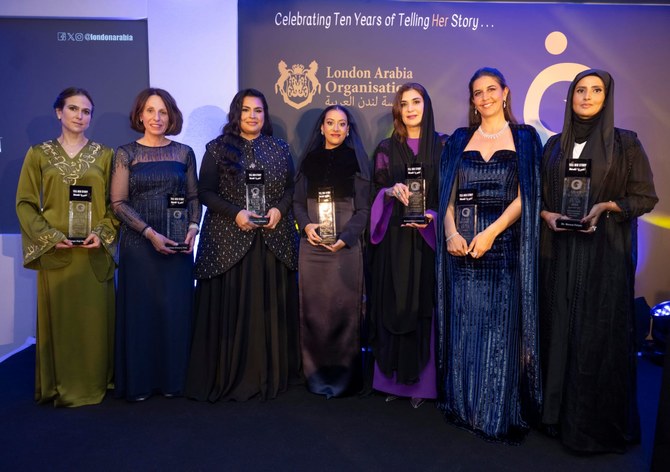


LONDON: Arab women from diverse professional backgrounds were honored for their global achievements at an annual awards ceremony in London, with Saudi Arabia leading the praise for female empowerment.
The 10th Arab Women of the Year Awards, organized by the UK-based London Arabia Organization, this year celebrated eight females for their achievements in business leadership, research and development, creativity, cultural pioneering, social development, cultural exchange, cybersecurity education, and humanitarian aid.
Omar Bdour, chief executive officer of the organization, said: “We don’t set a category, because we want every woman to go to our website for nominations and feel that she’s not pushed away, so it’s open to all fields and anyone can nominate anyone.”
This year saw the entry of new categories in creativity, as well as cybersecurity education, he told Arab News during the ceremony that was hosted at the Carlton Tower Jumeirah on Wednesday. Through the awards, organizers aim to strengthen UK-Arab ties by focusing on empowering Arab women worldwide.
Winners with their award at the 10th Arab Women of the Year Awards. (Supplied)
Princess Noura bint Faisal Al-Saud, founder of Saudi Fashion Week and the Global Culture House, a Saudi boutique consultancy, thanked King Salman and Crown Prince Mohammed bin Salman “for their vision and enablement of women with the minister of culture.”
The princess dedicated her award in cultural pioneering to “all the women out there.”
She said: “I was recently in the public sector, so I owe this to the Ministry of Culture for furthering my career, as well as from a personal perspective, my dear parents and siblings, and the other people that have supported my career growth through partnerships and opportunities.”
Princess Noura joined the ministry in 2019 where she headed strategy development for the Kingdom’s fashion sector and helped support and nurture local talent.
Winner of the social development achievement went to Emirati Khuloud Hassan Al-Nuwais, a businesswoman and strategist who has been profiled as one of the UAE’s inspirational leaders in 2014 and played a key role in establishing the Abu Dhabi-based Emirates Foundation, a national charity dedicated to facilitating public-private social development programs and initiatives.
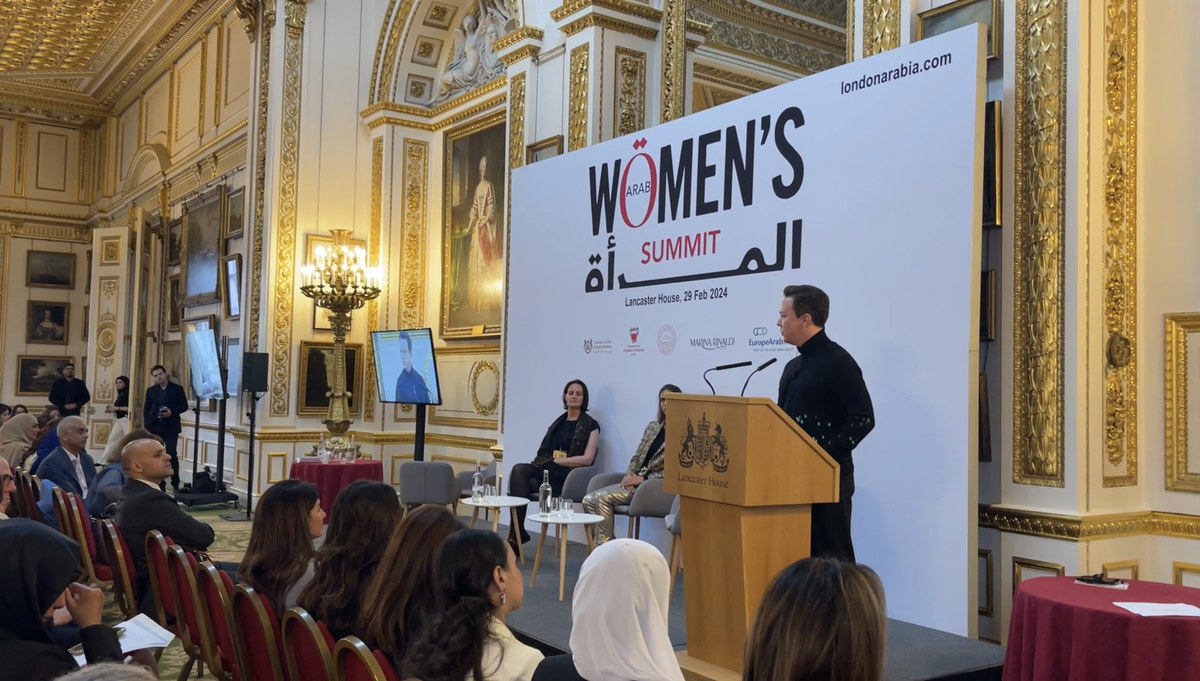
To mark the 10th anniversary of the awards, organizers decided to host the first annual Arab Women’s Summit on Thursday at Lancaster House. (AN Photo/Sarah Glubb)
“My journey from the private sector to philanthropy was a decision driven by a desire to make a meaningful difference in the lives of others.
“Our leadership’s commitment to empowering women in the UAE has given me the opportunity to grow, to give and to serve as I reflect on this journey,” Al-Nuwais said.
Baria Alamuddin, a member of the organization’s advisory board, said: “(Awards that celebrate) successful women give them a lot of confidence, a lot of things to look forward to.
“I think in the Arab world we need it, because for a long time women in the Arab world have been brought up (to believe) that the brother and the boy can do more things and are more important.”
A writer and journalist, she noted that Arab societies were “reaching some kind of an equilibrium,” but that Arab women still “lacked a bit of self-confidence.”
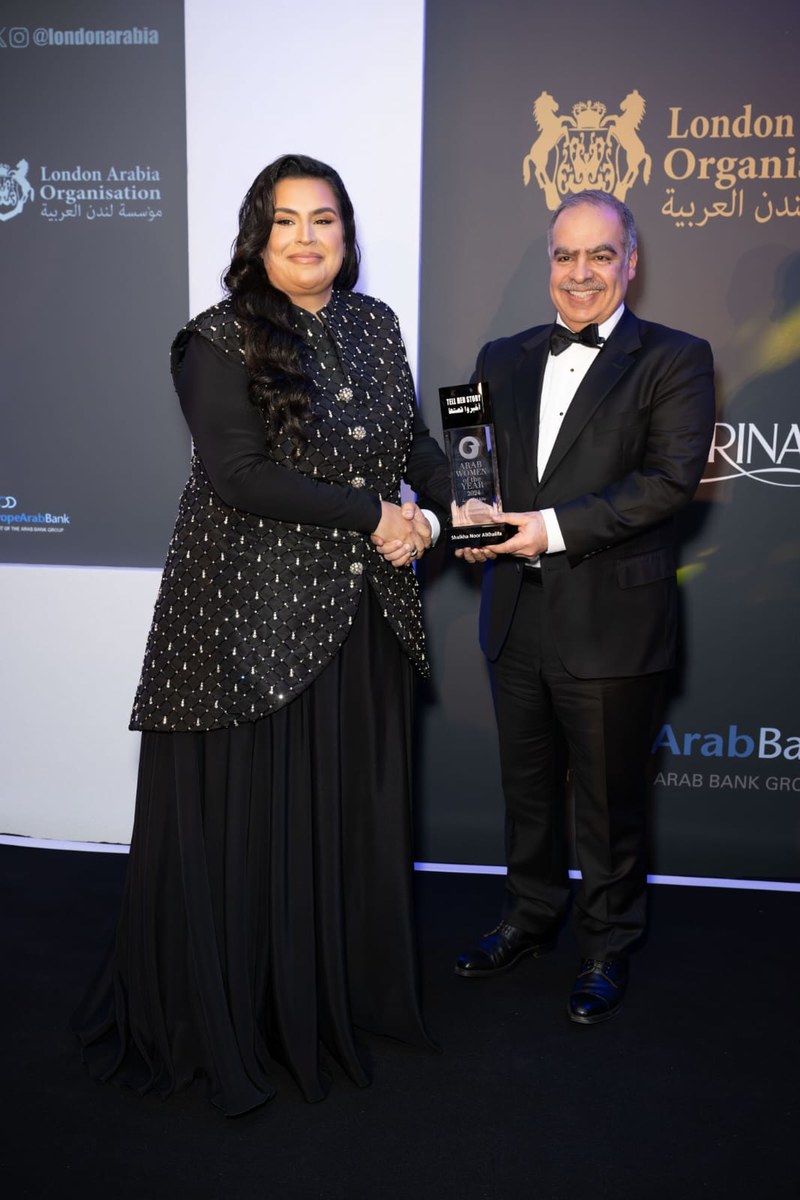
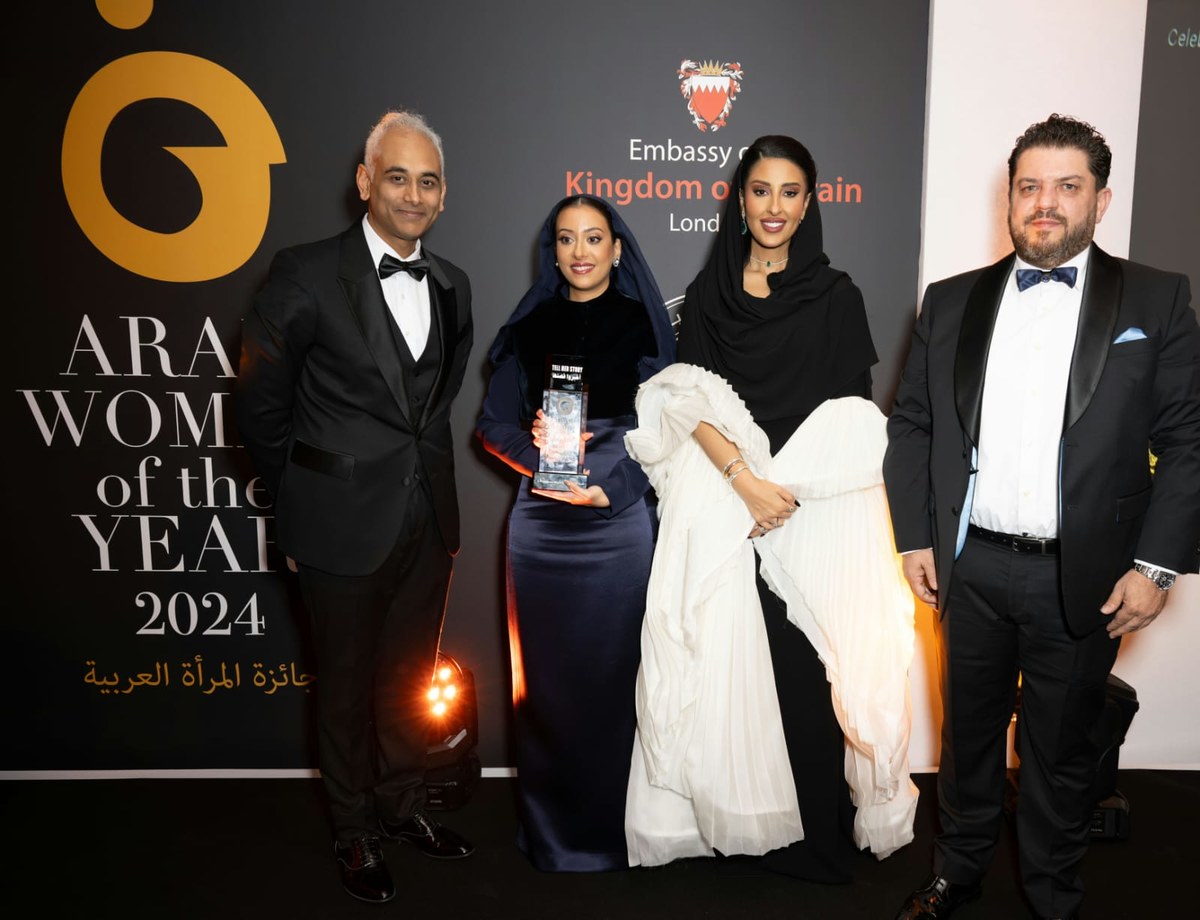
Bahraini ambassador to UK Fawaz bin Mohammed Al-Khalifa with an award winner. (Supplied)
On the awards’ cybersecurity category, she added: “It is extremely important in our part of the world (and) we need it because, as you know, this is almost the new enemy in the new world, and we cannot live without our internet and our connections.”
Alamuddin also called for equal opportunities for women in computer programming, journalism, the army, parliament, and many other fields.
And she praised the increase in Saudi female participation in the workforce, currently running at 34 percent, which had already surpassed the Vision 2030 target of 30 percent of the labor market.
“What I like about Saudi women is their passion. They really want to arrive, they really want to succeed, they really want to be firm believers, and they’re not only proud of their country, but also to participate in the development of their country and the Arab world at large,” Alamuddin said.
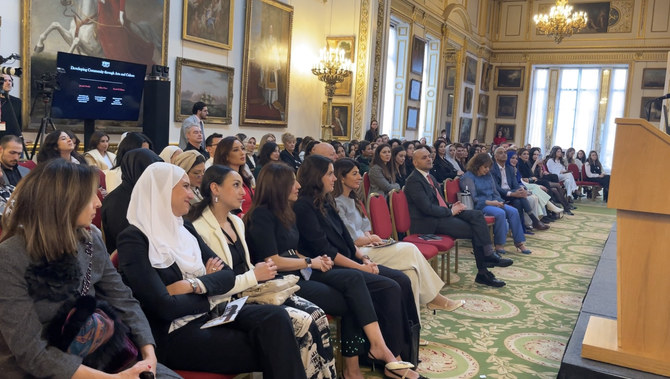
London Arabia annually hosts sessions at the British Parliament and various universities on the sidelines of the awards ceremony, but this year, to mark the 10th anniversary, organizers decided to host the first annual Arab Women’s Summit on Thursday at Lancaster House with former UK Prime Minister Theresa May as headline speaker.
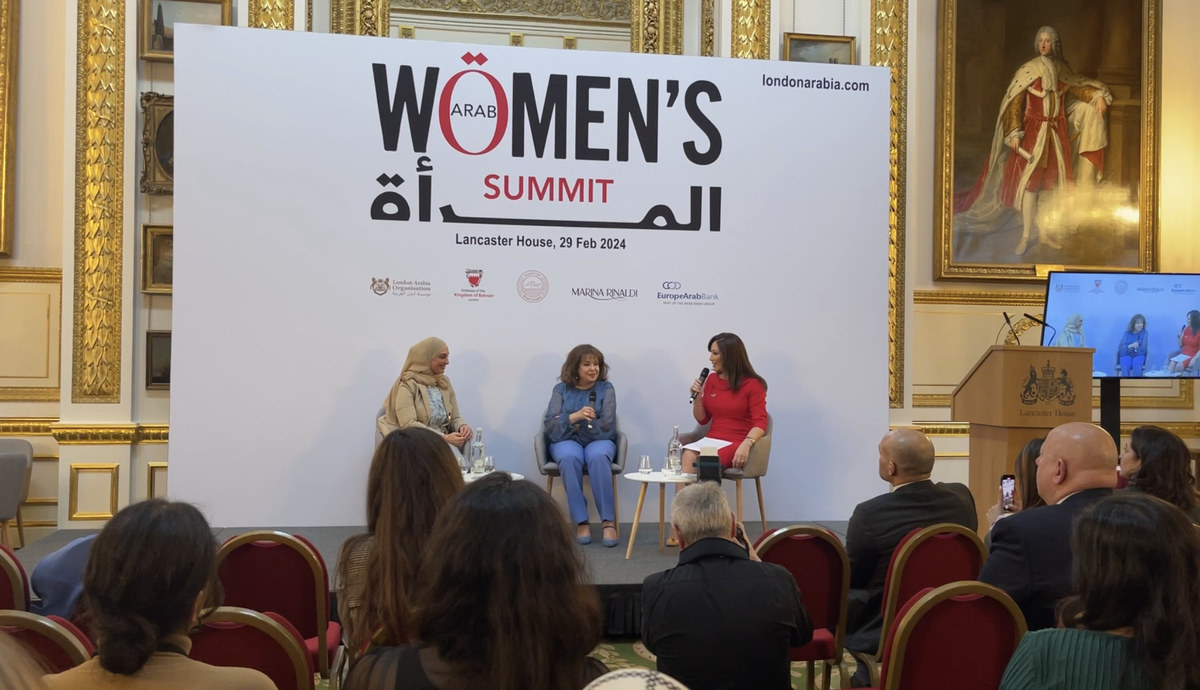
Baria Alamuddin (C), a member of the organization’s advisory board, spoke at the Arab Women’s Summit. (AN Photo/Sarah Glubb)
Kiran Haslam, chief marketing officer for the Diriyah Gate Development Authority, a key sponsor of the event, said: “It’s a very important summit and some of the discussion points that we’ve had, the recipients of the awards from the ceremony, which was absolutely sensational to experience, and to hear their own words of what motivated them and drove them to succeed in the way that they have, was absolutely fantastic.”
He pointed out that the two-day event took seriously the opportunity, vision, and ambition of the Kingdom under the country’s leadership.
“What we have is an extraordinary development in society which sees 85 percent of the workforce in Diriyah being Saudi, 36 percent being female, 16 percent of the female population of employees we have are in senior leadership positions, which is a real testament to the vision and the ambition and sees really delivering the Diriyah project through extremely authentic eyes, hearts, and minds.
“The entire Vision 2030 path that has been laid is unlocking so many very special ways in which society is developing.
“I encounter young Saudi women all across the world who are being recognized and awarded for exceptional things, their exceptional perseverance, their intellect, dedication, and focus on particular subjects and causes,” Haslam added.


