


KARACHI: Pakistan’s southwestern Balochistan province saw a 72 percent increase in militant attacks during February, mostly as banned outfits targeted political parties’ election activities in days leading up to the polls, the managing director of a Pakistani think tank said on Sunday.
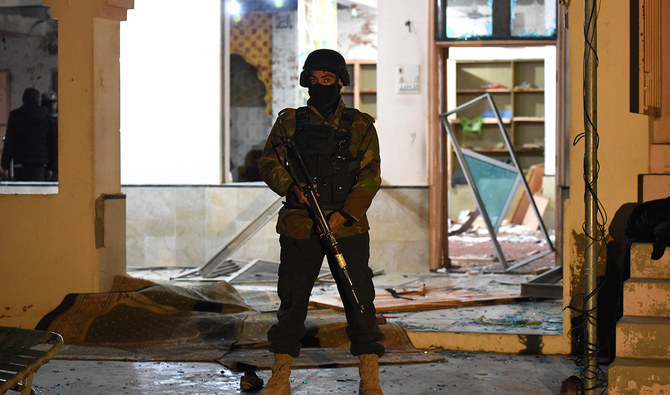
The security situation in Pakistan’s restive southwestern province remained precarious in February, especially in the days before the Feb. 8 polls. Twin blasts in Balochistan killed at least 28 people and injured scores of others on election eve, triggering security fears ahead of polls.
In a report released on March 1, the Pakistan Institute for Conflict and Security Studies (PICSS) said 57 attacks in total took place in Balochistan during February, which resulted in 42 deaths and 72 injuries. January had witnessed 33 attacks, leading to 31 fatalities and 50 injuries in the province, the report said. It added that 30 out of the 57 attacks last month were directed at election activities.
“As you may recall, the Tehreek-e-Taliban Pakistan (TTP) had announced that it would not target election activities while the terrorist groups active in Balochistan had openly threatened that they would target the election process,” Abdullah Khan, managing director of the PICSS, told Arab News.
The report pointed out that 50 out of the 57 attacks in Balochistan occurred from February 1-8 while only seven attacks were reported after the elections, “underscoring the militants’ primary focus on disrupting the election process, considering political participation in Pakistan a threat to their cause.”
The report said that in contrast, the security situation “improved” in the rest of the country during February, with a 54 percent drop in violence in the former FATA (Federally Administered Tribal Areas) and a 23 percent reduction in mainland Khyber Pakhtunkhwa (KP) province.
“In the tribal districts of KP, 11 attacks resulted in seven deaths and 17 injuries, compared to 24 attacks, 36 deaths, and 57 injuries in January,” the PICSS said.
“Mainland KP witnessed 23 attacks with 35 deaths and 28 injuries, showing a decrease in attacks but an increase in human losses compared to January.”
Khan said militant attacks had decreased in KP due to the TTP’s decision to refrain from election violence.
“ISKP was keen to carry out attacks against the election process but its operational capabilities in Pakistan are still no match to TTP,” Khan explained.
Balochistan is Pakistan’s largest province by land yet its most sparsely populated and poor province. It has been the scene of a low-lying insurgency for the past two decades. Ethnic Baloch nationalists accuse the state of denying them a share in Balochistan’s mineral resources and now demand independence from the center.
The state rejects these allegations and has vowed to quash any armed rebellion.


