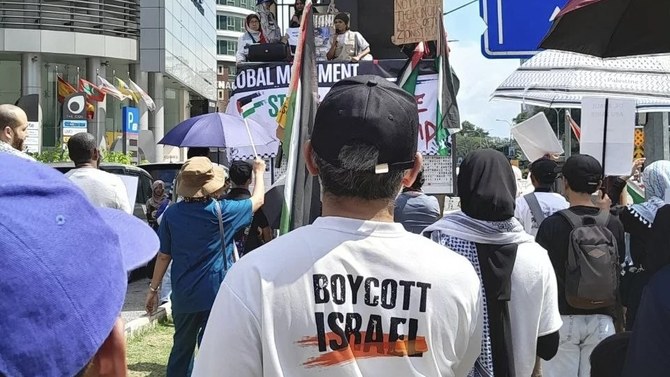

Kuala Lumpur: Leading brands in Malaysia accused of Israeli links have been reeling from falling revenues amid a local boycott of their goods, with the movement behind it vowing to continue over Israel’s war on Gaza.
Israeli airstrikes have since October killed more than 30,000 in the densely populated Palestinian enclave — a large majority women and children. More than 70,000 have been injured, while thousands of others remain missing under the rubble.
Since the outbreak of the attacks, many Malaysian citizens have backed a growing refusal to buy products from Western companies that they say are aiding Israel or facilitating its invasion of Gaza.
The latest of the brands to publicly admit the pinch in the Muslim-majority Southeast Asian country was the US-origin coffee chain Starbucks, with its Malaysian parent company Berjaya Foods blaming a near 40 percent drop in revenue on the boycott.
In a mid-February filing on the Malaysian stock exchange, it reported a revenue of 182.55 million ringgit ($38.47 million) for its second quarter ending Dec. 31, down from 295.32 million ringgit ($62.23 million) for the same period the year before.
In an Instagram post a week later, Starbucks Malaysia said that the boycott had led to “acts of violence and vandalism” in some of its 400 stores with some of its staff assaulted. It did not, however, give any examples or evidence.
This week, the chain issued a statement saying it has no stores in Israel and it does not provide financial support to the Israeli government or army.
“Despite false statements spreading through social media, we have no political agenda. We do not use our profits to fund any government or military operations anywhere — and never have,” the company said.
But the denial of links with Israel did not seem to satisfy Malaysian anger on social media, with users demanding that the company show a more unequivocal stand.
The coffee chain was not listed as one of the official targets by the Malaysian chapter of the Boycott, Divestment and Sanctions movement, which calls for economic and trade pressure in opposition to Israel.
But a few of BDS Malaysia’s Facebook posts have shared content related to the boycott of the company.
Starbucks’ developments in Malaysia followed a claimed loss of profits and job cuts by the McDonald’s franchise, with the fast-food chain seeking $1.26 million in damages from BDS Malaysia.
Some of the other popular brands BDS Malaysia has listed are Burger King, Puma, Airbnb, and McDonald’s.
While the movement’s representatives will meet McDonald’s in a Malaysian court on March 18, BDS chairman Mohd Nazari Ismail told Arab News they were not going to back down from the challenge by the business.
He said that the group was only going to end its campaign in line with the worldwide movement’s demands, which are to stop Israel’s colonization of Palestinian land, end discrimination against Palestinian citizens, and give Palestinian refugees the right to return to their homes.
“We don’t plan to stop our boycott campaign of McDonald’s because it has provided food to Israeli soldiers,” Nazari said.
“We will continue to call for the boycott of Israel and companies that are complicit with the atrocities and injustice committed by Israel.”
Malaysia has no formal relations with Israel, has long been supportive of the rights of Palestinians and their struggle for a sovereign statehood, and bars Israelis from entering its territory.
In December, the Southeast Asian nation barred Israeli and Israel-bound ships from docking at its ports.