GAZA STRIP, Palestinian Territories: The Gaza war’s reported Palestinian death toll neared 30,000 Wednesday as fighting raged in the Hamas-run territory despite mediators insisting a truce with Israel could be just days away.
Another 91 people were killed in overnight Israeli bombardment, the health ministry said.
Mediators from Eygpt, Qatar and the United States have been trying to find a path to a ceasefire amid the bitter fighting, with negotiators seeking a six-week pause in the nearly five-month war.
After a flurry of diplomacy, mediators said a deal could finally be within reach — reportedly including the release of some Israeli hostages held in Gaza since Hamas’s October 7 attack in exchange for several hundred Palestinian detainees held by Israel.
“My hope is by next Monday we’ll have a ceasefire” but “we’re not done yet,” US President Joe Biden said on Tuesday.
Qatari foreign ministry spokesman Majed Al-Ansari said Doha was “hopeful, not necessarily optimistic, that we can announce something” before Thursday.
But he cautioned that “the situation is still fluid on the ground.”
Doha has suggested the pause in fighting would come before the beginning of Ramadan, the Muslim fasting month which starts on March 10 or 11, depending on the lunar calendar.
Hamas had been pushing for the complete withdrawal of Israeli forces from Gaza — a demand rejected outright by Israeli Prime Minister Benjamin Netanyahu.
But a Hamas source, speaking on condition of anonymity, said that the deal might see the Israeli military leave “cities and populated areas,” allowing the return of some displaced Palestinians and humanitarian relief.
Israel’s military campaign in Gaza has killed at least 29,954 people, mostly women and children, according to the territory’s health ministry.
The war was triggered by an unprecedented Hamas attack on southern Israel that resulted in the deaths of around 1,160 people, mostly civilians, according to an AFP tally of official figures.
Militants also took about 250 hostages, 130 of whom remain in Gaza, including 31 presumed dead, according to Israel.
Since the war began, hundreds of thousands of Gazans have been displaced, with nearly 1.5 million people now packed into the far-southern city of Rafah, where Israel has warned it plans to launch a ground offensive.
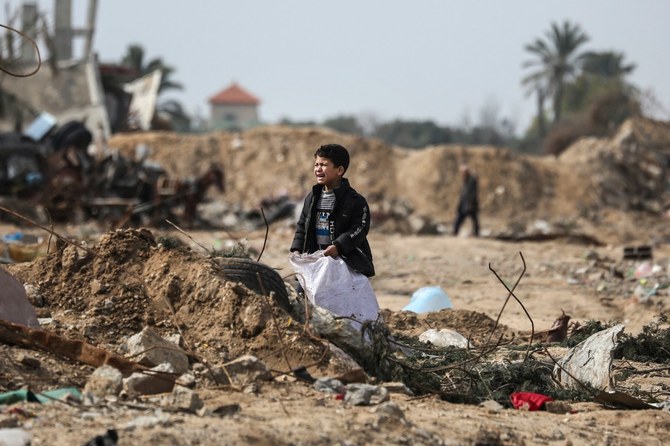
Those who remain in northern Gaza have been facing an increasingly desperate situation, aid groups have warned.
“If nothing changes, a famine is imminent in northern Gaza,” the World Food Programme’s deputy executive director Carl Skau told the UN Security Council Tuesday.
His colleague from the UN humanitarian office OCHA, Ramesh Rajasingham, warned of “almost inevitable” widespread starvation.
The WFP said no humanitarian group had been able to deliver aid to the north for more than a month, with aid blocked from entering by Israeli forces.
“I have not eaten for two days,” said Mahmud Khodr, a resident of Jabalia refugee camp in the north, where children roamed with empty pots.
“There is nothing to eat or drink.”
Most aid trucks have been halted, but foreign militaries have air dropped supplies including on Tuesday over Rafah and Gaza’s main southern city Khan Yunis.
What aid does enter Gaza passes through the Rafah border crossing from Egypt, fueling a warning from UN chief Antonio Guterres that any assault on the city would “put the final nail in the coffin” of relief operations in the territory.
Israel has insisted it would move civilians to safety before sending troops into Rafah but it has not released any details.
Egypt has warned that an assault on the city would have “catastrophic repercussions across the region,” with Cairo concerned about an influx of refugees.
Israeli military spokesman Rear Admiral Daniel Hagari said Tuesday that Israel will “listen to the Egyptians and their interests,” adding that Israel “cannot conduct an operation” with the current large population in Rafah.
Ahead of the threatened ground incursion, the area has been hit repeatedly by Israeli air strikes.
An AFP correspondent reported that overnight several air strikes hit the southern cities of Khan Yunis and Rafah, as well as Zeitun in central Gaza.
The army said it had “killed a number of terrorists and located weapons” in Zeitun.
It said two more soldiers had died in the fighting in Gaza, taking its overall toll to 242 since the start of the ground offensive on October 27.


![]()

Gaza death toll nears 30,000 as aid groups warn of ‘imminent’ famine
Short Url
https://arab.news/bjscb
Gaza death toll nears 30,000 as aid groups warn of ‘imminent’ famine
- One in six children under 2 years of age in northern Gaza are suffering from acute malnutrition
- WFP “is ready to swiftly expand and scale up our operations if there is a ceasefire agreement,” WFP Deputy Executive Director Carl Skau said


Latest updates


© 2026 SAUDI RESEARCH & PUBLISHING COMPANY, All Rights Reserved And subject to Terms of Use Agreement.