

Pakistan has resolved three of five operational issues for KE stake sale — Al-Jomaih official

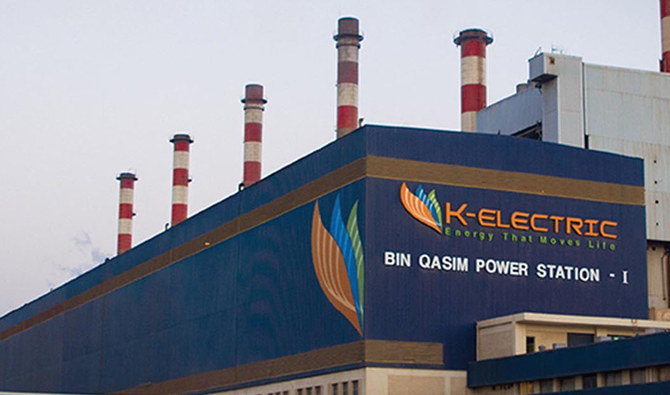
An undated file photo of a Karachi Electric power station in Karachi, Pakistan. (Photo courtesy: K-Electric/Facebook)
Short Url
Updated 26 February 2024
Follow

Pakistan has resolved three of five operational issues for KE stake sale — Al-Jomaih official

  • Al-Jomaih bought 66.4 percent share in KE in 2005 along with Abraaj Group and Kuwait’s National Industries Group
  • In 2016, consortium decided to sell stake to Shanghai Electric but sale stuck due to regulatory and other issues

KARACHI: The top official of a consortium that owns majority shares of Karachi Electric said on Monday Saudi investors were satisfied with the outcome of a committee formed by the Pakistani government to resolve regulatory hurdles and issues of payables that have been blocking the sale of the Pakistani utility to Chinese powerhouse Shanghai Electric Power (SEP) for years.

Al-Jomaih Holding Group, one of the largest business groups in Saudi Arabia, bought a 66.4 percent share in KE in 2005 as part of a consortium comprising Al-Jomaih, Abraaj Group and Kuwait’s National Industries Group (NIG). In 2016, the consortium decided to sell the stake to China’s Shanghai Electric Power and submitted an application for a National Security Certificate (NSC) to the Pakistani Privatization Commission. However, the group still awaits approval of the deal due to long-standing issues of regulatory approvals and KE’s liquidity constraints as a consequence of mounting circular debt plaguing the country’s power sector.

In January this year, Shanghai Electric reiterated its commitment to the deal. The government of Pakistan currently owns a 24.4 percent stake in K-Electric, which powers the country’s largest city and commercial hub of Karachi.

Shan Abbas Ashary, the Chief Investment Officer (CIO) of Al-Jomaih and a director at KE, said regulatory hurdles and disputes were being addressed at a “high pace” after the Saudi investment minister wrote a letter to the finance minister of Pakistan in December last year.

“After that, we had several meetings and the SIFC [Special Investment Facilitation Council] took up the matter and created a committee of three ministers,” Ashary told Arab News, referring to a civil-military body set up last year to fast-track foreign investments.

“Thanks to the Pakistani government, and thanks to the support from the Saudi government, this interim [Pakistani] government took it [KE’s issues] very seriously,” he said, adding that out of five key issues, three operational issues had been resolved while a committee had been formed to look into the remaining issues and progress was taking place.

“The outcome is satisfactory for us and I have reported it back to Al-Jomaih Group and they understand it and they appreciate it very much that progress is being made by the Pakistan government.”

He said he hoped the issues would be resolved in “several months not several years” due to the seriousness being accorded to the matter by the SIFC, whose committee comprised the ministers of law, energy and privatization.

When asked if Shanghai Electric, which had offered to purchase shares of KE for $1.7 billion six years ago, would revaluate its offer, the Al Jomaih official said:

“Shanghai Electric has just renewed expression of interest …. They will come back, do a complete due diligence because six years have passed, it’s a long time.”


Pakistan, global crypto exchange discuss modernizing digital payments, creating job prospects 

Updated 05 December 2025
Follow

Pakistan, global crypto exchange discuss modernizing digital payments, creating job prospects 

  • Pakistani officials, Binance team discuss coordination between Islamabad, local banks and global exchanges
  • Pakistan has attempted to tap into growing crypto market to curb illicit transactions, improve oversight

ISLAMABAD: Pakistan’s finance officials and the team of a global cryptocurrency exchange on Friday held discussions aimed at modernizing the country’s digital payments system and building local talent pipelines to meet rising demand for blockchain and Web3 skills, the finance ministry said.

The development took place during a high-level meeting between Finance Minister Muhammad Aurangzeb, Pakistan Virtual Assets Regulatory Authority (PVARA) Chairman Bilal bin Saqib, domestic bank presidents and a Binance team led by Global CEO Richard Teng. The meeting was held to advance work on Pakistan’s National Digital Asset Framework, a regulatory setup to govern Pakistan’s digital assets.

Pakistan has been moving to regulate its fast-growing crypto and digital assets market by bringing virtual asset service providers (VASPs) under a formal licensing regime. Officials say the push is aimed at curbing illicit transactions, improving oversight, and encouraging innovation in blockchain-based financial services.

“Participants reviewed opportunities to modernize Pakistan’s digital payments landscape, noting that blockchain-based systems could significantly reduce costs from the country’s $38 billion annual remittance flows,” the finance ministry said in a statement. 

“Discussions also emphasized building local talent pipelines to meet rising global demand for blockchain and Web3 skills, creating high-value employment prospects for Pakistani youth.”

Blockchain is a type of digital database that is shared, transparent and tamper-resistant. Instead of being stored on one computer, the data is kept on a distributed network of computers, making it very hard to alter or hack.

Web3 refers to the next generation of the Internet built using blockchain, focusing on giving users more control over their data, identity and digital assets rather than big tech companies controlling it.

Participants of the meeting also discussed sovereign debt tokenization, which is the process of converting a country’s debt such as government bonds, into digital tokens on a blockchain, the ministry said. 

Aurangzeb called for close coordination between the government, domestic banks and global exchanges to modernize Pakistan’s payment landscape.

Participants of the meeting also discussed considering a “time-bound amnesty” to encourage users to move assets onto regulated platforms, stressing the need for stronger verifications and a risk-mitigation system.

Pakistan has attempted in recent months to tap into the country’s growing crypto market, crack down on money laundering and terror financing, and promote responsible innovation — a move analysts say could bring an estimated $25 billion in virtual assets into the tax net.

In September, Islamabad invited international crypto exchanges and other VASPs to apply for licenses to operate in the country, a step aimed at formalizing and regulating its fast-growing digital market.