RIYADH: When former tennis stars Martina Navratilova and Chris Evert decided to question the Women’s Tennis Association’s ties with Saudi Arabia, they failed to take into account how far tennis, and women’s sports in general, have come in recent years, and the level of empowerment that female athletes have been afforded in that time.
The response from Saudi Ambassador to the US Princess Reema bint Bandar was swift, describing their views as “outdated” and “Western-centric.”
Tunisian star Ons Jabeur, a strong supporter of Arab and Saudi tennis, said critics should be “more informed.”
Indeed, anyone keeping an eye on the development of Saudi tennis in recent years will know how different the reality is to those negative stereotypes.
Talented players of different age groups are being cultivated.
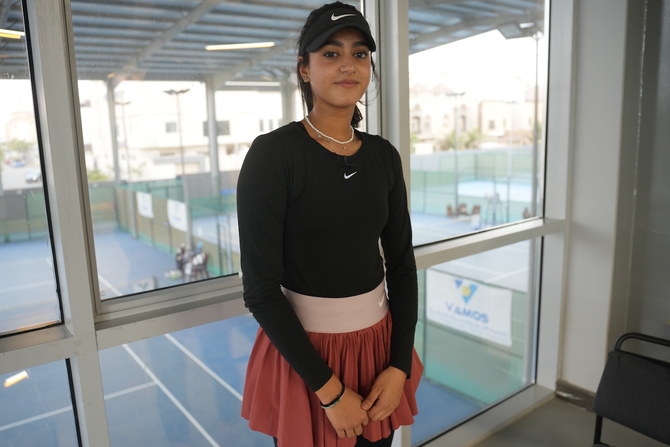
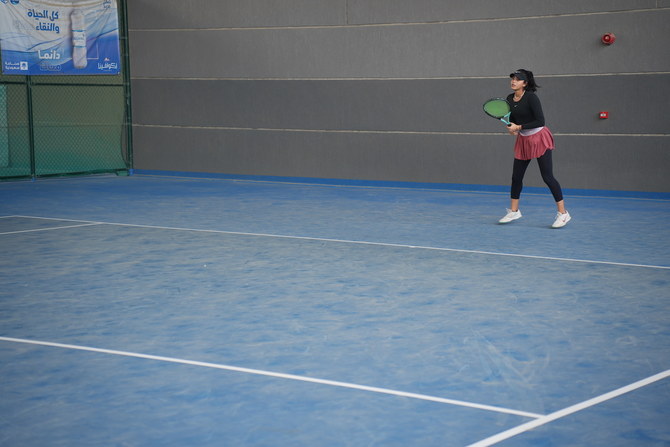
Eighteen-year-old Lara Wjdey Bukary, an emerging star from Jeddah, discovered her passion for tennis seven years ago through her two older brothers, before her father began training with her.
Today, Bukary boasts some impressive achievements. She represented Saudi Arabia in the Kingdom’s first-ever participation in the Billie Jean King Cup in 2023, took home a silver medal during the 2022 Saudi Games, and followed that up with a bronze last year.
“I was the only Saudi on the podium, so that was pretty exciting,” Bukary told Arab News.
“I just want to be able to represent my country and, hopefully, get some titles, international tournaments, and grow as a tennis player.”
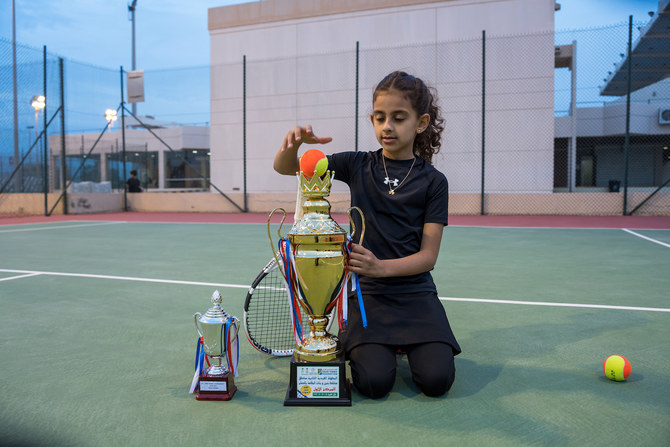
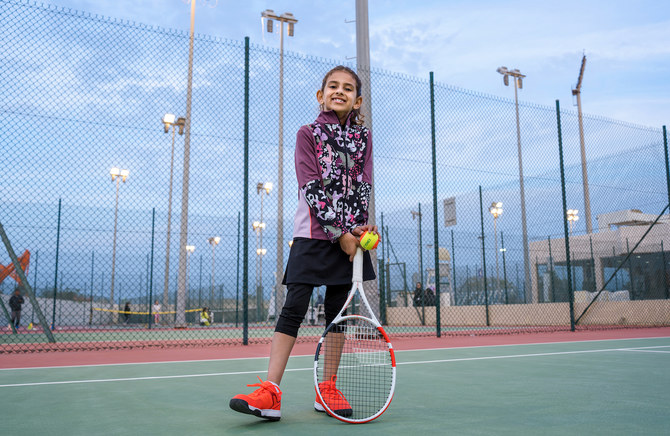
Among tennis circles in Saudi Arabia, 8-year-old Sama Al-Bakr is a name on many people’s lips, her undoubted potential symbolizing just what the future of Saudi women’s tennis could offer.
“She’s the only one in the Al-Bakr family that plays this sport,” her father, Ali Al-Bakr, told Arab News.
Hailing from Alkhobar in the Eastern Province, Sama has already rubbed shoulders with tennis greats such as Novak Djokovic when he visited during the Riyadh Season in late 2023.
She described being “happy, surprised, excited” when offered the opportunity to play with him and “beat him with the backhand.”
In September, Sama came first in a regional aged 7-10 mixed boys and girl’s tennis tournament.
After she was invited to participate, her father was told she would be playing among boys, in case he had any objections. Her father said that, on the contrary, his only thoughts were “I’m happy for the challenge and I feel sorry for these boys.”
The goal for Sama “is definitely going to be an international level,” Al-Bakr said.
He added that the “sky is the limit in the future,” and his daughter has the potential to become “the first Saudi girl who will play in Wimbledon as she promised.”
In Riyadh, 24-year-old Maha Kabbani has been playing tennis since seeing a Rafael Nadal match on television at the age of 9.
Like Bukary and young Sama, family support played a crucial role in her love for tennis.
Kabbani’s role model is her brother, who from a young age nurtured her passion for tennis and encouraged her to pursue a career in the sport.
“We used to train, me and my brother, at home and we started hitting the walls and then we got a tennis net,” she told Arab News.
“My family is the biggest supporter. They saw my passion, they saw the light inside me. Tennis has put such a light inside me that it made me shine,” Kabbani added.
From practicing with her brother in a make-do tennis court built in their small garden to training at Tennis Home Academy in Riyadh, Kabbani’s tennis journey highlights the transformative role played by Saudi Arabia’s post-2016 social reforms.
“I remember being 9 years old and trying to find a court. We could barely have one court, let alone academies. So, that’s huge progress,” she told Arab News.
“Right now, we are living our dreams and meeting the people that inspired us when we were younger.”
Kabbani said that past obstacles are now firmly behind them, and this is the “perfect time” for women and girls in the country to get involved in tennis.
“This is the perfect motivation,” she said.
The Saudi Tennis Federation is currently headed by a woman, Arij Almutabagani.
“We deserve to live our dreams, and see this progress and we deserve to enjoy our passion,” Kabbani said.


![]()
![]()
![]()
![]()
![]()
![]()

Saudi female tennis players challenge stereotypes as sporting dreams become reality


Short Url
https://arab.news/yzfdf
Saudi female tennis players challenge stereotypes as sporting dreams become reality
- The response from Saudi Ambassador to the US Princess Reema bint Bandar was swift, describing their views as “outdated” and “Western-centric”
- Talented players of different age groups are being cultivated


Latest updates


Recommended


© 2026 SAUDI RESEARCH & PUBLISHING COMPANY, All Rights Reserved And subject to Terms of Use Agreement.