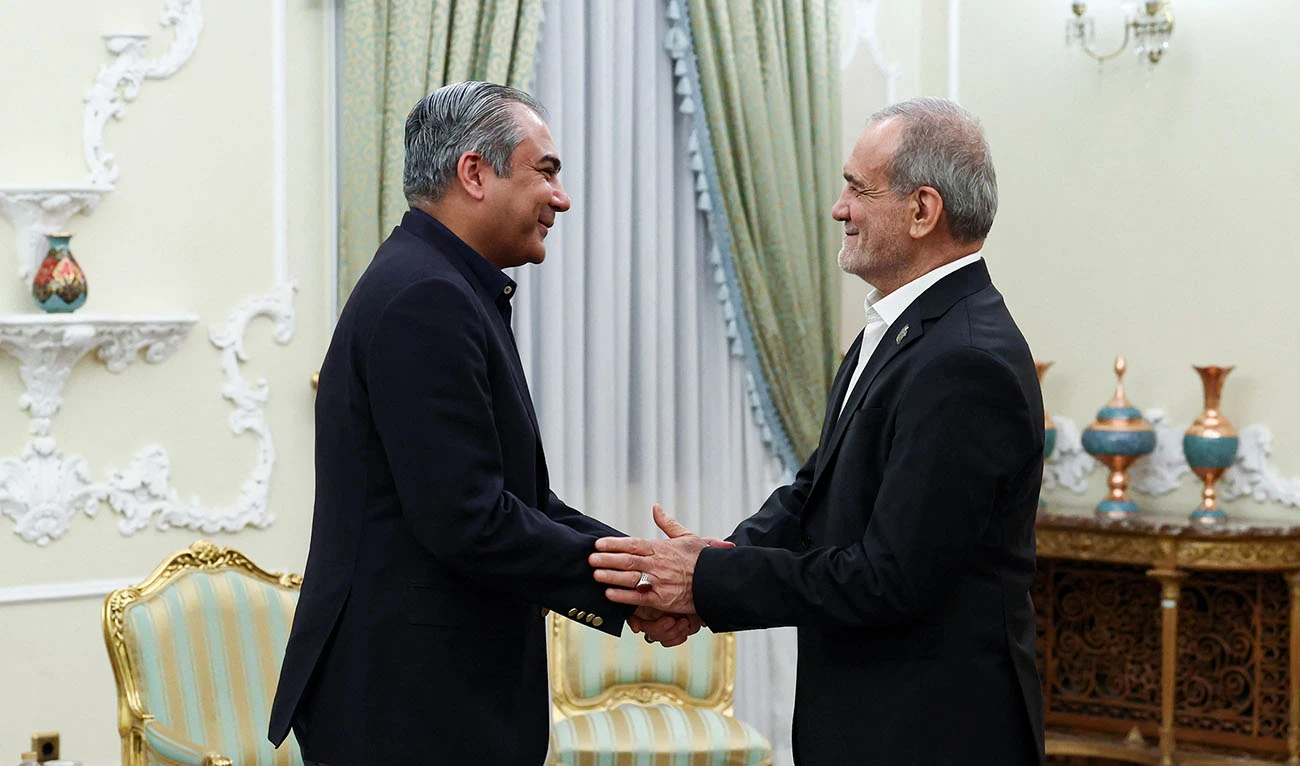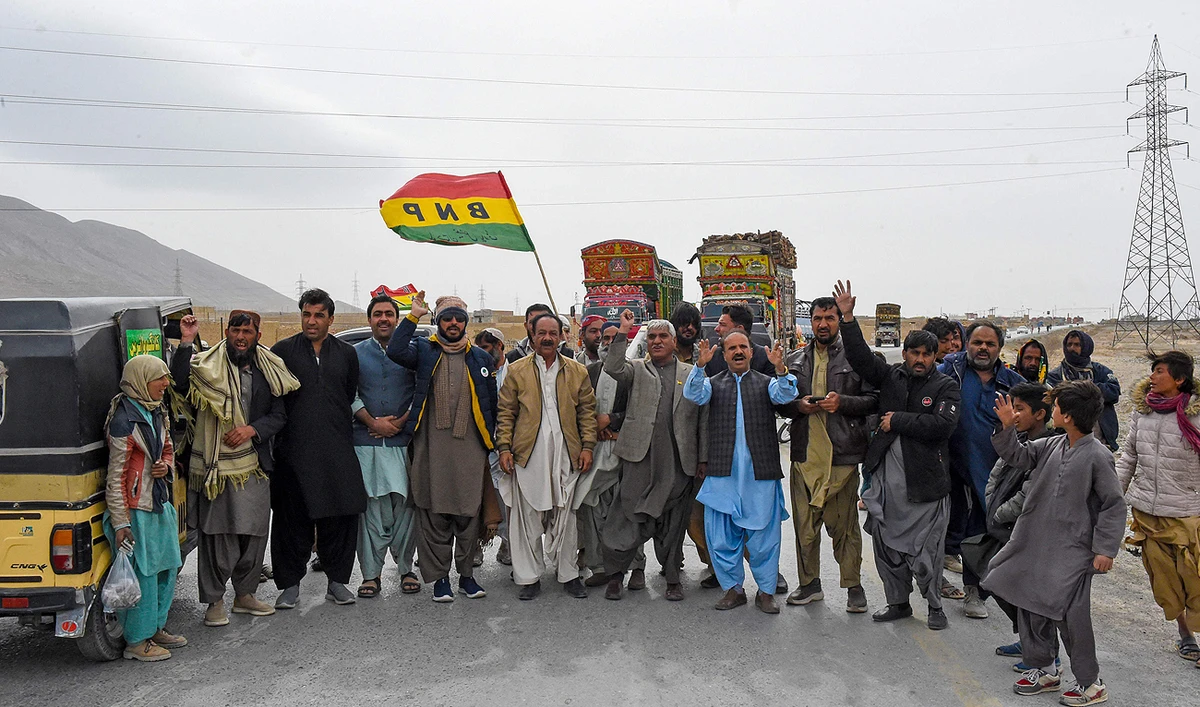
QUETTA: Nationalist parties in Pakistan’s southwestern Balochistan on Sunday choked key highways leading from the provincial capital of Quetta to the rest of the country to protest what they called “brazen rigging” and “manipulation” of results of Feb. 8 national election.
Last week’s polls witnessed attacks by militants in the country’s southwest and northwest, a nationwide outage of mobile phone networks, followed by prolonged delays in the release of constituency results by election officials. Members and supporters of multiple nationalist parties have been camped outside the Quetta deputy commissioner office for the last 10 days, alleging that results of polls in their constituencies had been changed during the counting process.
A coalition of the Balochistan National Party-Mengal (BNP-M), Pashtoonkhwa Milli Awami Party (PkMAP), National Party (NP) and Hazara Democratic Party (HDP) gave a call for a wheel-jam strike across the province on Sunday, after which protesters blocked major highways for more than eight hours and suspended traffic in Quetta, Mastung, Kalat, Khuzdar, Kuchlak, Zhob, Loralai, Chaman, Turbat, Gwadar and Kharan areas.
“BNP-Mengal blocked a key highway at Dasht, National Party was protesting at the Quetta-Karachi highway and PkMAP’s supporters were sitting at the Quetta-Loralai highway against the brazen rigging in the election,” Ghulam Nabi Marri, a BNP-M member, told Arab News.
Footage seen by Arab News showed dozens of vehicles, including ambulances and passenger buses, stranded for hours on highways across the province, causing difficulties for passengers.
Saeed Ahmed, a passenger bus driver who traveled to Quetta from the eastern city of Lahore, said he reached the southwestern city after a 12-hour delay because of a blockade of the Quetta-Lahore highway by protesters in Khanozai area.
“More than a dozen passengers in my bus faced immense difficulties due to the road blockade,” Ahmed told Arab News.
Marri said his party’s supporters had blocked the Quetta-Sukkur highway in Dasht, but opened it upon the request of travelers.
Jan Achakzai, the provincial caretaker information minister, said the politicians defeated in the election had been “rejected” by the people of Balochistan.
“Most of the highways and train service in Balochistan remained open because overall, people don’t like the politics of punishing them for the defeat of candidates,” he said.
Nationalist parties choke highways in Pakistan’s southwest to protest alleged rigging of Feb. 8 election
https://arab.news/4vjds
Nationalist parties choke highways in Pakistan’s southwest to protest alleged rigging of Feb. 8 election
- Members and supporters of Baloch, Pashtun and Hazara parties have been protesting outside Quetta deputy commissioner’s office for 10 days
- A coalition of these parties gave a call for a wheel-jam strike in the province on Sunday, after which supporters blocked highways for several hours
Pakistan launches final polio drive of 2025 as official calls disease persistence an embarrassment
- Sindh chief minister says Muslim-majority countries have eliminated polio by ensuring universal vaccination
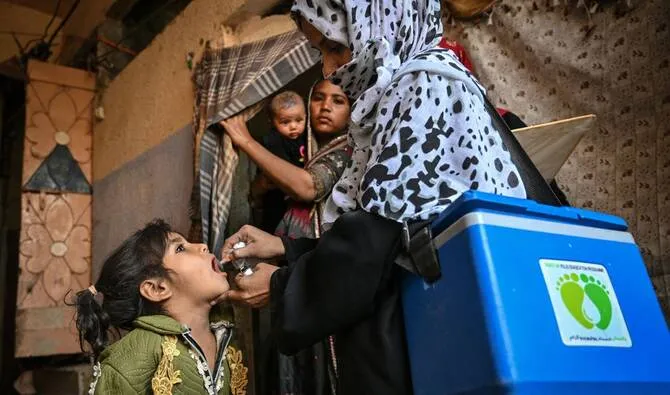
ISLAMABAD: Pakistan launched its final nationwide polio vaccination campaign of 2025 on Monday as a senior government official described the continued presence of the disease in the country as an embarrassment and said the only way to eradicate it was to vaccinate every child under the age of five.
The campaign, which will run from Dec. 15 to Dec. 21, aims to administer oral polio drops to more than 45 million children across the country, according to the National Emergency Operations Center (NEOC).
Pakistan is one of only two countries in the world, along with Afghanistan, where polio has not yet been eradicated.
“There is only one way to eliminate this disease, and the entire world has adopted it: every child under the age of five must be given two drops of the polio vaccine,” Sindh Chief Minister Murad Ali Shah said while inaugurating the campaign in Karachi.
“There is no other way.”
Shah said it was “quite embarrassing” that polio continued to persist in Pakistan, noting that around 30 children had been infected so far this year, including nine cases in Sindh province.
He added that many Muslim-majority countries had successfully eliminated polio by ensuring universal vaccination of children.
To ensure the safety of vaccination teams, authorities have deployed around 21,000 security personnel nationwide, including about 1,000 women, to accompany frontline polio workers during the campaign, Shah said.
According to the NEOC, more than 23 million children will be vaccinated in Punjab, over 10.6 million in Sindh, about 7.2 million in Khyber Pakhtunkhwa and more than 2.6 million in Balochistan.
The campaign also targets around 460,000 children in Islamabad, 228,000 in Gilgit-Baltistan and more than 760,000 in Azad Jammu and Kashmir.
Health authorities have urged parents to cooperate with vaccination teams, open their doors to polio workers and ensure that all children under five receive two drops of the vaccine, while also completing routine immunization schedules for infants up to 15 months old.
Pakistan has struggled for decades to eradicate polio due to misinformation, vaccine hesitancy and security challenges, despite repeated nationwide immunization drives.