


Snow creates winter wonderland at Tabuk mountains

1 / 13
Northern parts of Saudi Arabia are experiencing high temperatures because there are no moist southern winds. (SPA)
2 / 13
Northern parts of Saudi Arabia are experiencing high temperatures because there are no moist southern winds. (Supplied)
3 / 13
Northern parts of Saudi Arabia are experiencing high temperatures because there are no moist southern winds. (Supplied)
4 / 13
Northern parts of Saudi Arabia are experiencing high temperatures because there are no moist southern winds. (Supplied)
5 / 13
Northern parts of Saudi Arabia are experiencing high temperatures because there are no moist southern winds. (Supplied)
6 / 13
Northern parts of Saudi Arabia are experiencing high temperatures because there are no moist southern winds. (Supplied)
7 / 13
Northern parts of Saudi Arabia are experiencing high temperatures because there are no moist southern winds. (SPA)
8 / 13
Northern parts of Saudi Arabia are experiencing high temperatures because there are no moist southern winds. (SPA)
9 / 13
Northern parts of Saudi Arabia are experiencing high temperatures because there are no moist southern winds. (SPA)
10 / 13
Northern parts of Saudi Arabia are experiencing high temperatures because there are no moist southern winds. (SPA)
11 / 13
Saudi special forces monitor weather to protect against winter hazards. (SPA)
12 / 13
Saudi special forces monitor weather to protect against winter hazards. (SPA)
13 / 13
Saudi special forces monitor weather to protect against winter hazards. (SPA)
Short Url
Updated 18 February 2024
Follow

Snow creates winter wonderland at Tabuk mountains

  • Saudi special forces monitor weather to protect against winter hazards

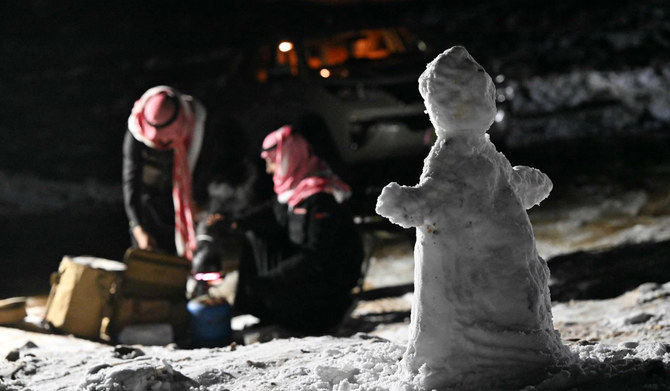
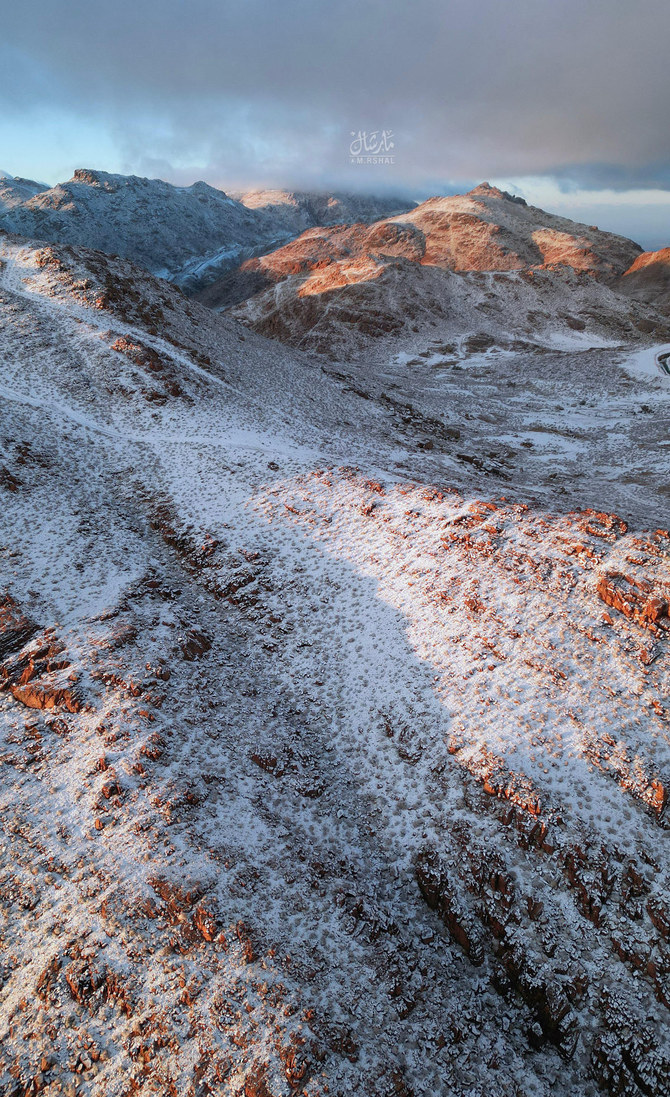
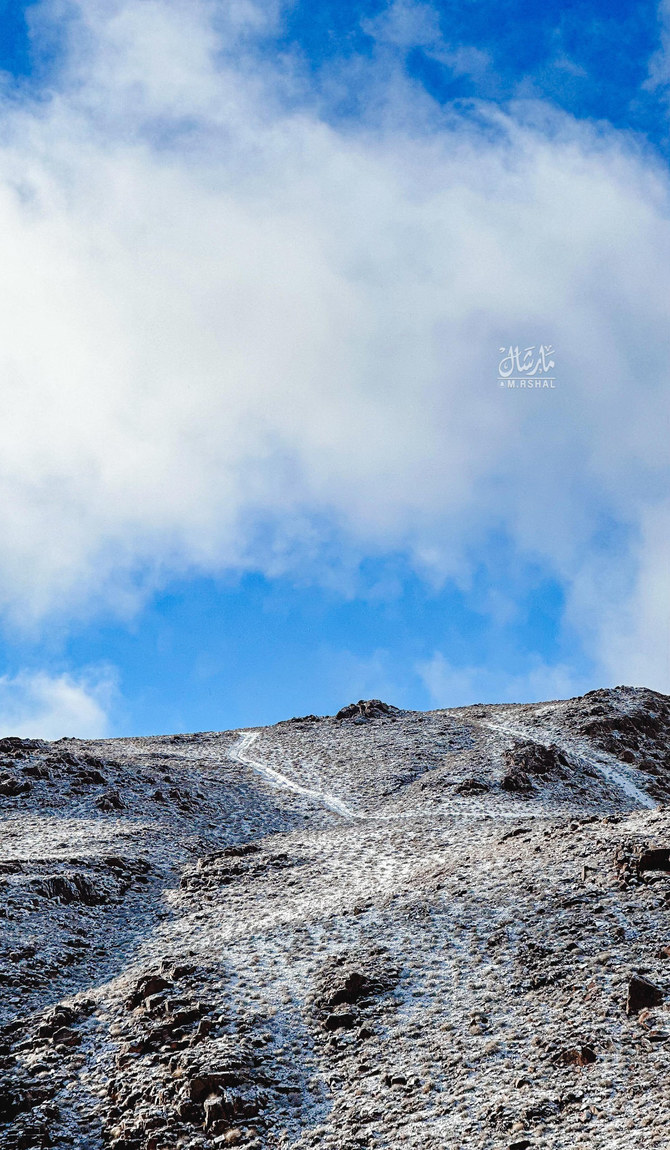
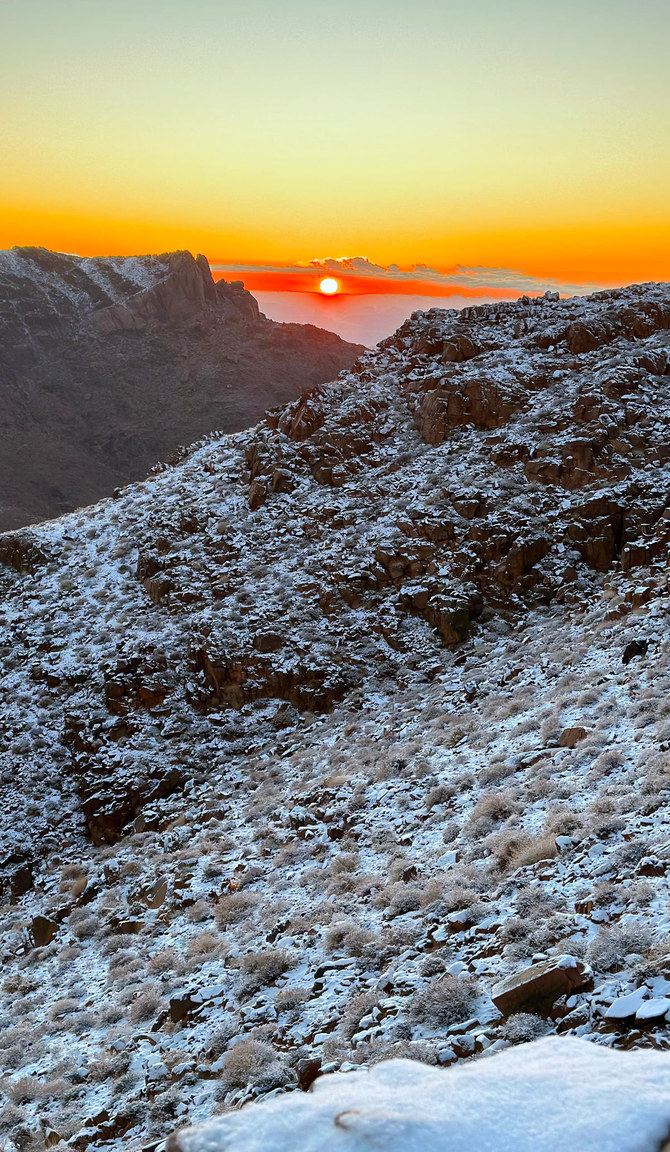
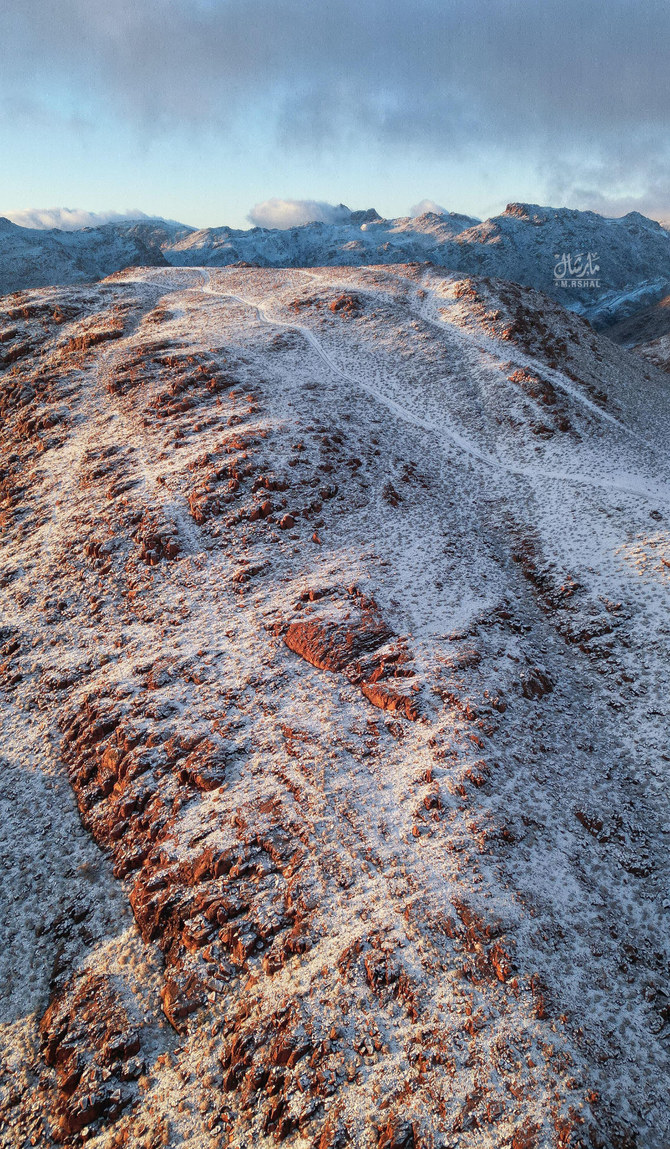
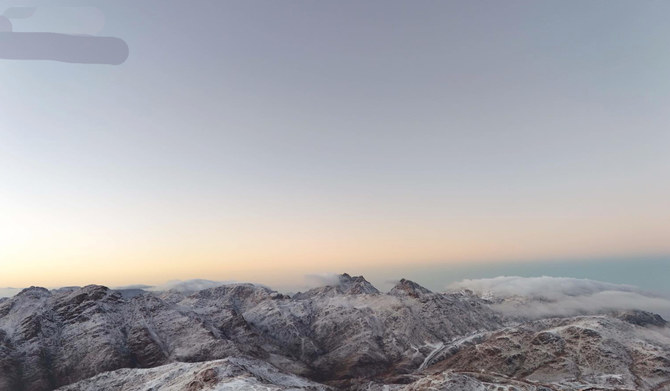
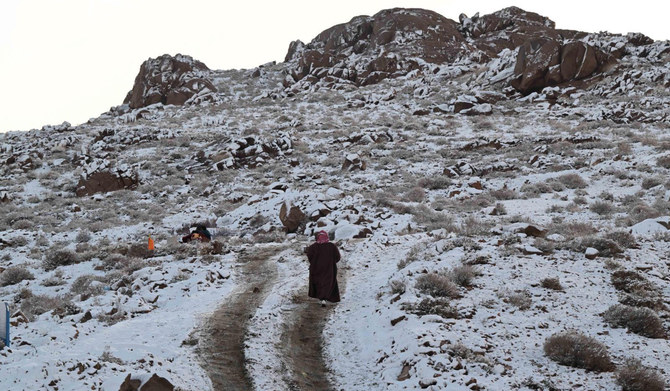
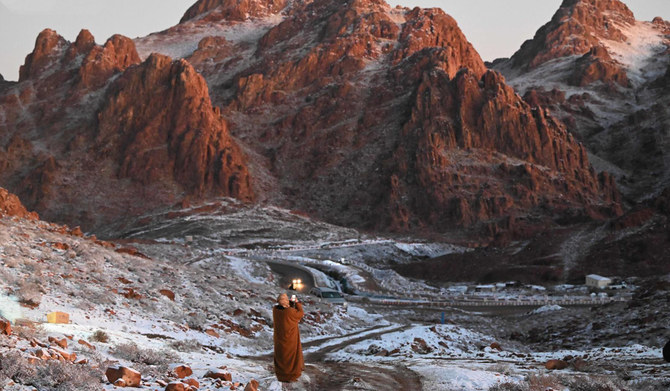
JEDDAH: Snow fell on Jabal Al-Lawz in Tabuk for a second time this month on Friday night, as temperatures dipped significantly.

The peak, whose name translates as “mountain of almonds,” is located in northwest Saudi Arabia and rises to 2,580 meters above sea level.

While the snow delighted locals and visitors, its arrival was two months later than last year due to the generally warmer weather.

The National Center for Meteorology attributed the higher temperatures to the absence of moist southern winds in northern parts of the Kingdom.

The Saudi Special Forces for Security and Protection were on high alert. They meticulously monitored weather conditions to ensure the safety of civilians against potential dangers, such as slippery roads and areas prone to accidents.

Their vigilant efforts provided a secure environment for both locals and visitors to revel in the stunning natural spectacle without concern.

Photographer Musheer Al-Balawi used a drone to capture some stunning images of the snowfall on the red mountains, which he posted on social media under the name Marshall.

He told Arab News that the snow fell three times during the night.

“The first was at 7 p.m., then 9:40 p.m. and finally at 1:30 a.m. on Saturday. As the temperature remained low, the snow persisted until sunrise,” he said.

While snowfall in the desert often amazes residents and inspires viral videos, the Tabuk region actually sees snowfall often and is a popular destination for tourists.

On Thursday, authorities said “moderate to heavy thunderstorms will occur in Baha, Makkah, Qassim, Riyadh and the Eastern Province.”


Saudi Arabia welcomes ceasefire agreement between Syrian Democratic Forces and Syria state

Updated 19 January 2026
Follow

Saudi Arabia welcomes ceasefire agreement between Syrian Democratic Forces and Syria state

RIYADH: Saudi Arabia has welcomed an agreement between the Syrian state and Syrian Democratic Forces.
In a foreign ministry statement early on Monday, the Kingdom said it had welcomed an deal between Damascus and Kurdish Syrian Democratic Forces that was announced by the Syrian government on Sunday.
The agreement entails merging all SDF forces into the defense and interior ministries and means that Kurdish forces will redeploy to east of the Euphrates river.
The 14-point deal would also see the immediate administrative and military handover of Deir Ezzor and Raqqa governorates.
The Syrian state would regain control of all border crossings, oil fields, and gas fields in the region, with protection secured by regular forces to ensure the return of resources to the Syrian government, while considering the special case of Kurdish areas, the state news agency SANA reported.
The ceasefire comes after intense fighting between the SDF and government troops in Aleppo. But SDF troops have now pulled back from there and the Syrian army now controls most areas east of Aleppo.
The Saudi foreign ministry statement also thanked the US for the agreement. Washington is believed to have supported brokering the ceasefire between allies SDF and the Syrian government, who they have also backed diplomatically since the fall of long-time dictator Bashar Assad.
The Syrian state announced on Friday a raft of new directives to recognize Syrian Kurds, including making their language official and bolstering other rights for the minority group.