LONDON: Israel staged secret strikes on two major Iranian gas pipelines this week, threatening the supply of energy to millions of people across the country, the New York Times reported.
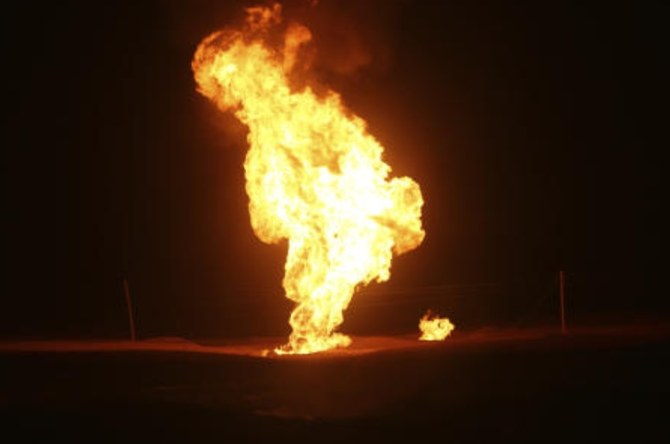
The attacks simultaneously hit several points along the two pipelines in the Fars and Chahar Mahal Bakhtiari provinces, with the disrupted natural gas flow affecting up to five provinces across the country.
It is unclear whether drones or explosives were used to carry out the strikes, but local collaborators appear to have been involved, experts said, adding that the Israel’s actions represented a major escalation in its strategy against Iran.
Shahin Modarres, a Rome-based security analyst, said: “This shows that the covert networks operating in Iran have expanded their target list and advanced beyond just military and nuclear sites. It’s a major challenge and reputation blow for Iran’s intelligence and security agencies.”
Israel has long waged a covert campaign against Iran based on attacking the country’s nuclear capabilities and oil infrastructure, involving assassinations of scientists and cyberattacks.
But the strikes on natural gas infrastructure were a deliberate plan to “stir domestic discontent,” said Iran’s Oil Minister Javad Owji.
“The enemy’s plan was to completely disrupt the flow of gas in winter to several main cities and provinces in our country” by using “sabotage and terrorist attacks,” he added, without directly blaming Israel.
Owji said his ministry had sent technical teams to assess and repair the damage, and service had been quickly restored.
One Western official told the New York Times that although the damage was repaired, the escalation served as a “symbolic” warning to Iran of Israel’s capabilities.
Experts believe that the attacks disabled about 15 percent of Iranian daily natural gas production.
The two pipelines — which run for about 1,200 km — carry gas from the south of the country to major urban centers further north, including Tehran, Isfahan and Astara, on the border with Azerbaijan.
Homayoun Falakshahi, a senior energy analyst at Kpler, said: “The level of impact was very high because these are two significant pipelines going south to north. We have never seen anything like this in scale and scope.”
One official from the Islamic Revolutionary Guard Corps, speaking on condition of anonymity, said patrols regularly scout the pipelines, taking allocated breaks.
The attackers would have required knowledge of break times to stage the attacks, suggesting the involvement of local collaborators, the official added.
No casualties were reported from the strikes. Social media posts showed locals rushing to the streets after the blasts early in the morning.
It comes amid rising tensions between Iran — and its network of allied militias in the region — and Israel and the US, both of which have carried out strikes on Tehran-backed groups in Syria and Iraq in recent months.


![]()

Israel strikes Iranian gas pipelines in covert attack: NYT
Short Url
https://arab.news/pkcdm
Israel strikes Iranian gas pipelines in covert attack: NYT
- Energy analyst: ‘We have never seen anything like this in scale and scope’
- Security analyst: ‘It’s a major challenge and reputation blow for Iran’s intelligence and security agencies’


Latest updates


© 2026 SAUDI RESEARCH & PUBLISHING COMPANY, All Rights Reserved And subject to Terms of Use Agreement.