ALULA: The work of Manal AlDowayan, one of Saudi Arabia’s leading contemporary artists, is often focused on cultural metamorphosis, collective narratives and the representation of women, particularly from her home country.
AlDowayan, who will represent the Kingdom at this year’s Venice Biennale, is currently the subject of two exhibitions in AlUla as part of the pre-opening program of Wadi AlFann, a major new cultural destination for art, design and performance.
The first exhibition, “Oasis of Stories,” features hundreds of drawings and tales from local communities across AlUla. It will run in the AlJadidah Arts District as part of the AlUla Arts Festival 2024 until March 23.
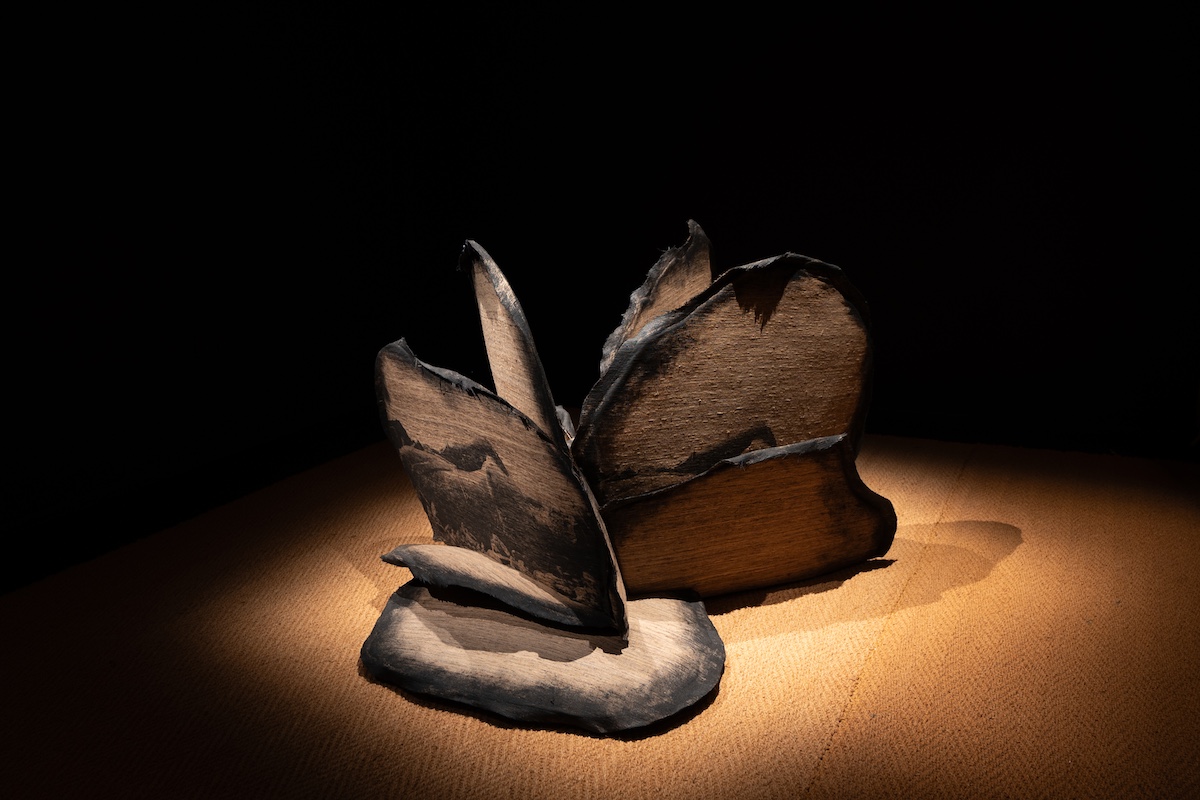
'Their Love Is Like All Loves, Their Death Is Like All Deaths’ by Manal AlDowayan, a collaboration between Arts AlUla and Sabrina Amrani Gallery, 2024. Curated by Jal Hamad. (Image courtesy of the Royal Commission for AlUla)
“AlUla is a library of stories,” AlDowayan said in a statement. “This land holds an archive of narratives and identities that numerous civilizations engraved into its rocks for centuries, telling us about the tools they used, the animals they farmed and the lives they led.”
The detailed drawings of daily personal and collective life in AlUla were created during workshops AlDowayan held that attracted 700 participants from AlUla, including farmers, cooks, teachers, tour guides, rangers, artists, students, craftspeople, junior football teams and a disability association. AlDowayan asked them to draw their personal stories on paper. The results are poignant and endearing renderings that detail the realities, hopes and dreams of AlUla’s residents as well as the beauty of the region’s natural landscape.
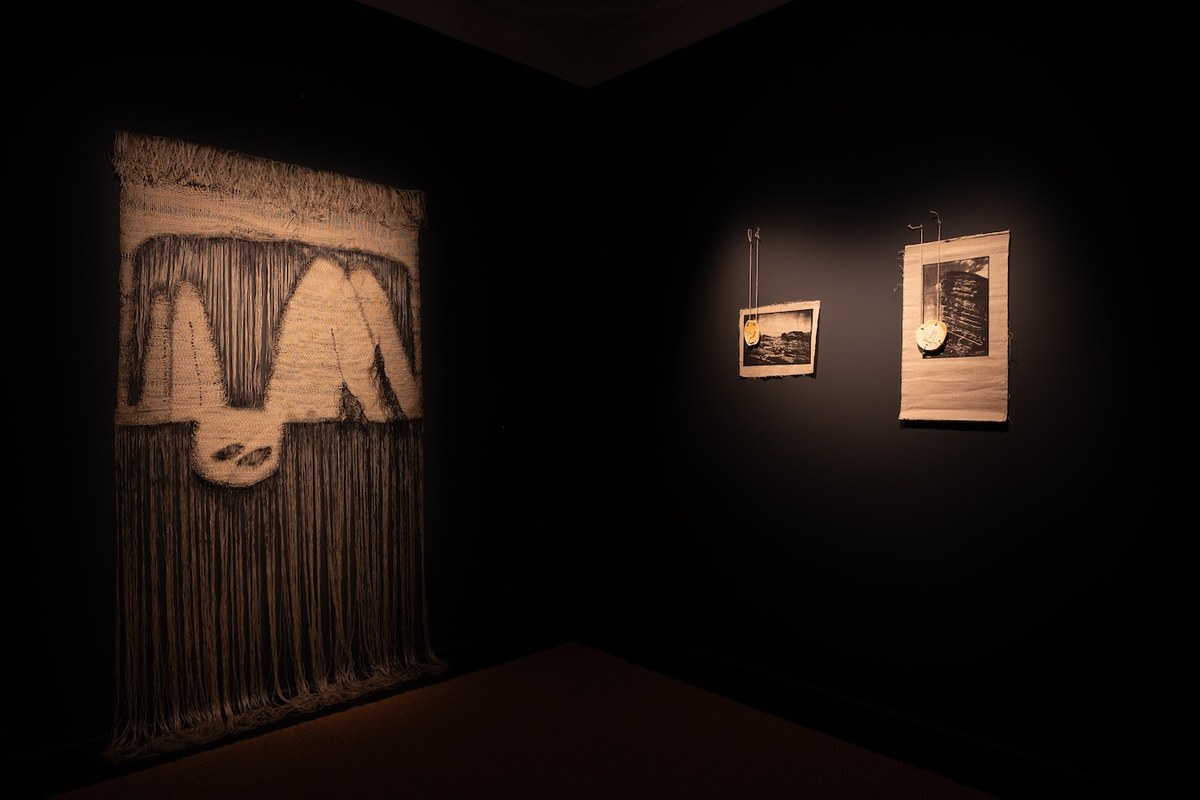
'Their Love Is Like All Loves, Their Death Is Like All Deaths’ by Manal AlDowayan, a collaboration between Arts AlUla and Sabrina Amrani Gallery, 2024. Curated by Jal Hamad. (Image courtesy of the Royal Commission for AlUla)
“I want to give the contemporary inhabitants of AlUla a space for their narrative, allowing it to live permanently in a public artwork for future generations to contemplate,” AlDowayan said.
The exhibition marks a turning point in the development of AlDowayan’s permanent large-scale desert installation for Wadi AlFann, which will also be titled “Oasis of Stories,” and is expected to be completed in 2026. That work takes inspiration from the labyrinth-like passages and walls of AlUla’s Old Town. The drawings and stories from the workshhops will be inscribed into its walls, meaning that AlUla’s residents will leave their mark on a major piece of art in the region they call home.

Wadi AlFann presents Manal AlDowayan's journey towards 'Oasis of Stories'. Exhibition curated by Iwona Blazwick, 2024. (Image courtesy of the Royal Commission for AlUla)
“I decided to speak with the AlUla residents to learn about their old town,” AlDowayan told Arab News. “I realized that the story of the people of AlUla has not been documented. (And I thought they needed to) inscribe their story onto something in the surrounding landscape.
“I visited women’s homes and asked them to document their recipes; I attended weddings and danced and also asked eldery women to tell their stories,” she continued. “Me and my studio manager, Carla, were constantly trying to build a relationship of love and trust with the people from AlUla.”
Wadi AlFann is a 65-kilometer “Valley of the Arts” in the desert of AlUla. It will include large-scale art installations set against the natural desert landscape and alluring rock formations. The first five commissions will be by AlDowayan, her fellow Saudi artist Ahmed Mater, and the US-based artists Agnes Denes, Michael Heizer, and James Turrell.
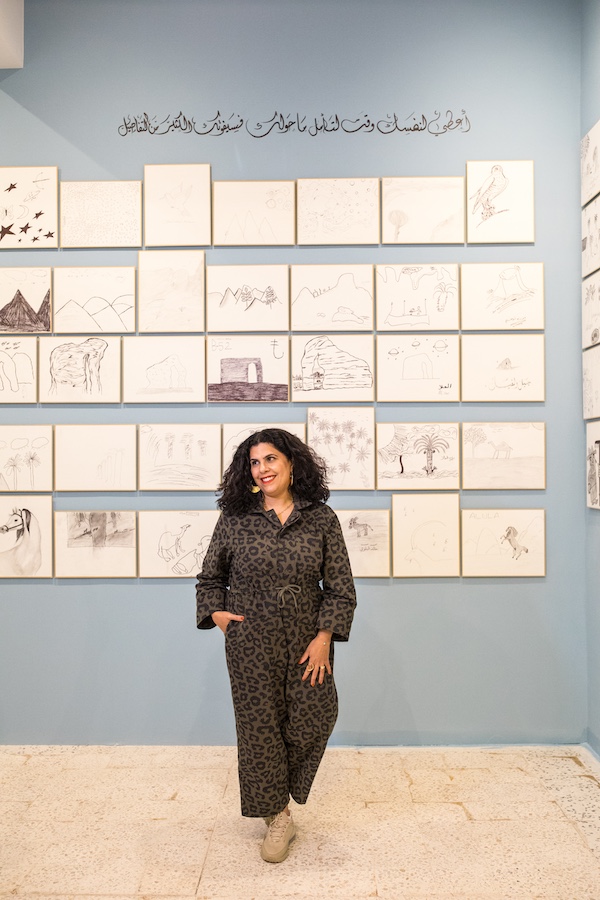
Wadi AlFann presents Manal AlDowayan's journey towards 'Oasis of Stories'. Exhibition curated by Iwona Blazwick, 2024. (Image courtesy of the Royal Commission for AlUla)
“There is no desert quite like the AlUla desert,” Wadi AlFann’s lead curator Iwona Blazwick said during the press tour. “This was once a large plateau that was underwater over millennia. The cliffs have been eroded. They’re made of sandstone. There are 7,000 years of human presence in this area, and we find it through rock art markings, petroglyphs, pictograms and hieroglyphs. They’re everywhere you look. But we want to find an expression of the 21st century that we can also add to the landscape.”
AlDowayan’s second exhibition, presented in collaboration with Madrid-based Sabrina Amrani Gallery, is “Their Love Is Like All Loves, Their Death Is Like All Deaths,” a solo exhibition that delves further into her artistic practice. Sculptural works and drawings in a range of mediums explore the idea of ruin — all inspired by the engravings and architecture of the ancient tombs of AlUla.
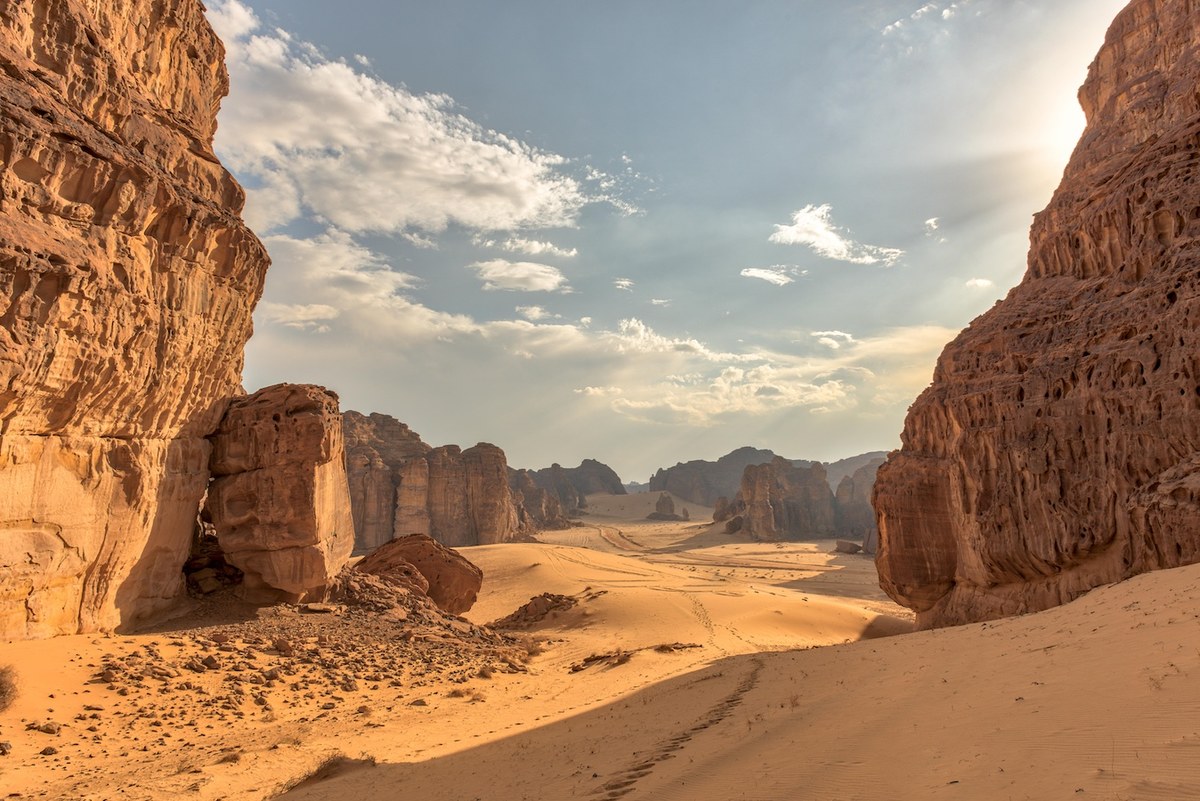
Wadi AlFann, AlUla. (Image courtesy of the Royal Commission for AlUla)
In several rooms of the exhibition, there are soft desert rose-shaped sculptures made from tussar silk, on which are printed subtle images reflective of AlUla’s heritage. Elsewhere, AlDowayan’s labyrinth-like drawings bring to mind the winding passages of AlUla’s Old Town.
There are also intricate works created by Sadu weaving, a technique traditionally used by Bedouin women, mounted on the wall. Once again, AlDowayan engaged the larger AlUla community, and its imprint powerfully resonates throughout.
“I want to be sure that everyone enjoys art,” AlDowayan told Arab News. “Saudi Arabia is going through a huge transformative moment and public art is being commissioned across the Kingdom. This is part of a vision that art will be ingrained in our communities.”