

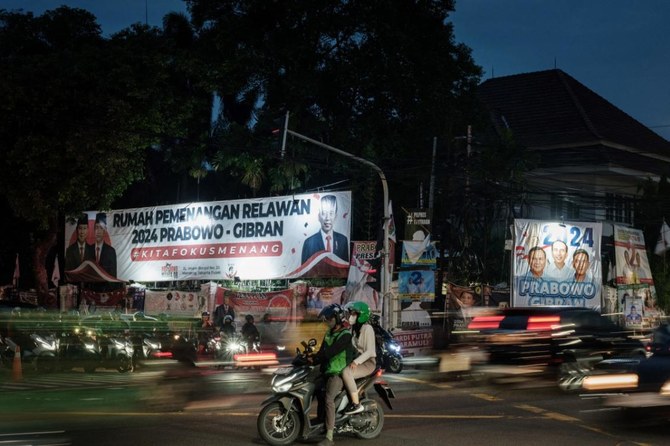

JAKARTA: At an Indonesian presidential campaign event, 22-year-old voter Irene Putri Aisyah was busy uploading everything she saw — from cute dances to cooking demonstrations — to short video app TikTok.
To court young voters like Irene, all three candidates in the Feb. 14 race to lead Indonesia have gravitated toward TikTok, which has 125 million users in the country, second only to the United States.
But experts say the platform is also flooded with problematic content that attempts to manipulate young voters, who make up over half of about 205 million registered voters in the country.
In this new online battleground, Prabowo Subianto, a once-feared military man, has rebranded himself as a cuddly statesman. Videos of his awkward dance moves, reminiscent of local martial arts, have got millions of views, inspiring others to mimic him.
When the frontrunner faced stinging barbs from rivals in a televised debate, women supporters shared videos of themselves crying for Prabowo.
Rivals Anies Baswedan and Ganjar Pranowo have also ramped up their presence on the app, answering questions in real-time during livestreamed sessions or sharing videos of heartfelt encounters with voters.
“TikTok is the most appealing app for first-time voters, so it does have a big influence as a platform to campaign and propagate election-related information,” said Anita Wahid, a researcher who has worked with TikTok on issues related to online trust and safety.
ENDURING POPULARITY
During the campaign period, TikTok became Indonesians’ second-most used source of information on politics, after television, according to a January survey by pollster Indikator Politik Indonesia.
“We can easily find information about Prabowo on TikTok,” voter Irene said.
But experts have flagged some of this information may be incorrect.
Endah Triastuti, a communications researcher at the University of Indonesia, says that because of such content, many young voters may not be aware that Prabowo has been forced to deny allegations of human rights abuses during his time as special forces commander.
Manipulated images and ‘deepfake’ videos of the candidates have also circulated widely.
TikTok says on its website its policy is to remove “harmful misinformation” and work with fact-checkers to flag or debunk it. Political ads and fundraising are also banned on the platform.
“We prioritize protecting the integrity of elections on our platform so that our community can continue to enjoy creative and entertaining TikTok experiences,” a TikTok spokesperson said in an email.
Young voters prefer to see candidates create fun content, which explains the app’s enduring appeal and success in this election, said researcher Anita Wahid.
“This is a new battle.”


