

Saudi Airlines rebrand will ‘bring the world’ to the Kingdom

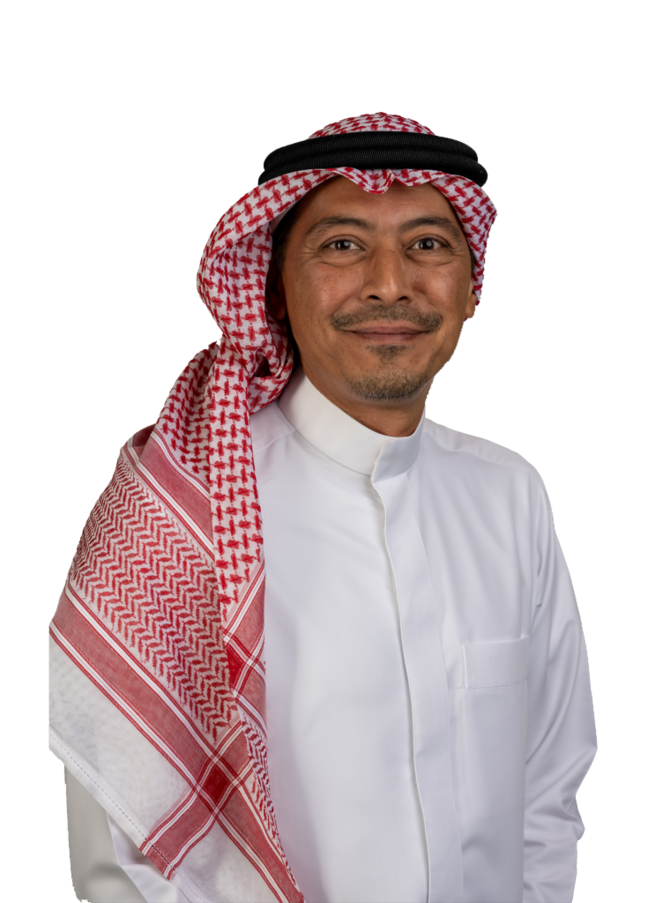
Khaled Tash, Group Chief Marketing Officer of Saudia
Short Url
Updated 10 February 2024
Follow

Saudi Airlines rebrand will ‘bring the world’ to the Kingdom

At the recent Diriyah E-Prix in Riyadh, it was hard to escape the presence of one of Formula E’s most established partners — Saudi Airlines. The Kingdom’s national carrier has been a partner of the all-electric racing series since its debut in the Saudi capital in 2018.

Since then, the Kingdom has undergone a cultural revolution that has swept through every possible sector, including business, tourism and sport.

“Look at how much has happened in Saudi Arabia over the last few years, it’s amazing,” said Khaled Tash, group chief marketing officer at Saudia. “We have Formula 1, we host so many different football, boxing, tennis and other tournaments. The culmination of all this is going to come when we host the Asian Cup 2027, Asian Games 2034, and World Cup 2034 Insha’Allah. I think the trajectory is at an accelerated rate, probably unprecedented anywhere else in the world.”

“We’re very fortunate as an airline to be associated with everything that is happening in Saudi Arabia; we’re very happy to be in Formula E for the sixth year in our partnership with them,” he said, adding: “The best is yet to come.”

Last year saw the partnership with Formula E take Saudia’s involvement in the sporting sector to an expanding market.

“Last year we started activating this partnership in other parts of the world,” said Tash. “It gave access to cities like Jakarta, Rome, and London, and we’re very happy with the partnership so far. It also goes very well with the sustainability agenda of the world, the country, and the airline,” Tash said.

“This year, we’re going to Berlin as well, in addition to other cities where we’ve activated globally. We’re very happy, and happier now that PIF has signed a strategic partnership with Formula E. I think what we will see in the next year or so is an increased level of partnerships and activations between Formula E, Saudia and the rest of the partners.”

Looking at the bigger picture, Tash sees the green shoots of recovery for the aviation industry continuing.

“The year 2023 was a good year for aviation globally, and very, very good for us, as we are almost back to the normal levels of the pre-COVID era,” he said. “I believe 2024 has so many more opportunities than challenges. The travel demand is picking up, the importance of aviation in connecting the world is higher than ever.”

“There is a lot more interest to visit Saudi Arabia, be it for tourism, for Hajj and Umrah, for business and investment. So, we see a lot of opportunities,” said Tash. “There is a big challenge in terms of the supply chain; we have probably a lot of concerns when it comes to aircraft deliveries and when it comes to spare parts, things like that, but I think the players in the industry are mature and professional enough. These are big companies we work with, and we will find solutions. But I would say aviation has many more opportunities than challenges moving forward.”

Saudia launched a rebrand last year, and Tash said that it has been a “a great experience,” which will showcase where the airline is heading.

“Saudia is soon approaching its 80th anniversary; we are an old company but also a company that is still relevant today and will be in the future. We are changing our business model from one that only focused on taking Saudi to the world, to bringing the world to Saudi.”

He said: “We also want to play a very important role in realizing Vision 2030 and what is happening in the country, so there is a lot of work that happens between us, the government entities, and the private sector in Saudi Arabia. It revolves around how we can be in synergy with each other so that all our efforts can not only create better travel opportunities for passengers but also better job opportunities and local content opportunities.”

The coming months will see Saudia announce its biggest ever aircraft order, with 100 more planes joining the fleet that is already awaiting 50 aircraft to be delivered, according to Tash.

Under the new rebranding, Saudia will also be one of the first airlines to use artificial intelligence — in the form of ChatGPT — to help customers navigate its services.

“We want to change everything in the travel experience so that our customers can feel more enabled in a way that they are able to enjoy a truly authentic Saudi experience,” Tash added.


Jameel Observatory-CREWSnet advances climate resilience in Bangladesh

Updated 20 January 2026
Follow

Jameel Observatory-CREWSnet advances climate resilience in Bangladesh

The Jameel Observatory Climate Resilience Early Warning System Network, an initiative co-founded by the Massachusetts Institute of Technology and Community Jameel to reinvent climate change adaptation in vulnerable communities into a proactive, integrated and evidence-based process, announced the launch of its Adaptation Fortress initiative, transforming existing cyclone shelters and providing protection from heat waves in Bangladesh for the first time.
The first Adaptation Fortress is under construction in Satkhira district, southwest Bangladesh. If this pilot is successful, the initiative will open a pathway, with additional funding, to scaling up to 1,250 Adaptation Fortresses providing heatwave relief to half a million of the region’s most vulnerable residents.
More than 30 million people live in southwestern Bangladesh. Between 2019 and 2021, including in the midst of the COVID-19 pandemic, multiple cyclones hit the region, devastating land, homes and entire communities. The threats posed by climate change — rising sea levels and more extreme weather — mean that people living in this region are likely to face similar crises in the years ahead. In addition to cyclones, extreme heat is a growing threat, putting people at risk of dehydration and heatstroke. In 2024, the UN found that heat waves caused nationwide school closures for two weeks, with some schools closing for six to eight weeks due to the combined impact of heat waves and flooding.
In Bangladesh, the Jameel Observatory-CREWSnet has used its mid-century climate projections and analysis of local human systems to design a pilot for a multi-purpose, multi-objective structure called an Adaptation Fortress.
By engaging extensively with local communities, the Jameel Observatory-CREWSnet, which includes among its partners BRAC, a global nongovernmental organization established in Bangladesh, is demonstrating a new model of climate adaptation that repurposes schools that are also cyclone shelters to serve as sanctuaries during extreme heat events.
The climate resilient shelter model is the first of its kind in Bangladesh and serves as a blueprint for infrastructure development across South Asia. Designed to protect the most vulnerable community members during government-declared heat emergencies, Adaptation Fortresses feature solar power generation and battery backup systems to ensure the shelter is resilient to outages during extreme heat conditions. The site also includes rainwater harvesting capacity and is designed so that excess energy generated when air conditioning is not in use is made available for community use.
Mohammed Abdul Latif Jameel KBE, founder and chairman of Community Jameel, said: “The Jameel Observatory-CREWSnet’s construction of this first pilot Adaptation Fortress marks a milestone for Bangladesh and the region. It lays the foundation for a proactive response to cyclones and heat stress — emergencies that the team has projected will become frequent events, threatening the lives of millions in Bangladesh. By adapting infrastructure today, we are building the resilience needed for tomorrow.”
Professor Elfatih Eltahir, lead principal investigator of the Jameel Observatory-CREWSnet, said: “Bangladesh built a vast network of cyclone shelters that have been effective in protecting vulnerable populations. For the first time the Jameel Observatory-CREWSnet is introducing the concept of shelter from heat waves as well as cyclones in southwest Bangladesh. This integrated and proactive initiative will significantly improve climate resilience in a region with some of the highest risks from climate change.”
Dr. Deborah Campbell, executive director of the Jameel Observatory-CREWSnet, said: “Bangladesh is getting hotter and will experience more frequent and severe heat waves, leaving many people very vulnerable to heat stress and lacking the resources to adapt. The Adaptation Fortress initiative will provide shelter for the most vulnerable community members in southwest Bangladesh and has the potential to serve as a model for similar proactive climate resilience infrastructure development across Bangladesh and South Asia.”
Dr. Md Liakath Ali, principal investigator of the Jameel Observatory-CREWSnet at BRAC, said: “BRAC is proud to partner with the Jameel Observatory-CREWSnet in pioneering the Adaptation Fortress initiative, an important step toward protecting vulnerable communities from the growing risks of extreme heat in coastal Bangladesh. By transforming existing cyclone shelters into multi-purpose, climate-resilient infrastructure, we are demonstrating how locally grounded solutions can address emerging climate hazards while strengthening community well-being. Alongside the pilot, we are committed to engaging policy makers so that future heat and climate risks are integrated into national planning processes. The lessons from this initiative will not only support communities in the southwest, but also inform long-term, scalable strategies for resilience across the country.”