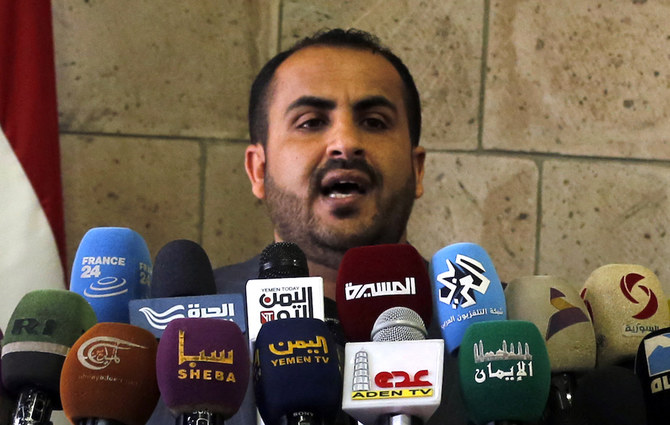

LONDON: Mohammed Abdulsalam, chief negotiator and spokesperson of the Houthis, says that the recent meeting of the Sanaa delegation with Saudi Arabia officials has “resulted in overcoming the most important obstacles facing the roadmap” to peace.
These solutions were in line with those championed by the UN envoy to Yemen, Hans Grundberg, said Abdulsalam in a wide-ranging interview with Asharq Al-Awsat on Thursday.
Abdulsalam had previously called Saudi Arabia officials his “brothers” in a statement to Asharq Al-Awsat in January. He did so again on Thursday, and answered questions about peace initiatives, attacks in the Red Sea and regional and international relations.
Abdulsalam said the Houthi attacks on ships in the Red Sea would only stop if Tel Aviv ended their assault on the Palestinian people.

Saudi Arabia’s ambassador to Yemen Mohammed Al-Jaber shakes hands with the political leader of the Houthis, Mahdi Al-Mashat in Sanaa. (X: @mohdsalj)
Abdulsalam believes that efforts at finding peace in Yemen “is going well, both since the start of the UN truce in April 2022, corresponding to the month of Ramadan at that time, and also through discussions with the Saudi side under Omani sponsorship, which are going well so far.”
Asked about the extent of the Houthis’ willingness to begin political negotiations that include power sharing, elections, and a new constitution, Abdulsalam said “the roadmap included everyone’s concerns, and highlighted the urgent humanitarian situation that the Yemeni people are suffering from.”
In a previous statement to Asharq Al-Awsat, Abdulsalam said that the Houthis’ Red Sea operations would not impact the peace initiatives. He said it was “necessary to respond to the urgent situation in Palestine, which represents a risk for regional, Arab and Islamic security.

Prince Khalid bin Salman bin Abdulaziz, the Saudi Minister of Defense, meets with a delegation from Sanaa during their visit in Riyadh in September 2023. (SPA)
“It will affect us in Yemen if Israel dominates, eliminates or weakens the Palestinian people and its resistance. This will reflect negatively on everyone, aside from the religious and moral position towards this issue. Therefore, we consider that it is separate from the peace process so far and think that the statements of the West come as part of an attempt to pressure us to back down.”
Abdulsalam added: “The military operations in the Red Sea, which target Israeli ships as well as ships heading towards Israel, will continue until the aggression against the Gaza Strip ends and the siege is lifted by bringing food assistance into the north and south of the strip.
He said the Houthis were open to talks with Western powers on the Red Sea situation, under the “auspices of our brothers in the Sultanate of Oman.”
• This article originally appeared in Arabic on Asharq Al-Awsat