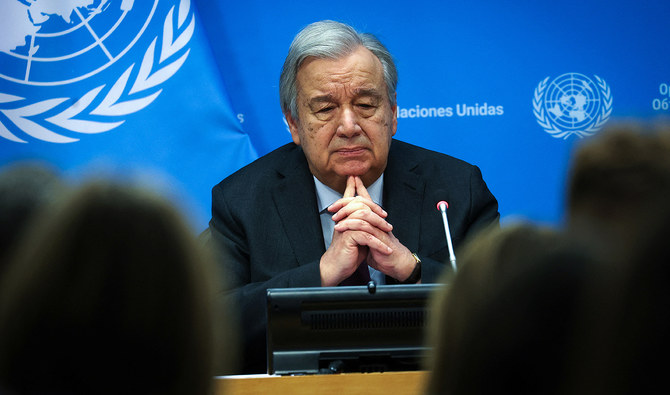
UNITED NATIONS: United Nations Secretary-General Antonio Guterres on Thursday expressed concern about violence in Pakistan and the suspension of mobile communications services on election day in the South Asian nation, his spokesperson said in an emailed statement.
WHY IT IS IMPORTANT
Pakistan counted votes after polling ended on Thursday in a general election marred by militant attacks and suspension of mobile phone services, with no indication of a clear leader hours after voting closed — an unusual delay compared to previous polls.
Mobile phone services were suspended early on Thursday and were being partially resumed late into the night, the Interior Ministry said late on Thursday, citing security reasons for the suspension, which was also condemned by rights groups like Amnesty International.
The main contests are expected to be between candidates backed by jailed former prime minister Imran Khan, whose party won the last national election, and the Pakistan Muslim League of former prime minister Nawaz Sharif, whom analysts say is backed by the powerful military.
KEY QUOTES
“As Pakistan awaits the results of the elections, the secretary-general encourages all political leaders and society segments to maintain a calm atmosphere, as well as refrain from the use of violence and any actions that could increase tensions,” UN spokesperson Stephane Dujarric said.
“It is important for all candidates and supporters to ensure that human rights and the rule of law are fully respected in the interest of the Pakistani people and resolve any disputes that might arise through established legal procedures,” the spokesperson added.
CONTEXT
Thousands of troops were deployed on the streets in Pakistan and at polling stations across the country. Borders with Iran and Afghanistan were temporarily closed as security was stepped up.
Despite the heightened security, nine people, including two children, were killed on Thursday in bomb blasts, grenade attacks and shootings.
At least another 26 were killed on Wednesday in two explosions near electoral candidates’ offices in the southwestern province of Balochistan. Daesh later claimed responsibility for those attacks.
Earlier on Thursday, the US State Department also said it was concerned about steps taken to “restrict freedom of expression” in Pakistan, especially related to phone and Internet access.


![]()

UN chief concerned by violence, communication restriction on Pakistan election day
Short Url
https://arab.news/76kcu
UN chief concerned by violence, communication restriction on Pakistan election day
- Pakistan counted votes after polling ended on Thursday in election marred by militant attacks
- UN chief urges Pakistani political stakeholders to resolve disputes via “legal procedures”
Latest updates





© 2026 SAUDI RESEARCH & PUBLISHING COMPANY, All Rights Reserved And subject to Terms of Use Agreement.