BEIRUT: The United Nations agency for Palestinian refugees expects a preliminary report into Israeli claims that a dozen of its employees took part in the Oct. 7 attack on Israel to be ready by early next month, its representative in Lebanon said Tuesday.
Israel has accused 12 of UNRWA’s 13,000 employees in the Gaza Strip of taking part in the Hamas-led assault on Israel last year. The claims came as Israel faced a genocide case at the International Court of Justice over its war on Gaza, and after years of it calling for the agency to be disbanded.
UNRWA’s representative in Lebanon Dorothee Klaus told reporters in Beirut that 19 donors had suspended their funding following the accusations.
“We expect a preliminary investigation report early March, based on which we assume donors would look into their decisions of having suspended funding to UNRWA,” Klaus said.
The UN’s oversight office is carrying out the investigation. UNRWA has said it acted quickly to address the allegations, with its head Philippe Lazzarini firing those allegedly involved and informing the UN’s secretary general, as well as the United States and other donors.
Israel had informed Lazzarini of the accusations against the 12 staff members verbally, but other allegations were leaked to media that a larger number of UNRWA employees have Hamas links.
Neither Israel nor any other official source has shared with UNRWA a dossier alleging that 190 of the agency’s staff members in Gaza are Hamas or Islamic Jihad militants.
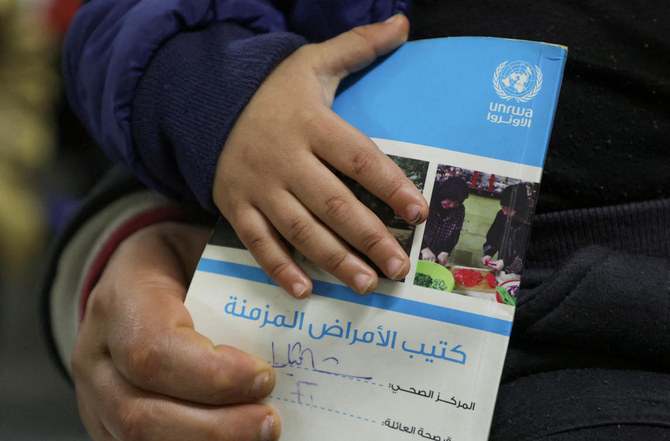
The first ever UN agency, UNRWA was established by a resolution of the body’s General Assembly in 1949 to look after refugees who fled or were pushed from their homes when Israel was created.
UN Secretary-General Antonio Guterres in January described UNRWA as “the backbone of all humanitarian response in Gaza” and has appealed to all countries to “guarantee the continuity of UNRWA’s lifesaving work.”
The agency, whose biggest donors in 2022 included the US, Germany and the European Union, has repeatedly said its capacity to render humanitarian assistance to people in Gaza is on the verge of collapse.


![]()

UNRWA says report into Israeli claims against staff due early March
Short Url
https://arab.news/554pc
UNRWA says report into Israeli claims against staff due early March
- Israel has accused 12 of UNRWA’s 13,000 employees in the Gaza Strip of taking part in the Hamas-led assault last year

Latest updates


Recommended


© 2026 SAUDI RESEARCH & PUBLISHING COMPANY, All Rights Reserved And subject to Terms of Use Agreement.