Turkiye agrees to provide drones to Egypt
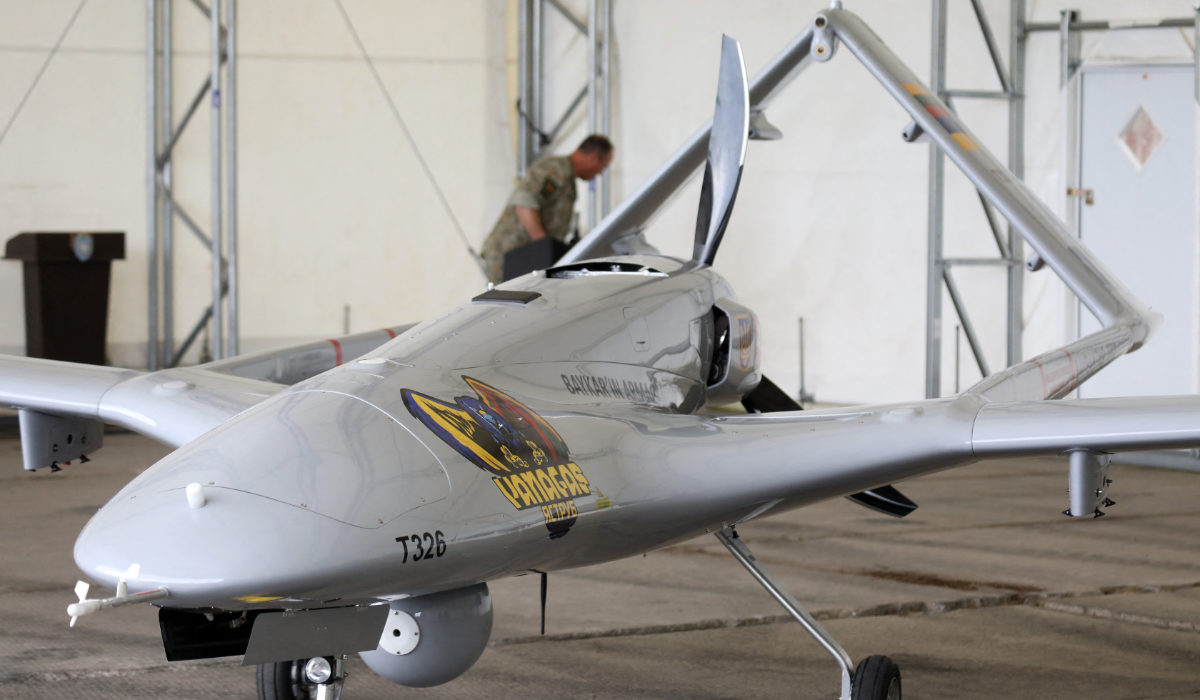
A Turkish Bayraktar TB2 combat drone is on view during a presentation at the Lithuanian Air Force Base in Siauliai, Lithuania, on July 6, 2022. (AFP feel photo)
Short Url
Updated 05 February 2024
Follow

Turkiye agrees to provide drones to Egypt

  • Turkish President Tayyip Erdogan is set to travel to Egypt on Feb. 14 to meet counterpart Abdel Fattah El-Sisi, in his first visit since Ankara and Cairo upgraded relations by appointing ambassadors last year

ANKARA: Turkiye agreed to provide its increasingly popular drones to Egypt after the two countries normalized ties following a decade of rupture, Foreign Minister Hakan Fidan said on Sunday.
Turkish President Tayyip Erdogan is set to travel to Egypt on Feb. 14 to meet counterpart Abdel Fattah El-Sisi, in his first visit since Ankara and Cairo upgraded relations by appointing ambassadors last year.
Fidan told private A Haber television that Turkiye’s leader will discuss bilateral and regional issues including trade, energy and security with El-Sisi.
“Normalization in our relations is important for Egypt to have certain technologies. We have an agreement to provide (Egypt) unmanned air vehicles and other technologies,” Fidan said, without further elaborating.
International demand for Turkish drones has soared after their impact on conflicts in Syria, Libya, Azerbaijan and Ukraine. Ethiopia, which has frosty relations with Egypt over a hydropower dam on the Blue Nile, is among buyers of Turkish drones.


Lebanon, Jordan seek solutions after Damascus bans non-Syrian trucks

Updated 3 sec ago
Follow

Lebanon, Jordan seek solutions after Damascus bans non-Syrian trucks

  • Lebanon and Jordan are seeking a solution with Syria after the latter barred foreign trucks from entering its territory, officials from both countries told AFP on Tuesday.
BEIRUT: Lebanon and Jordan are seeking a solution with Syria after the latter barred foreign trucks from entering its territory, officials from both countries told AFP on Tuesday.
Damascus had issued a decision on Saturday stipulating that “non-Syrian trucks will not be allowed to enter” the country, and that goods being imported by road must be unloaded at specific points at border crossings.
The decision exempts trucks that are only passing through Syria to other countries.
Dozens of trucks unable to enter the country were lined up on the Lebanese side of the Masnaa border crossing on Tuesday, an AFP photographer saw.
Ahmad Tamer, head of land and maritime transportation at the Lebanese transport ministry told AFP that discussions were underway with Damascus over the decision.
He said the issue was not specifically targeting Lebanon — which is trying to reset ties with Damascus after the fall of Bashar Assad — adding that he hoped to hold a meeting with the Syrian side soon.
Lebanon sends around 500 trucks to Syria per day, according to Tamer.
In Jordan, also affected by the decision, transport ministry spokesperson Mohammed Al-Dweiri told AFP that “discussions are currently underway, and we are awaiting a response from the Syrian side regarding allowing foreign trucks to enter and cross.”
Dweiri said that Jordanian trucks were continuing to unload their cargo at the free zone at the Nassib border crossing with Syria despite some “confusion.”
Around 250 Jordanian trucks travel to Syria daily, according to him.
A source in the Syrian General Authority for Ports and Customs told AFP that the decision aimed to “regulate the movement of cargo through the ports.”
Representatives of unions and associations in Lebanon’s transport sector denounced the decision on Tuesday and warning of “negative repercussions,” according to the state-run National News Agency.
Syria is the only land route Lebanon can use to export merchandise to wealthy Gulf markets.
As part of continued attempts to rekindle ties, the two countries signed an agreement on Friday to hand around 300 Syrian convicts over to Damascus.