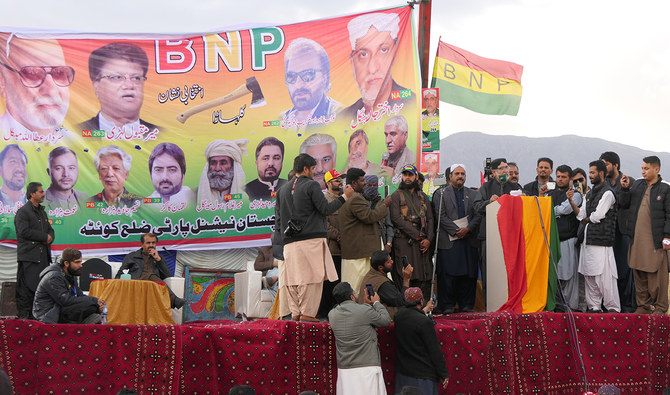

QUETTA: As Pakistan inches closer to national polls slated for Feb. 8, all eyes will be on two key constituencies in the country’s southwestern Balochistan province, where tribal disputes have reignited fierce political competition and there are fears of armed clashes between rival groups come polling day.
Balochistan, Pakistan’s largest province by land but poorest and most sparsely populated, is home to several ethnic Baloch tribes like the Bugti, Marri, Mengal, and Rind, as well as influential Pashtun tribes such as Achakzai, Kakar, and Sherani. The region, which borders Iran and Afghanistan, has for decades been the scene of a low-level insurgency by ethnic Baloch militants who accuse the state of denying its residents a share in the province’s vast mineral wealth. Political leaders, human rights activists and locals have for decades spoken against killings in Balochistan by security agencies, who deny the charge.
Arab News puts the spotlight on two key constituencies in Balochistan where political rivalries and tribal disputes will make for an interesting electoral contest.
NA-256 Khuzdar
This mountainous constituency comprising the Khuzdar district in Balochistan is known for its mineral pyrite and marble mines and lies 300 kilometers from the provincial capital of Quetta. It is home to 1.1 million people, mostly from the Zehri and Mengal tribes.
Leading candidates from the constituency include veteran politician Sardar Akhtar Jan Mengal of the Balochistan National Party-M (BNP-M), independent candidate Mir Shafique ur Rehman Mengal, the Pakistan Peoples Party’s (PPP) Abdul Rehman, who is backed by another powerful tribal chief Nawab Sanaullah Zehri, and independent candidate Nawabzada Israr Ullah Zehri.
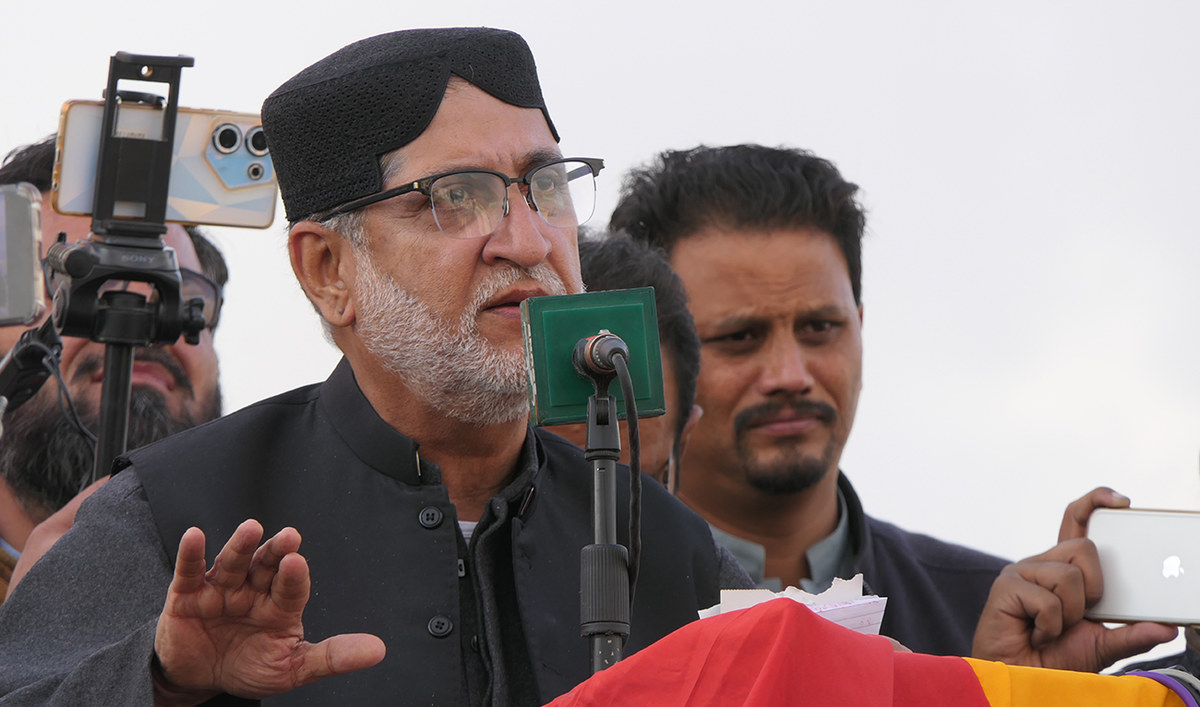
Sardar Akhtar Jan Mengal addresses the public during an election campaign rally in Khuzdar, a city in southwestern Balochistan province of Pakistan on February 1, 2024. (AN Photo)
In this case, the two Mengals are bitter political and tribal rivals, with enmity dating back at least two decades. Last year, the rivalry between the Mengals turned violent when armed men from both sides dug trenches in Wadh, a small town in Khuzdar, and traded fire for over three days, disrupting business activities and traffic on the Quetta-Karachi highway.
Akhtar, whose BNP-M pushed for provincial rights and greater autonomy for Balochistan province through peaceful and democratic struggle, has held rallies and engaged with supporters ahead of polling next week.
In an interview to Arab News, Akhtar said he had spent the last five years fighting for rights for the province and the recovery of missing persons.
Shafique meanwhile accuses Akhtar of doing little to get basic facilities including health and education for the people of Khuzdar, something he promises to deliver on if elected.
The last election in the constituency in 2018 was won by Akhtar with 53,000 votes against Shafique’s 14,000. The BNP-M chief has also remained an ally of two of the last governments at the center, led by former prime ministers Imran Khan and Shehbaz Sharif between 2018-23. He has strong support in Baloch dominated areas from Quetta to Khuzdar and is also contesting polls from two other constituencies with a majority of ethnic voters: NA-261 Surab-Kalat-Mastung and NA-264, which is also in Quetta.
“I have stood from three National Assembly constituencies not because I just want to reach the Assembly, I want to defeat the powers who assume Balochistan as an ‘orphaned’ province and continue exploiting the province’s natural wealth,” the BNP chief said.
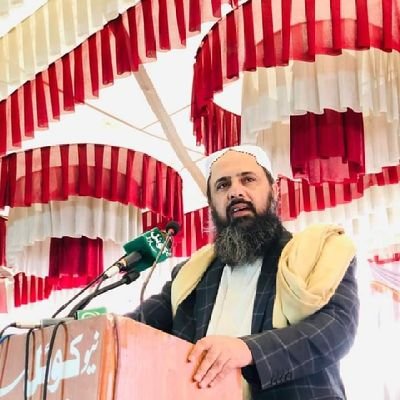
An undated file photo of Mir Shafique ur Rehman Mengal. (Photo courtesy: @MirShafiqUrRah/X)
Shahzad Zulfiqar, a senior journalist and political analyst based in Quetta who has for years covered elections in Balochistan, said NA-256 was a “challenging constituency” due to simmering tensions between the Mengals.
“Both sides will try to take election benefits from the recent tribal disputes in Wadh,” Zulfiqar told Arab News, claiming that Akhtar was the stronger candidate and more popular among Baloch tribesmen.
“I don’t have any personal dispute with anyone, but we stood against the powerful feudal system emboldened by the British government before Pakistan’s creation,” Shafique told Arab News.
Without naming his chief adversary, Shafique said “powerful people” had been taking advantage of the feudal system for decades and not serving the impoverished people of Khuzdar.
“I secured 14,000 votes in 2018 elections,” he said. “If there will be free and fair elections, we can defeat them.”
NA-263 Quetta II
NA-263 is another key constituency in southwestern Pakistan because the winning candidate here will represent the provincial capital of Quetta, with its diverse population of Pashtuns, Balochs, Hazaras and Punjabis.
Veteran politician and leader of the nationalist Pashtoonkhwa Mili Awami Party (PKMAP) Mehmood Khan Achakzai, Balochistan National Party’s (BNP) Mir Maqbool Lehri, Pakistan Peoples Party’s (PPP) Rozi Khan Kakar and independent candidate Nawabzada Hajji Lashkari Raisani are considered the strongest candidates among 46 vying for the NA-263 constituency.
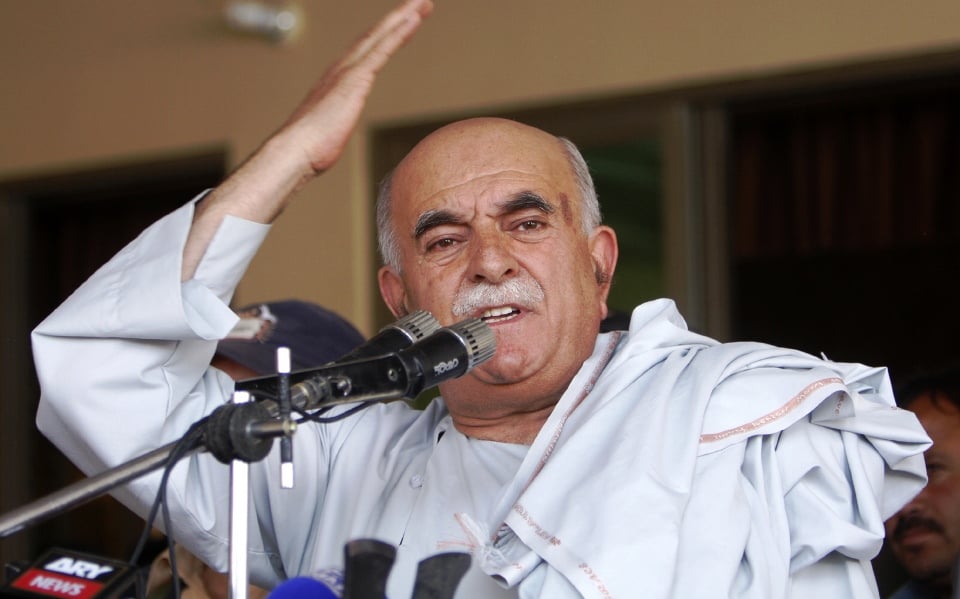
An undated file photo of Mehmood Khan Achakzai. (Photo courtesy: INP)
In the 2018 elections, the Pakistan Tehreek e Insaf’s (PTI) Qasim Khan Suri won by securing over 25,000 votes, defeating Raisani who decried “rigging.” In 2013, Achakzai emerged as the victor after bagging over 4,000 votes.
Maqbool Lehri, 69, a senior politician who has served as mayor of Quetta, is running for the NA-263 seat from the Balochistan National Party Mengal (BNP-M) platform, said his main opponents were tribal big-wigs like Achakzai and Raisani but he was optimistic he could win.
“I am deeply aware of the general issues of Quetta city because I served the city twice as mayor,” Lehri told Arab News.
“I am not competing with my election rivalries, but leading with a vision to address the indigenous issues of Quetta city including infrastructural development and other facilities.”
For 418,279 registered voters of the constituency, the main issues are a shortage of gas, especially during the biting winter cold, along with the lack of clean drinking water and traffic problems.
Muhammad Furqan, a resident of Shahbaz Town in NA-263, lamented that lawmakers previously elected from the city did not resolve its issues.
“Residents of the city should use their power of vote with clarity by knowing the ability and seriousness of the current candidates standing from this important constituency,” Furqan told Arab News.
Journalist Asif Baloch said it was unclear who would win given a lukewarm election race this season, and few political activities amid security concerns.
“There are campaign rallies and corner meetings being held, but we haven’t seen zealous activities in these polls,” Asif Baloch told Arab News, “Even political parties are plagued by uncertainty whether there will be elections or not even a week before February 8.”
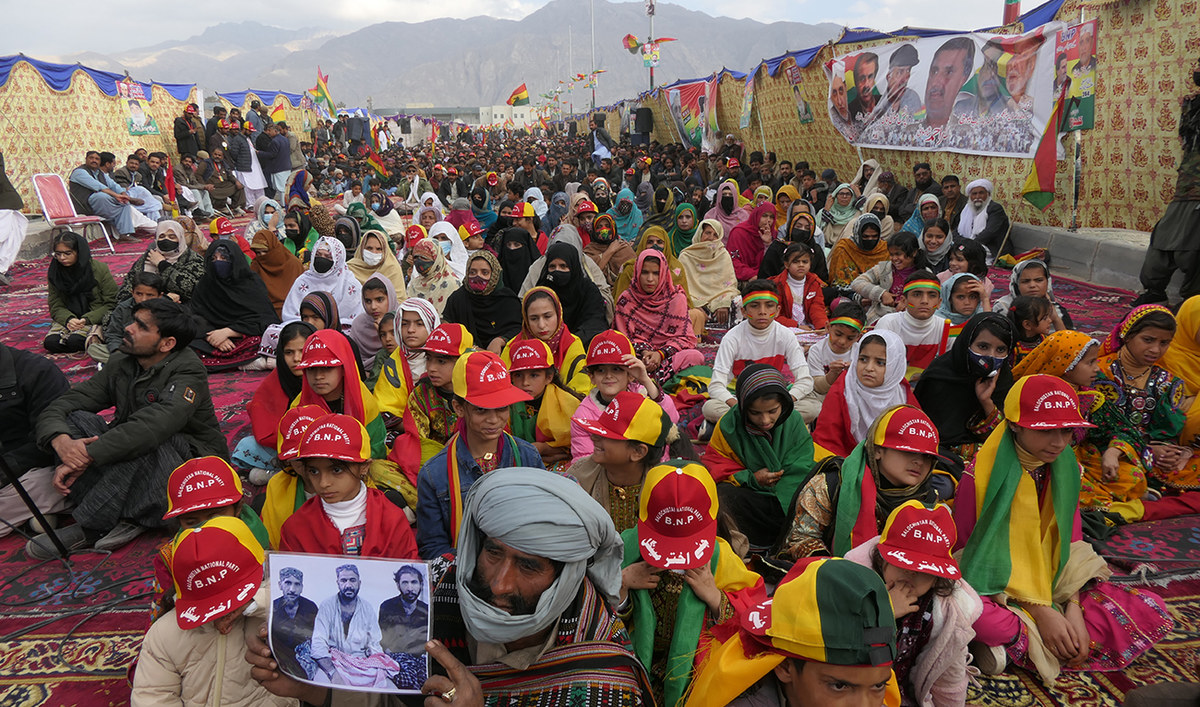
People attend a rally by Balochistan National Party in Khuzdar, Balochistan on February 1, 2024. (AN Photo)
There is a long history of election-related violence in Balochistan, where over a dozen attacks on election candidates and rallies have been recorded in the last two week ahead of elections in which at least five people have been killed. Earlier this week, a political rally by a key political party, the Pakistan Tehreek-e-Insaf (PTI), was targeted with a bomb blast in Sibi, a city located in southeast of Quetta.
“Being an election candidate, I am very much dismayed due to the recent terrorism incidents in Balochistan,” Shakeel Ahmed Roshan, an election candidate for NA-263 from the Pakistan Muslim League-Quaid (PML-Q) party, said.
“Our people are being killed and injured in these attacks targeting election activities and apart from the fears in general polls, people are also feeling sad.”