

Saudi crown prince launches ‘Alat’ to help turn Kingdom into electronics, advanced industries hub

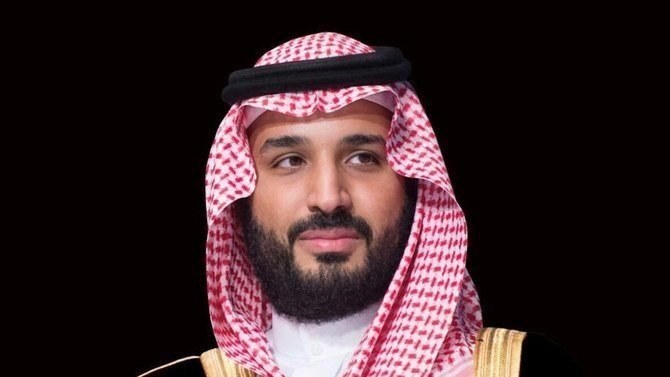
Saudi Arabia’s Crown Prince Mohammed bin Salman. (File/SPA)
Short Url
Updated 01 February 2024
Follow

Saudi crown prince launches ‘Alat’ to help turn Kingdom into electronics, advanced industries hub

  • Company aims to create 39,000 direct jobs in Saudi Arabia by 2030, and achieve a direct non-oil GDP contribution of $9.3 billion by the same year

RIYADH: Saudi Crown Prince Mohammed bin Salman announced on Thursday the launch of a Public Investment Fund company called “Alat.”

The company will contribute to the aim of making Saudi Arabia a global hub for sustainable technology manufacturing that focuses on advanced technologies and electronics, Saudi Press Agency reported. 

Alat will focus on manufacturing products that serve local and international markets within seven key strategic business units: advanced industries, semiconductors, smart appliances, smart health, smart devices, smart buildings, and next generation infrastructure.

The company, chaired by the crown prince, aims to enhance the capabilities of the Saudi technology sector, increase its contribution to local content, and increase the nation’s attractiveness and its ability to create investment opportunities. 

Alat will build partnerships to enable the transformation of the industrial sector globally by providing sustainable industrial solutions based on clean energy sources.

These partnerships will help meet commercial demand, keep pace with the needs of the next generation of manufacturing, enhance the strength of local supply chains and contribute to making Saudi Arabia a global center for advanced technological manufacturing.

The company will manufacture more than 30 product categories that will serve vital sectors. These include robotic systems, communication systems, advanced computers, digital entertainment products, and advanced heavy machinery used in construction, building and mining.

Alat aims to strengthen innovation, manufacturing and research and development, and localize expertise in the industrial and electronics sectors by developing local talent and enhancing job opportunities. 

It aims to create 39,000 direct jobs in Saudi Arabia by 2030, and achieve a direct non-oil GDP contribution of $9.3 billion by the same year.

Alat will focus on providing sustainable manufacturing solutions for international companies by accessing clean energy resources in Saudi Arabia to reach carbon neutral goals by 2060.

It will also allow global industrial companies to benefit from the competitive advantages of the Saudi economy, its unique geographical location, and its investments in the technology sector. 


Kuwait to boost Islamic finance with sukuk regulation

Updated 05 February 2026
Follow

Kuwait to boost Islamic finance with sukuk regulation

  • The move supports sustainable financing and is part of Kuwait’s efforts to diversify its oil-dependent economy

RIYADH: Kuwait is planning to introduce legislation to regulate the issuance of sukuk, or Islamic bonds, both domestically and internationally, as part of efforts to support more sustainable financing for the oil-rich Gulf nation, Prime Minister Sheikh Ahmad Abdullah Al-Ahmad Al-Sabah said on Wednesday.

Speaking at the World Governments Summit in Dubai, Al-Sabah highlighted that Kuwait is exploring a variety of debt instruments to diversify its economy. The country has been implementing fiscal reforms aimed at stimulating growth and controlling its budget deficit amid persistently low oil prices. Hydrocarbons continue to dominate Kuwait’s revenue stream, accounting for nearly 90 percent of government income in 2024.

The Gulf Cooperation Council’s debt capital market is projected to exceed $1.25 trillion by 2026, driven by project funding and government initiatives, representing a 13.6 percent expansion, according to Fitch Ratings.

The region is expected to remain one of the largest sources of US dollar-denominated debt and sukuk issuance among emerging markets. Fitch also noted that cross-sector economic diversification, refinancing needs, and deficit funding are key factors behind this growth.

“We are about to approve the first legislation regulating issuance of government sukuk locally and internationally, in accordance with Islamic laws,” Al-Sabah said.

“This enables us to deal with financial challenges flexibly and responsibly, and to plan for medium and long-term finances.”

Kuwait returned to global debt markets last year with strong results, raising $11.25 billion through a three-part bond sale — the country’s first US dollar issuance since 2017 — drawing substantial investor demand. In March, a new public debt law raised the borrowing ceiling to 30 billion dinars ($98 billion) from 10 billion dinars, enabling longer-term borrowing.

The Gulf’s debt capital markets, which totaled $1.1 trillion at the end of the third quarter of 2025, have evolved from primarily sovereign funding tools into increasingly sophisticated instruments serving governments, banks, and corporates alike. As diversification efforts accelerate and refinancing cycles intensify, regional issuers have become regular participants in global debt markets, reinforcing the GCC’s role in emerging-market capital flows.

In 2025, GCC countries accounted for 35 percent of all emerging-market US dollar debt issuance, excluding China, with growth in US dollar sukuk issuance notably outpacing conventional bonds. The region’s total outstanding debt capital markets grew more than 14 percent year on year, reaching $1.1 trillion.