



DUBAI: Growing up in Saudi Arabia in the Sixties and Seventies, Abdulsattar Al-Mussa was — like most boys at the time — encouraged to pursue a career in professions such as medicine or engineering. He had other plans.
Al-Mussa was born in 1955 in the oasis village of Al-Ahsa. Life there was simple, he says, void of public transportation and other modern facilities. But there were plenty of palm trees, water springs and rock formations. These natural wonders ultimately inspired him to draw (although he also credits his art teacher for encouraging him).
“I have loved drawing since childhood. I was drawing because the nature around me was beautiful,” Al-Mussa tells Arab News from Dammam, where he currently lives.

Al-Mussa was born in 1955 in the oasis village of Al-Ahsa. (Supplied)
Al-Mussa’s father was a goldsmith, who operated a store and a workshop. It seems that, from a young age, Al-Mussa was gifted with an eye for detail; he would help his father arrange the shiny necklaces and rings that were eventually sold for special occasions.
“I was the only one of my siblings that was with him to help him. He was a good goldsmith — an artist in a way,” recalls Al-Mussa.
“I didn’t grow up in a conservative environment, nor an open one. My father was open-minded, but, unfortunately, he wanted me to become a doctor. He was against the idea of art (as a career). Not because it was blasphemy, but because he wanted to guide me, in his own way,” he continues. “To him, art had no meaning or value. He didn’t want me to make art, but I was persistent. If I bought art supplies, I would try to hide them from him.”
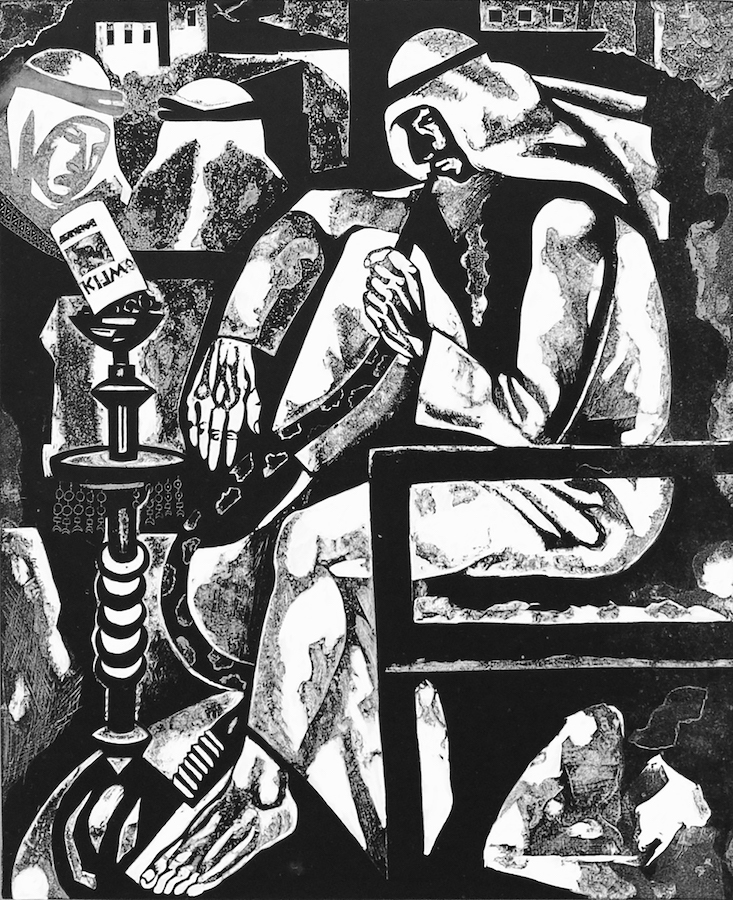
Abdulsattar Al-Musa, Series of Al-Ars fe Al-rafae, 1986. (Supplied)
Al-Mussa remembers how he once painted the walls of his room, which he shared with his brother, with images of trees, stars and people.
“At first, my father was so angry, but then he was quiet,” he says.
After finishing high-school, Al-Mussa was given the chance to join a delegation to study medicine in the United States. He declined. But another opportunity soon came around, this time to visit the Soviet Union. So, in 1975, Al-Mussa left his home country in the most extraordinary of circumstances.
“It was actually forbidden to travel to Russia at the time, because there were no diplomatic ties between Saudi Arabia and the Soviet Union. I went and studied there under another name. No one knew about my plans, not even my family. They only found out after I graduated,” he says. “I returned to Saudi Arabia three to four days prior to my father’s death. He thought that I was studying in France. He was, of course, surprised.”
In Russia, Al-Mussa did actually study medicine for two years. But he quit to follow his heart and went on to study graphic art at the University of Moscow for seven years.
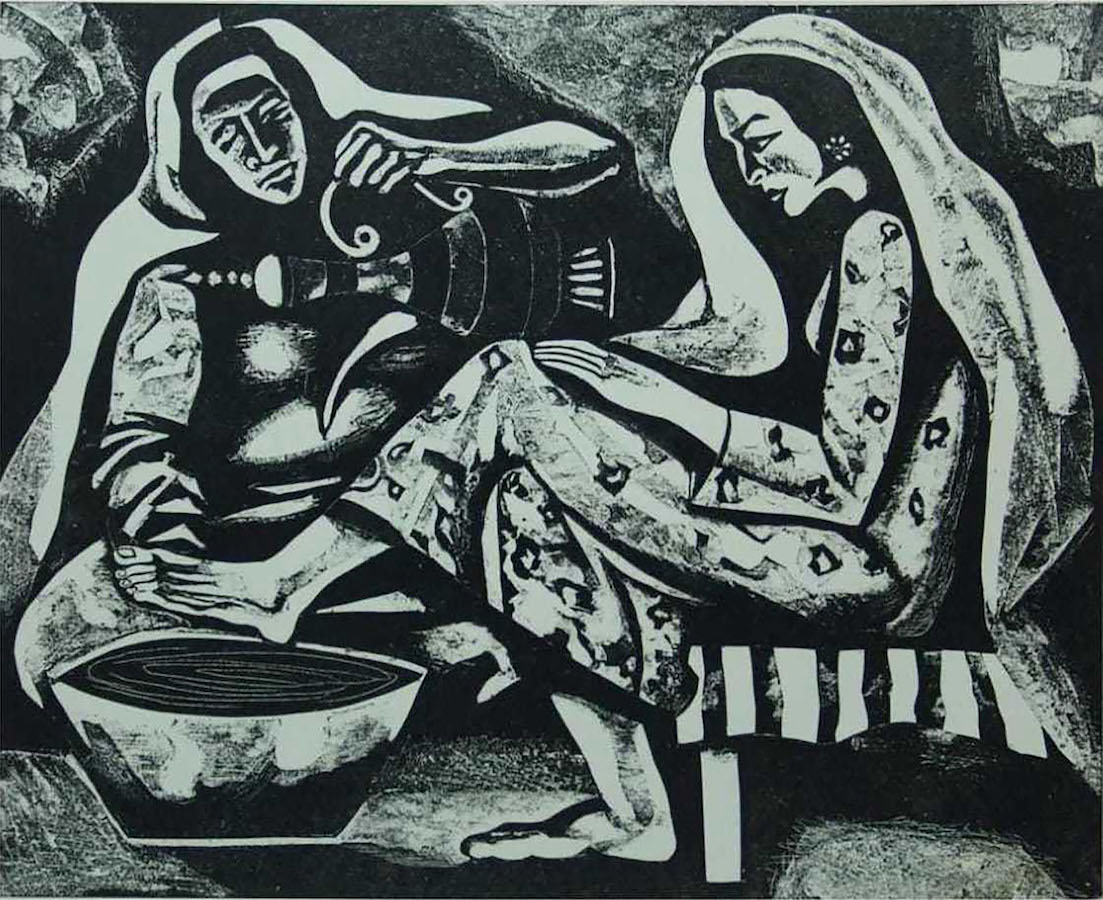
Abdulsattar Al-Musa, Series of Al-Ars fe Al-rafae, 1986. (Supplied)
“I was eating and drinking art. I was making art 24/7,” he says. But, entering the university program was a challenge: he had to step up his game, given the high quality of work that was produced by Russian students. It was a time that left an indelible mark on Al-Mussa’s life, for he also met his future wife — a fellow artist from Siberia — there.
“Honestly, even though I am in Saudi Arabia, I still feel like I am living in Russia,” he says with a chuckle, adding that he and his family are fluent in Russian. “I watch films and the news in Russian. I am really attached to the country.”
In Moscow, he visited its famed museums and hung out with fellow Arab students from Syria, Iraq and Kuwait. In those days, many students from the region received government-supported scholarships to study there.
In the early Eighties, Al-Mussa and his wife moved to the industrial Ukrainian city of Mariupol, where they became members of the local Artists’ Association. Despite being a foreigner, he remembers being warmly welcomed in both Russia and Ukraine. In central Mariupol, Al-Mussa won a contest to create a public mural (which still stands today) that was inspired by space travel.
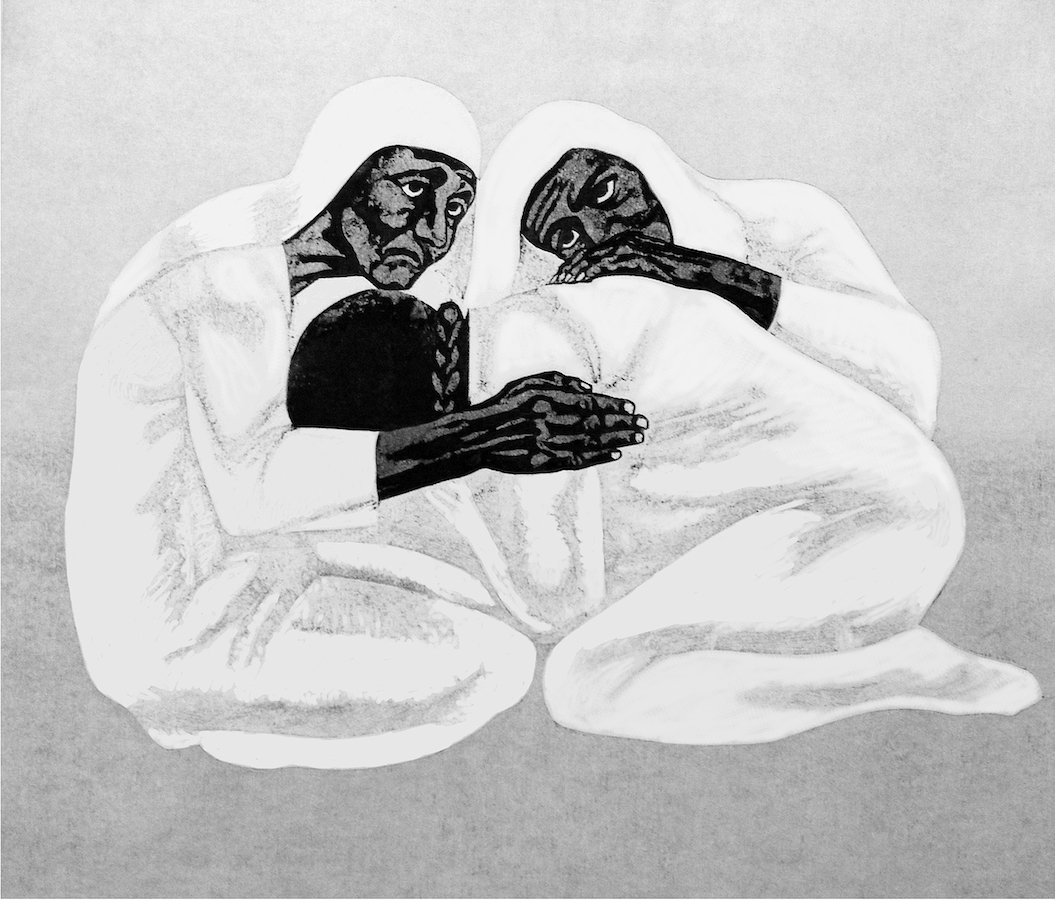
Abdulsattar Al-Musa, Sadness in Sabra, 1986. (Supplied)
It's natural, then, that the ongoing Russian invasion of Ukraine, which began in February 2022, is on his mind. For one thing, it forced Al-Mussa to leave a place he considered home. After the invasion, he says, he was harassed if he spoke Russian and not Ukrainian.
“Now, Mariupol is completely destroyed. Even my house and studio are gone,” he says. “I am, of course, against any war and aggression.”
Much of Al-Mussa’s oeuvre consists of black-and-white figurative carvings on cardboard, a color-absorbing medium that cannot handle a lot of pressure in the press but still generates visually interesting effects. Al-Mussa’s abundant bouquet of technical images are thickly-contoured depictions of the everyday man and woman — from coffee vendors and café customers to fishermen, musicians and dancing figures. They represent a love letter to his Saudi upbringing.
“I was away from home. The only thing that connected me to my country was my memories,” he says. But it also appealed to Abdulsattar’s colleagues, as his images made him stand out. “It’s strange for Russians to see a depiction of a man wearing a ghutrah headdress and smoking a nargile. But it attracted them. It was new to them and it motivated me to continue.”
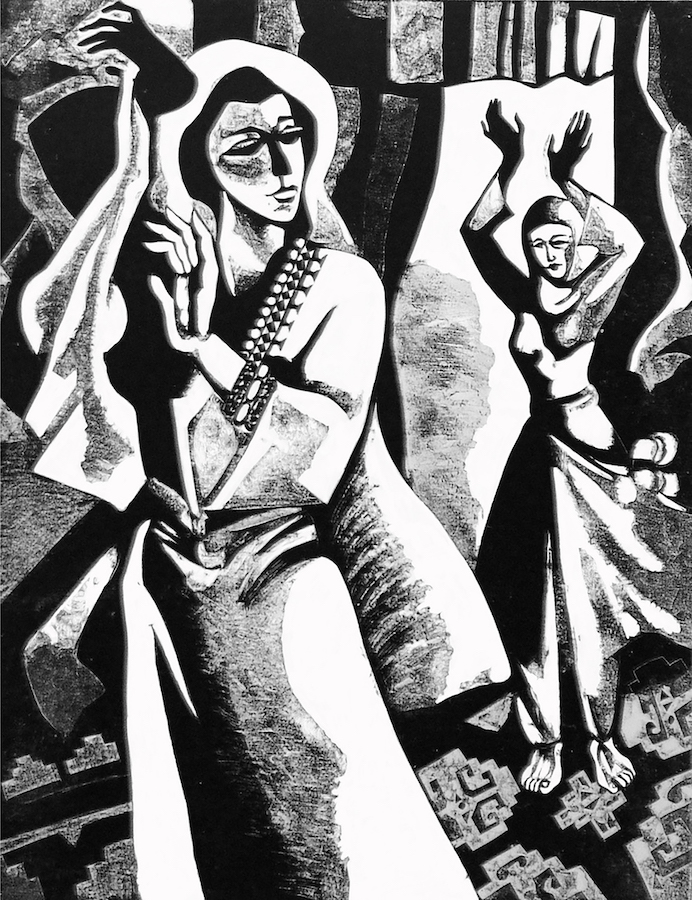
Abdulsattar Al Musa, Series of Al-Ars fe Al-rafae, 1986. (Supplied)
While his art was increasingly appreciated in Russia, Al-Mussa struggled for years to have his work recognized in the region — though he was traveling back and forth between the Gulf and Ukraine regularly from the Nineties onwards.
“Graphics in the Arab world were almost non-existent. No one worked with graphics, etching, linocuts… (it was all) oil painting and sculpting,” he says.
But things have changed. Al-Mussa is now represented by the Jeddah-based Hafez Gallery and is now appreciated as one of the most significant Gulf artists of his generation. At the 2024 edition of Art Dubai early next month, the gallery will stage a solo exhibition of his work from the Eighties.
Even though it is somewhat late in the game, Al-Mussa is happy that his hard work is finally paying off in the region, where several of his works have been acquired by public art institutions and private collectors.
“I don’t make art for pleasure,” he says. “It’s a part of my life, my memories, my being. I wish for these works to be eternal.”


