



SHANGLA: Women in Pakistan’s northwestern Shangla district, where two constituencies had the lowest female voter turnout in the last general elections in 2018, are gearing up to cast their ballots when the South Asian nation goes to the polls on Feb. 8, voters and local activists have said.
In 2017, Pakistan enacted the Elections Act to address women’s disenfranchisement, stipulating that for an election to be valid, at least 10 percent of the votes in any constituency had to be cast by women.
Pakistan’s election regulator canceled election results in Shangla district in 2018 and ordered re-polling after women voter turnout for the National Assembly’s NA-10 and provincial assembly’s PK-23 seats was recorded at 7.8 and 4.0 percent respectively, the lowest in the country, according to the Free and Fair Election Network (FAFEN), an election observer.
Shangla is a conservative area in Pakistan’s northwestern Khyber Pakhtunkhwa (KP) province where women mostly live within the confines of strict tribal norms that govern their rights and movement. Though voting is a constitutional right for all adults in Pakistan, in past elections millions of women had been effectively barred from voting across the country, particularly in conservative constituencies like Shangla where political party officials, local elders, and other powerful figures are widely believed to have colluded in broadcasting messages telling women not to vote and sometimes physically preventing them from going to polling stations, according to Human Rights Watch.
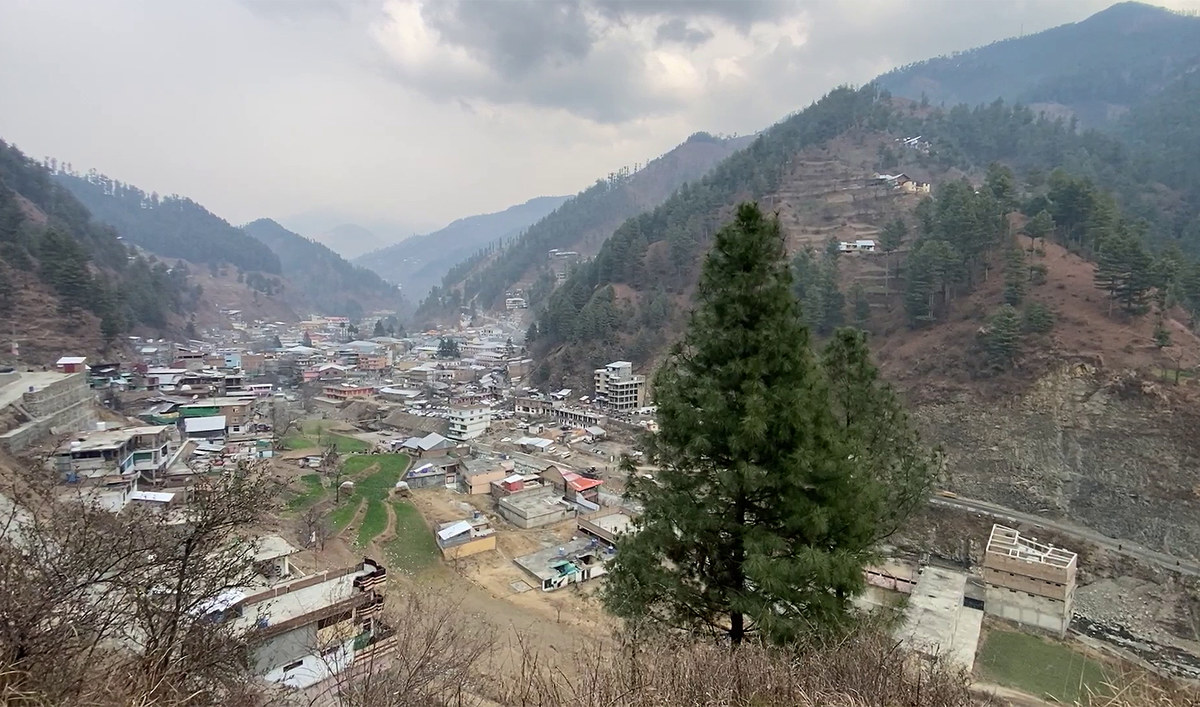
The picture taken on January 28, 2024, shows the aerial view of Pakistan's Shangla district in northwestern Khyber Pakhtunkhwa (KP) province. (AN photo)
Jameela Khan, who heads a local non-profit organization, HEWAD, which works on health, education and awareness initiatives for women in Shangla, said her group had tried to create awareness on the importance of women voting after the last election results were annulled.
“When the [2018] election was canceled, we did a lot of hard work by arranging sessions at the village level,” Khan told Arab News last week. “Due to society [social norms], they [women] can’t go outside [their homes] to cast their votes. Their husbands don’t allow them, their brothers and fathers don’t allow them.”
However, she was hopeful women voter turnout in Shangla this year would be between 18-20 percent.
Shangla has a total population of 757,810 people of whom 465,602 are registered voters, 247,099 men and 218,503 women. After the latest demarcation of constituencies by the ECP, the district has one National Assembly seat and three provincial seats, one more than the previous election.
Leading candidates for Feb. 8 polls for the NA-11 constituency are the Pakistan Muslim League-Nawaz’s (PML-N) Engineer Amir Muqam, Pakistan Tehreek-e-Insaf’s (PTI) Hajji Syed Fareen and Aurangzeb Khan of the Awami National Party (ANP). An independent candidate, Muhammad Alam, is also running.
Gul Bakht, a 61-year-old resident of the district’s Alpuri village, said a lack of awareness regarding women’s rights was the main reason why female voter turnout remained low in the district.
“They are women of the mountains, they are unaware of anything,” Bakht told Arab News. “They believe that casting a vote is just a thing and it ends.”
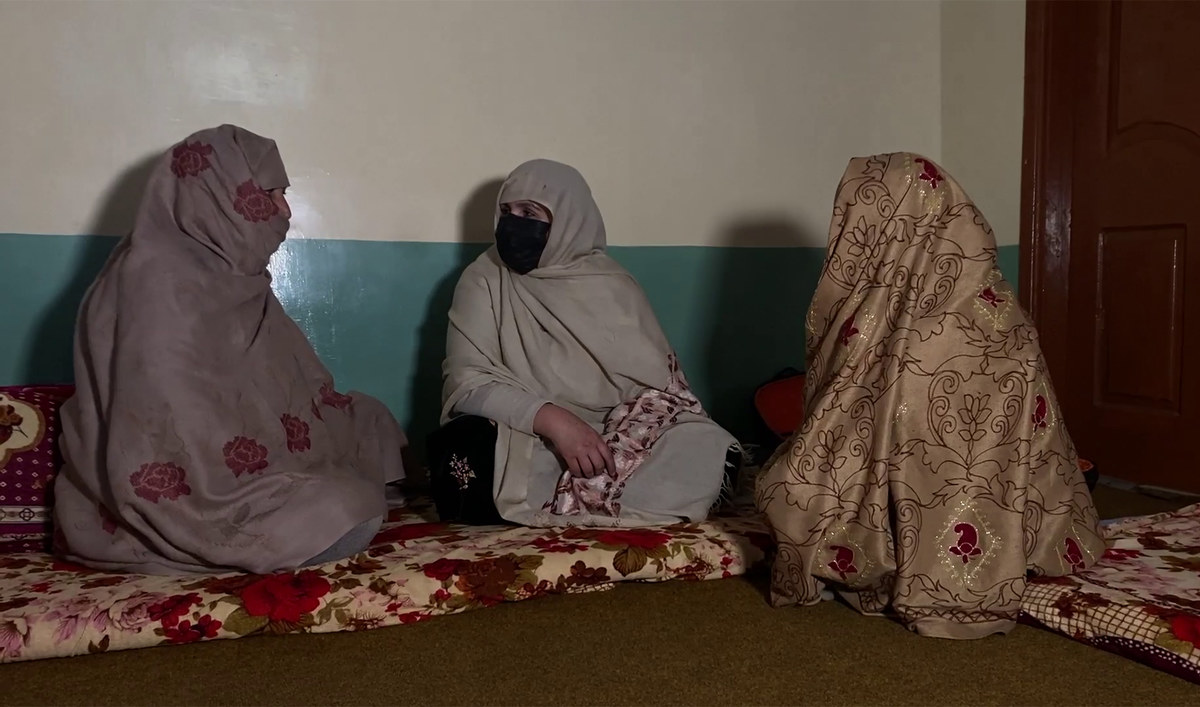
Jameela Khan (center), who heads a local non-profit organization, HEWAD, is sitting with other women from the community in Pakistan's northwestern Shangla district on January 28, 2024. (AN photo)
However, she said she was resolved to vote this year.
“God willing, as the vote comes, we will go [to cast our votes],” Bakht said. “Why won’t we go if it is for our betterment? We will go.”
Ali Bash Khan, a local tribal elder and political activist, said tribal customs restricted women from venturing outside their homes to cast votes and also interfered with the polling exercise in areas like Shangla.
“If I cast a vote, if it is my right to elect a member of my choice, isn’t it the right of my wife and my sister to cast their vote?” Ali Bash Khan asked.
“Women need to motivate themselves that they are not less than men,” HEWAD’s Jameela Khan said. “As males have 50 percent (equal rights), women also have equal rights.”


