



NOUAKCHOTT, Mauritania: Ten Sudanese civilians were killed on Jan. 20 when the bus they were traveling in struck a land mine on a road in Al-Jazirah state, south of Sudan’s capital Khartoum, where fighting between rival military factions has been ongoing since April last year.
The tragedy’s aftermath was marked by a deafening silence from the warring parties, the Sudanese Armed Forces and Rapid Support Forces. However, the incident, reportedly the first of its kind in this war, has revealed a perilous new reality for Sudan.
The UN Mine Action Service is yet to examine the site of the blast, so the type of explosive device used has not been confirmed. Social media users in Sudan, however, say the use of antipersonnel land mines is becoming more common, posing a deadly new threat to civilians.
“Prior to the onset of the ongoing crisis, the UN assisted victims of land mines and other explosive remnants of war,” Mohammad Sediq Rashid, head of the Sudan Mine Action Programme and part of the UN peace operation, told Arab News.
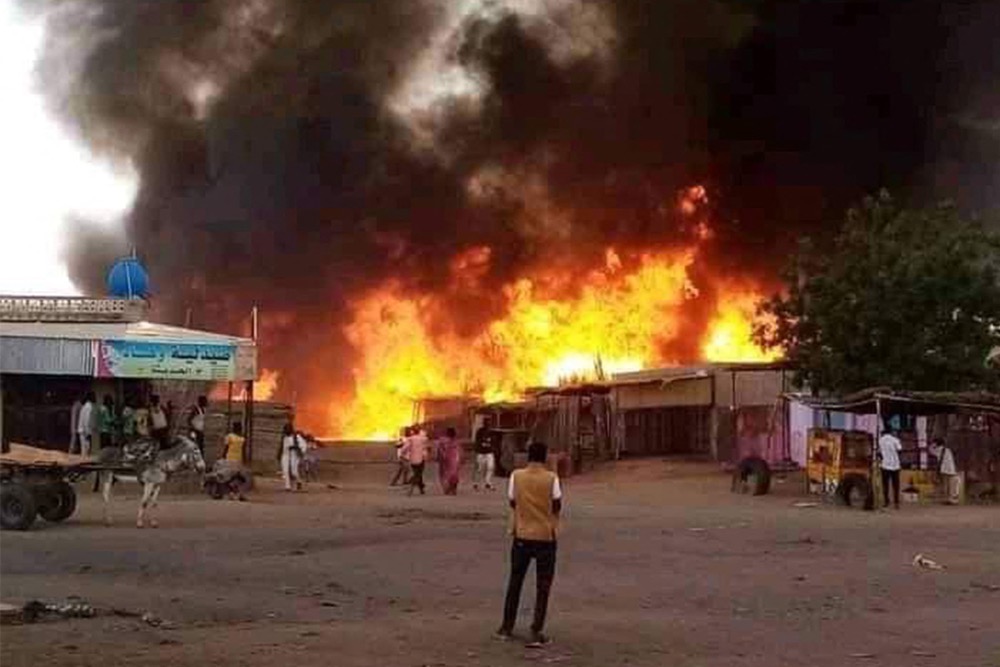
As Sudan absorbs the worrying precedent set by the Jan. 20 bus tragedy, its struggle is all too familiar elsewhere in the region. (AFP/File)
“Since the conflict started, we have been driving awareness-raising campaigns among internally displaced people, refugees, and frontline humanitarian actors by alerting the risks and promoting safe behaviors.”
The vehicle caught in the explosion was reportedly transporting passengers from the east of the state, seized by the RSF in late December, to Shendi, a small town in River Nile state, known for its ancient pyramids.
Since there is no history of land mines being used in this area, allegations are circulating on social media suggesting that the device may have been planted relatively recently by the SAF in a bid to frustrate the RSF advance into the region.
Given the inability to independently verify what took place, it is impossible to apportion blame. However, if more of these devices have been planted across Al-Jazirah and elsewhere, bitter experience suggests this tragedy will not be the last.
Produced for as little as a dollar, these indiscriminate weapons make no distinction between combatants and civilians, remaining primed in the earth for several decades, long after a conflict has ended.
The devastating impact of land mines and other unexploded ordnance extends beyond the immediate toll on lives and limbs. They can impede communities’ access to valuable land, hindering agricultural activities and the construction of essential facilities such as hospitals and schools.
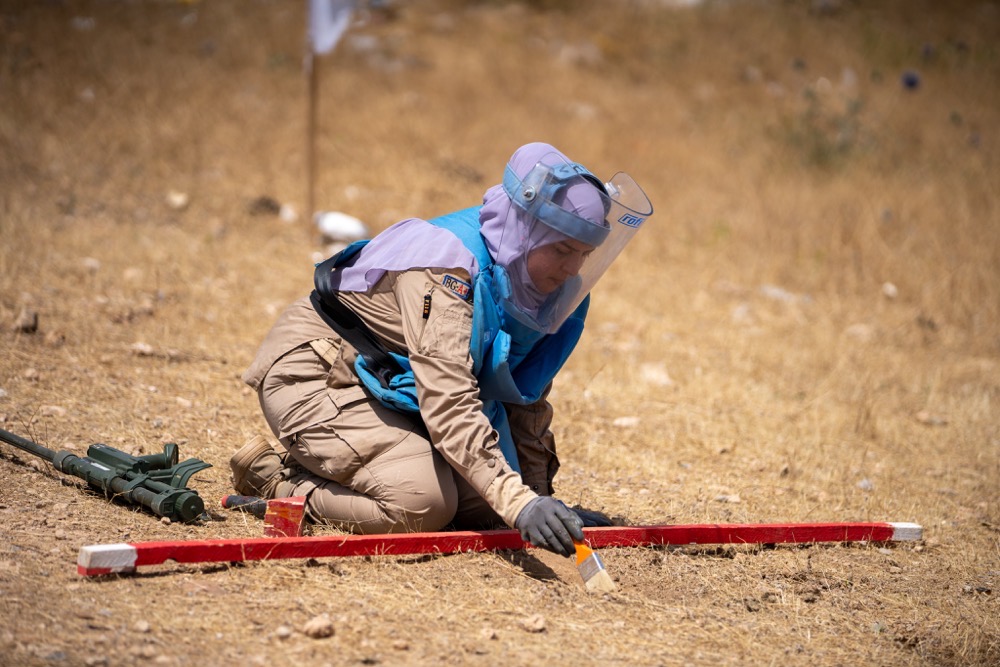
Produced for as little as a dollar, these indiscriminate weapons make no distinction between combatants and civilians. (UNMAS)
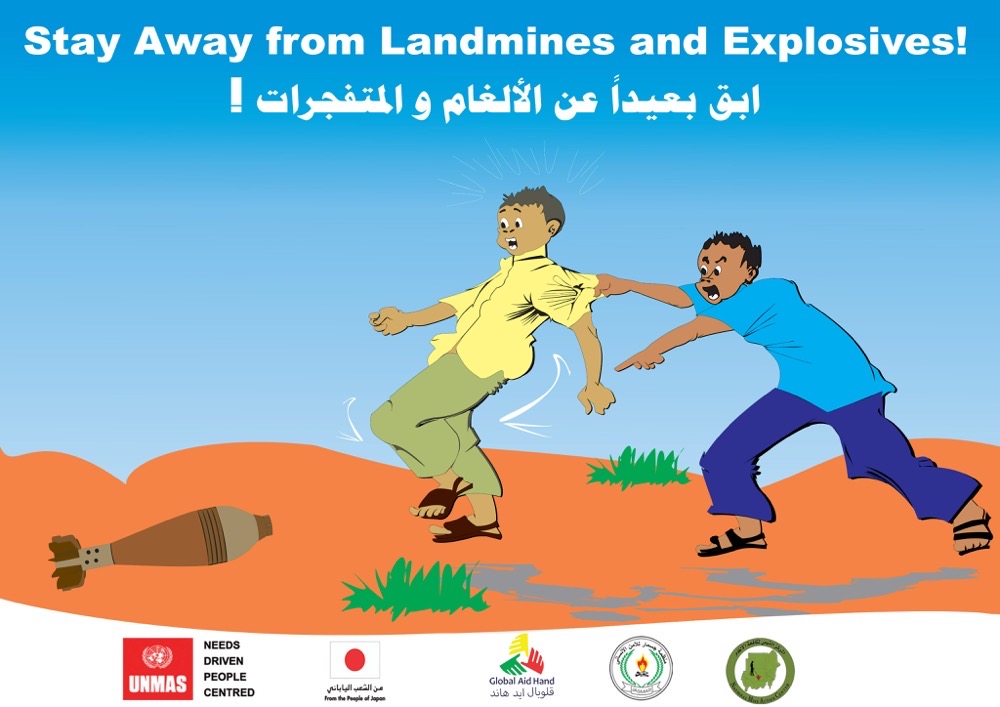
Rashid says education is a critical part of the land mine response. “Children, in particular, are vulnerable, drawn to the curious appearance of remnants without fully grasping the danger,” he said.
And the impact of antipersonnel land mines exploding can be long lasting. “The consequences encompass not only physical injuries but also psychological trauma, economic deprivation, and social exclusion,” he added.
In the global context, approximately 61 countries and regions are currently grappling with the persistent threat of land mine contamination, exposing thousands of individuals to the daily risk of life-changing injuries and death.
Among those nations, Sudan stands out as one of the most severely impacted by antipersonnel land mines and unexploded ordnance, according to UN classification.
Unlike China, India, Pakistan, Russia and the US, Sudan has ratified the 1997 Ottawa Treaty, commonly referred to as the Mine Ban Treaty. However, successive Sudanese governments have failed to meet their obligations under the convention.
Antipersonnel land mines have been used by combatants in Sudan across multiple conflicts. During these periods of protracted strife, all parties involved have deployed these devices, leaving behind a legacy of contamination.
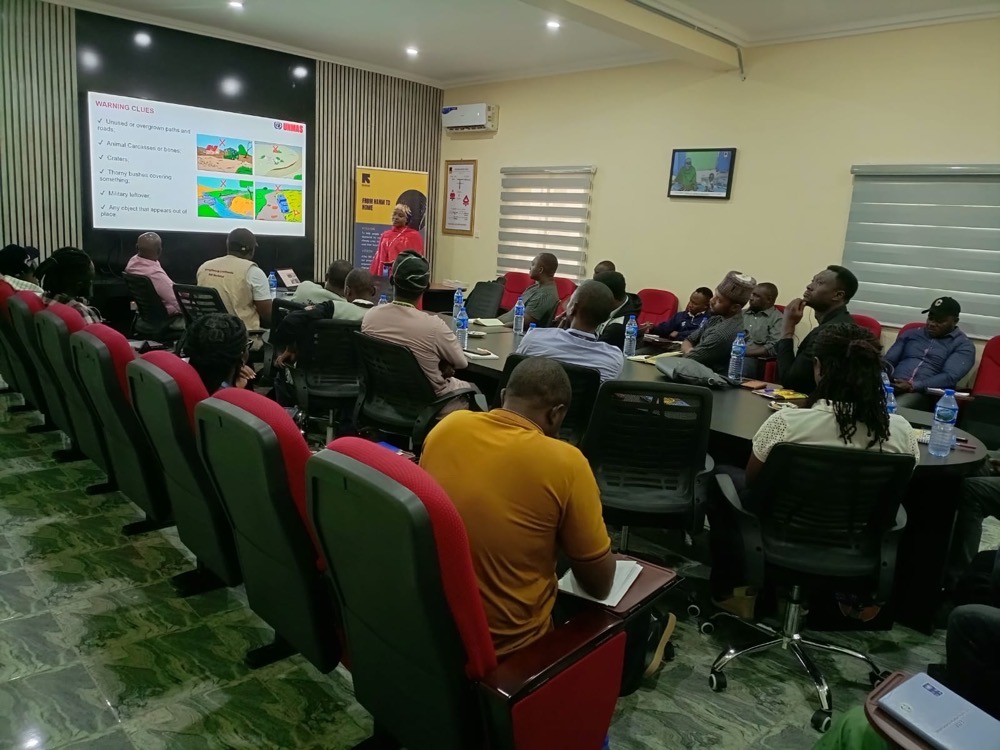
Sudan stands out as one of the most severely impacted by antipersonnel land mines and unexploded ordnance, according to UN classification. (UNMAS)
Before the current crisis, marked by more than 13,000 reported fatalities, Sudan had begun the arduous task of clearing land mines. But with a contaminated area encompassing more than 172 million square meters of land, it took more than two decades to clear just 80 percent of them.
Now this latest bout of violence has introduced further contamination, extending the demining timeline, with experts estimating that the time needed to eliminate all explosive ordnance in Sudan could take generations.
The complexity deepens when mines are planted in urban areas. Towns and cities, which will be vital for the post-conflict recovery, will face a daunting task of clearing explosive remnants after the war ends.
Given that much of Sudan’s demining focus has been on rural areas, additional training will be needed to handle urban clearance operations.
Similarly, in South Sudan, which declared independence from Sudan in 2011, unexploded ordnance continues to maim and kill despite commendable efforts to remove it.
“Our communities have learned to live with the land mines and have learned how to avoid them; yet land mines still continue to damage human lives, animals and vegetation,” Suzanne Jambo, a South Sudanese political analyst, told Arab News.
Moreover, unexploded ordnance complicates the already challenging delivery of humanitarian aid and commercial goods.

Sudan plunged into chaos after monthslong tensions between the military, led by Gen. Abdel Fattah Al-Burhan, left, and the Rapid Support Forces, commanded by Mohamed Hamdan Dagalo, exploded into open fighting last April. (AFP/File)
Mukesh Kapila, the former UN representative in Sudan, who previously spearheaded an initiative to demine major roads leading to South Sudan, emphasized “the critical nature of such programs for the secure repatriation of refugees from neighboring countries.”
Given that Sudan has seen the displacement of some 1.4 million people across its borders since mid-April, many of them seeking safety in Chad, South Sudan, and Egypt, reinstating such demining efforts has become imperative.
“Back then, we faced the challenge of reinforcing UN aid vehicles with ballistic blankets before dispatching food convoys,” Kapila told Arab News. “In the Nuba Mountains, the land mines were basic and manufactured within Sudan using Iranian technology.”
FASTFACTS
• 13,000 Sudan death toll estimated by the ACLED project.
• 10 months of fighting as of January between SAF and RSF.
• 10.7m people forced from their homes since April 2023 (IOM).
The international community, through organizations like UNMAS, has historically played a role in assisting victims of explosions of land mines and other remnants of war.
Rehabilitation efforts encompass medical support, vocational training, and community sensitization.
However, the ongoing conflict in Sudan has added layers of complexity to the situation. Hospitals and essential service providers, already strained by violence, face challenges in offering assistance.
The vulnerability of land mine victims has intensified as humanitarian access becomes increasingly challenging.
The picture is similar in other parts of the Arab world where conflict has left the land saturated with explosive remnants.
Maj. Gen. A.K. Bardalai, a former deputy head of mission and deputy force commander of the UN Interim Force in Lebanon, said one of the main challenges is accurately identifying the affected areas and the quantity of mines.
“In the absence of records, clearing agencies must proceed cautiously, making the process time-consuming and laborious,” he told Arab News. “Determining precise timelines for complete demining in Africa is also challenging.”
Drawing on his experience in Lebanon, where cluster munitions were left over from fighting with Israel, Bardalai said demining efforts can take decades, even when combatants supply clearance teams with detailed records of where antipersonnel land mines were planted and ordnance fell.
When these records are not provided or not made at all, then clearance operations can take even longer.
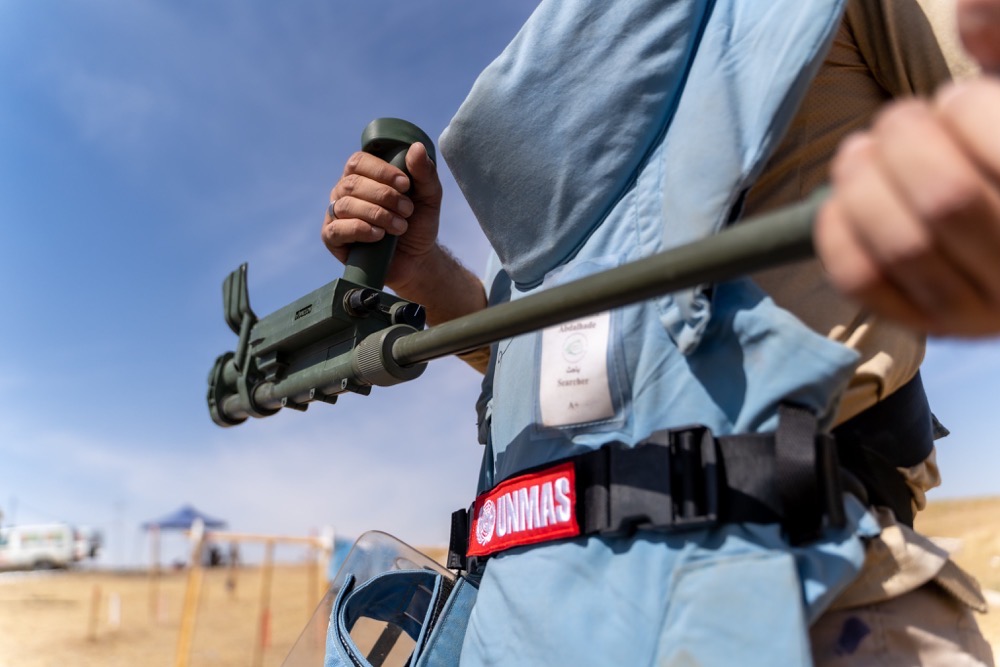
The UN Mine Action Service is yet to examine the site of the Jan. 20 blast in Al-Jazirah state. (UNMAS)
As Sudan absorbs the worrying precedent set by the Jan. 20 bus tragedy, its struggle is all too familiar elsewhere in the region. The parallel experiences of Lebanon, Iraq, Afghanistan, and Gaza underscore the universal challenges posed by land mines.
The Mines Advisory Group, a British nongovernmental organization, says Gaza faces years of clearance work due to the density of unexploded ordnance. The West Bank, too, has suffered more than 60 years of land mine contamination.
Unless a lasting ceasefire can be reached between the SAF and RSF, Sudan will no doubt see further contamination, setting back its recovery by decades and putting future generations at risk.


