ISLAMABAD: Prime Minister Anwaar-ul-Haq Kakar has said Pakistan’s retaliatory strikes inside Iran after Tehran struck Pakistan earlier this month was a “message to the whole region,” particularly archrival India, of the consequences of violating the South Asian nation’s sovereignty.
Last week Islamabad said it had hit bases of the anti-Pakistan, separatist Balochistan Liberation Front and Balochistan Liberation Army, after Tehran said its missiles struck bases of militants from the ‘Iranian terrorist group,’ Jaish al Adl (JAA).
The tit-for-tat strikes by the two countries were the highest-profile cross-border intrusions in recent years and raised alarm about wider instability in the region since the war between Israel and Hamas erupted on Oct. 7.
Iran and Pakistan share a 900 km, largely lawless border, and have long suspected each other of supporting, or at least behaving leniently, toward some militant groups operating on the other side of the border. Both deny the charges.
On Monday, Pakistan and Iran announced in a joint statement that ambassadors of both countries had been asked to return to their posts by Jan. 26 while the Iranian foreign minister would visit Pakistan on Jan. 29.
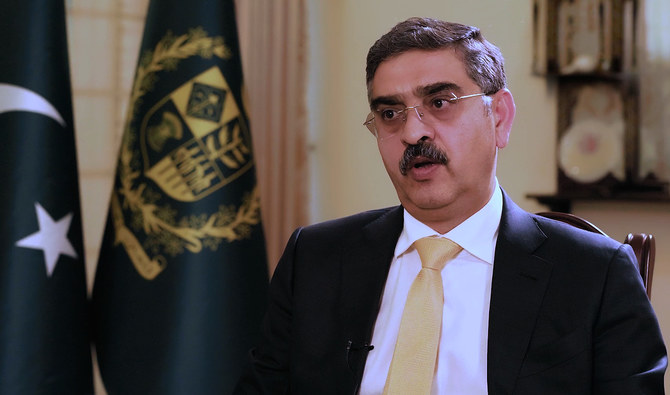
“There is desire on both sides for de-escalation but before that desire, what Pakistan demonstrated, the way we responded, that was a message to the whole of the region, it’s not just focused on Iran,” Kakar said in an interview to a local TV channel aired on Thursday.
“You have friends and foes in the region. If anyone violates your sovereignty, the intent of the state has been translated [with our response] and that was very important.”
When asked who in particular the message had been for, Kakar replied, “Of course India.”
Giving credit to Army Chief Gen. Asim Munir for taking the onus of the decision to carry out the attacks, he said not responding with airstrikes “was not an option” though it had been a “difficult decision” given Pakistan’s “brotherly” ties with Iran.
News of Iran’s airstrikes inside Pakistan came barely hours after Kakar met the Iranian foreign minister on the sidelines of the World Economic Forum in Davos, Switzerland.
In a separate interview, Kakar said teams from the two countries had met as per “diplomatic norms.”
“We had a very normal conversation on Pakistan-Iran bilateral relations and after a few hours we found out all this had happened,” Kakar told another TV channel.
“I was not just surprised, I was shocked and angered also. Like any Pakistani, I was angry and sad. If this had happened from India, which is an archenemy, you could always have expected this from them, but here, we still think they [Iran] are a brotherly Islamic country. So there was a great element of surprise that they would violate our sovereignty like this.”
But Pakistan’s “firm and swift response” had sent out a clear message, the PM added:
“That if anyone does this [attacks Pakistan] or thinks of doing this, then the answer for it would be very firm. It can’t happen that Pakistan will digest the violation of the sovereignty of its territory, no matter who does it, friend or foe.”


![]()

Pakistan’s response to Iranian airstrikes ‘message’ to whole region, India — PM
Short Url
https://arab.news/b6nhb
Pakistan’s response to Iranian airstrikes ‘message’ to whole region, India — PM
- Islamabad and Tehran are moving to mend ties after exchanging military strikes earlier this month
- Carrying out retaliatory attacks was a “difficult decision” given brotherly ties with Iran, PM says
Latest updates


Recommended


© 2026 SAUDI RESEARCH & PUBLISHING COMPANY, All Rights Reserved And subject to Terms of Use Agreement.