

UN: 40% drop in Suez traffic following Houthi attacks

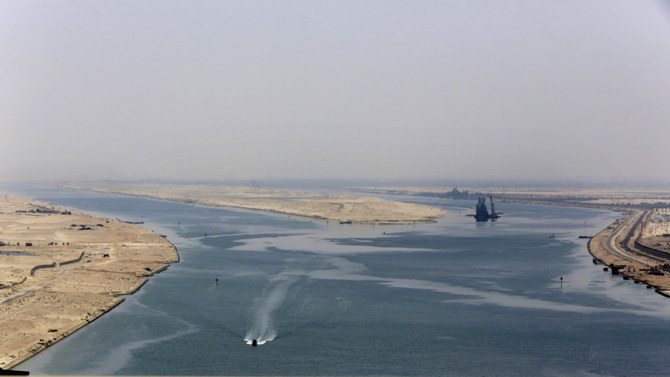
An army zodiac secures the entrance of the new section of the Suez Canal in Ismailia, Egypt, on Aug. 6, 2015. (AP)
Short Url
Updated 26 January 2024
Follow

UN: 40% drop in Suez traffic following Houthi attacks

UNITED NATIONS: The volume of commercial traffic passing through the Suez Canal has fallen more than 40 percent in the last two months after attacks by Yemen’s Houthi rebels, according to the United Nations, raising concerns for global trade.

The Iran-backed Houthis say they are targeting what they consider Israeli-linked commercial and military shipping in the region in solidarity with Palestinians in Gaza, pushing some cargo carriers to take longer and more expensive routes to avoid attack.

“We are very concerned that the attacks on Red Sea shipping are adding tensions to global trade, exacerbating (existing) trade disruptions due to geopolitics and climate change,” UN Conference on Trade and Development (UNCTAD) head Jan Hoffman told reporters Thursday.
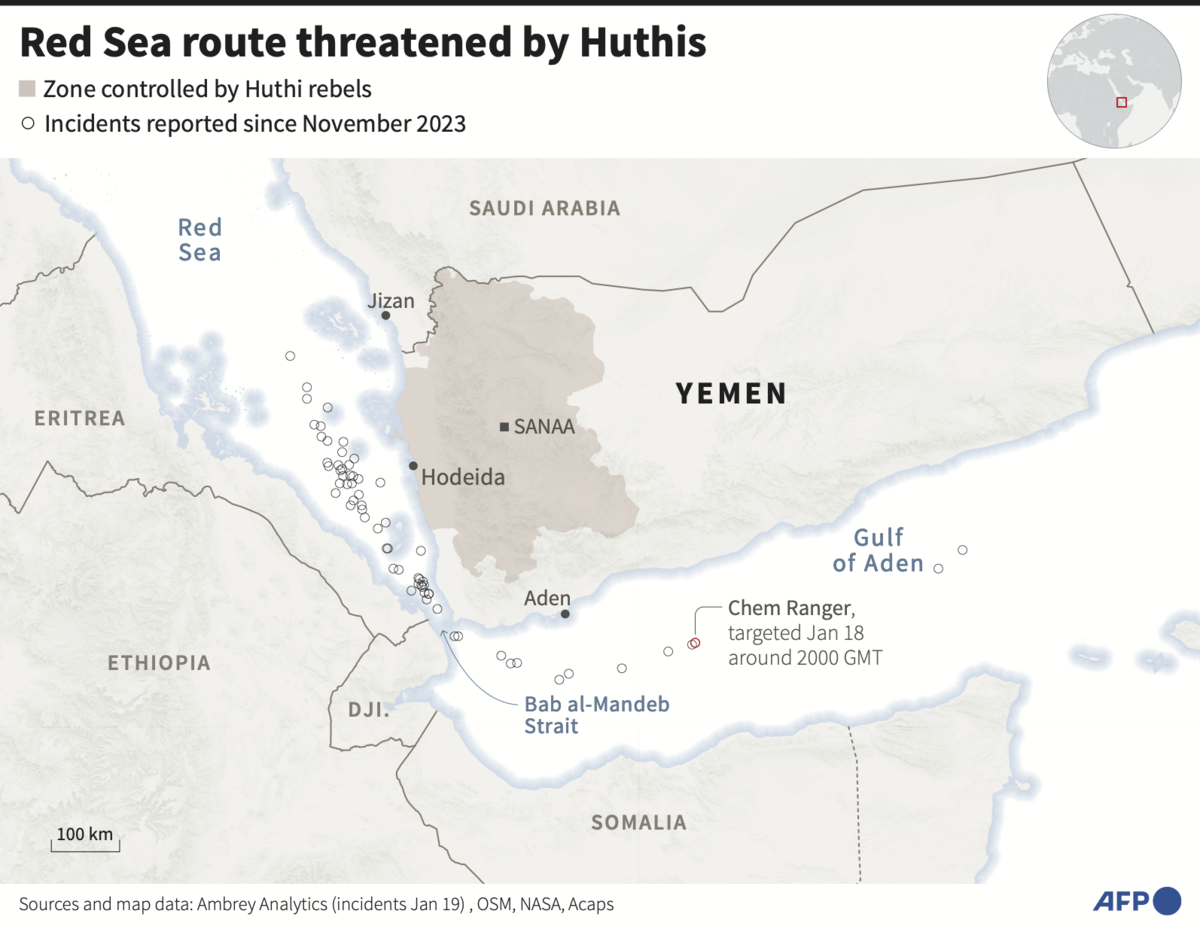
 

According to the UNCTAD, ships diverting from the Red Sea — sailing instead around South Africa’s Cape of Good Hope — has led to a 42 percent drop in transit through the Suez Canal in the last two months.

The Suez Canal, in Egypt, connects the Mediterranean Sea with the Red Sea. More than 80 percent of the volume of international goods trade is done via sea, Hoffman said.

“Maritime transport is really the lifeline of global trade,” he said.

The number of weekly container ship transits through the Suez has fallen by 67 percent year-on-year, according to the UNCTAD, as more than 20 percent of the world’s container trade goes through the Suez Canal.

“Given that it’s above all the larger container ships that divert from the Suez Canal, the decline in container carrying capacity is even bigger,” Hoffman said.

Tanker traffic has dropped 18 percent, the transit of bulk cargo ships carrying grain and coal is down six percent and gas transport is at a standstill.

Overall, between 12 and 15 percent of world trade — 20,000 ships per year — passes through the Red Sea, providing a link between Europe and Asia.

The situation is made even more dire as other global maritime trade routes also face disruption, with transit through the Black Sea severely restricted since Russia’s invasion of Ukraine two years ago, sending global food prices soaring.

A drought in Central America has led to a drop in water levels in the Panama Canal, significantly reducing the amount of traffic able to cross the essential route.

“Prolonged disruptions in major trade routes would disrupt global supply chains, leading to delayed deliveries of goods, increased costs and potential inflation,” the UNCTAD warned.


Hundreds mourn in Syria’s Homs after deadly mosque bombing

Updated 27 December 2025
Follow

Hundreds mourn in Syria’s Homs after deadly mosque bombing

  • Officials have said the preliminary investigations indicate explosive devices were planted inside the mosque but have not yet publicly identified a suspect

HOMS: Hundreds of mourners gathered Saturday despite rain and cold outside of a mosque in the Syrian city of Homs where a bombing the day before killed eight people and wounded 18.
The crowd gathered next to the Imam Ali ibn Abi Talib Mosque in the Wadi Al-Dhahab neighborhood, where the population is predominantly from the Alawite minority, before driving in convoys to bury the victims.
Officials have said the preliminary investigations indicate explosive devices were planted inside the mosque but have not yet publicly identified a suspect.
A little-known group calling itself Saraya Ansar Al-Sunna claimed responsibility for the attack in a statement posted on its Telegram channel, in which it indicated that the attack intended to target members of the Alawite sect, an offshoot of Shia Islam whom hard-line Islamists consider to be apostates.
The same group had previously claimed a suicide attack in June in which a gunman opened fire and then detonated an explosive vest inside a Greek Orthodox church in Dweil’a, on the outskirts of Damascus, killing 25 people as worshippers prayed on a Sunday.
A neighbor of the mosque, who asked to be identified only by the honorific Abu Ahmad (“father of Ahmad“) out of security concerns, said he was at home when he heard the sound of a “very very strong explosion.”
He and other neighbors went to the mosque and saw terrified people running out of it, he said. They entered and began trying to help the wounded, amid blood and scattered body parts on the floor.
While the neighborhood is primarily Alawite, he said the mosque had always been open to members of all sects to pray.
“It’s the house of God,” he said. “The mosque’s door is open to everyone. No one ever asked questions. Whoever wants to enter can enter.”
Mourners were unable to enter the mosque to pray Saturday because the crime scene remained cordoned off, so they prayed outside.
Some then marched through the streets chanting “Ya Ali,” in reference to the Prophet Muhammad’s cousin and son-in-law whom Shiite Muslims consider to be his rightful successor.