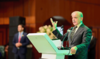
AL-MUKALLA: Abdul Malik Al-Houthi, the leader of Yemen’s Houthi militia, said on Thursday that they had launched over 200 explosives-rigged drones and 50 ballistic missiles against Israel and ships since the start of their Red Sea strikes, promising to continue despite worldwide anger.
Al-Houthi said that strikes by US and UK militaries on areas under their control in Yemen would not deter them from continuing their Red Sea operations, claiming that their missile and drone attacks did not influence international maritime trade in the Red Sea since 4,874 ships had passed through the key commerce corridor.
“Our country will continue its operations until all Gaza inhabitants have access to food and medicine, and the Israeli atrocity ceases … The escalation by the United States and the United Kingdom will be unproductive and have no bearing on our decisions or positions,” Al-Houthi said in a broadcast speech.
He has once again urged his followers to demonstrate in large numbers on Friday in the streets of Sanaa and other locations under his control to condemn US and UK attacks and to show solidarity with Gaza residents.
The Houthi leader’s speech came as neither the UK Maritime Trade Operations nor the US Central Command reported any new incidents in the Red Sea, Bab Al-Mandab, or the Gulf of Aden on Thursday, and neither did the Yemeni militia claim credit for any ship assaults.
Since November, the Houthis have seized a commercial ship and launched over 25 drone and missile attacks on commercial and naval ships as they enforce an embargo on all Israel-bound vessels.
The US and UK have replied to the Houthi Red Sea raids by unleashing dozens of strikes on military targets in Houthi-controlled territories. Houthis say they want Israel to end its siege of Gaza.
On Wednesday night, Houthi military spokesperson Yahiya Sarae said that they fired missiles at US Navy destroyers escorting two US commercial ships in the Gulf of Aden and Bab Al-Mandab, with one of the missiles directly hitting a US Navy ship and forcing the two commercial ships to turn back and avoid entering the Red Sea.
The US Central Command said that the Houthis fired three ballistic missiles at the US-flagged, owned, and operated container ship M/V Maersk Detroit in the Gulf of Aden on Wednesday afternoon, with two intercepted and one landing in the water.
Meanwhile, family members of Abdul Wahab Qatran, a famous Yemeni judge kidnapped by the Houthis earlier this month in Sanaa, have renewed their request to the Houthis to free him or allow them to phone or see him.
Mohammed, Qatran’s son, appeared in a new video on Wednesday saying that the Houthis continue to hold his father while also denying numerous requests to see him.
“They did not allow us to visit him or give him his clothes,” he said.
On Jan. 2, the Houthis kidnapped Qatran, a legal activist who had publicly criticized the Houthis’ draconian government as well as their inability to pay public workers, after besieging his home in Sanaa and roughing up and temporarily arresting his family.
The Houthis have not issued an official statement on the kidnapping, but his family says the militia has accused him of using and manufacturing alcohol.