BEIRUT: Hostilities on the southern Lebanese front decreased on Thursday as the conflict between Israel and Hezbollah entered its 110th day.
The displacement of people from the border area played a significant role in reducing civilian casualties, especially after Israeli shelling began targeting homes in Lebanese villages.
At noon, an Israeli strike on the town of Bazouriye — 7 km east of the city of Tyre — targeted a house, injuring two people, one of them a woman.
An Israeli warplane, meanwhile, struck the home of Radwan Ataya in the town of Tayr Harfa during a funeral procession for the mother of a dead Hezbollah member. No one was inside the house, which has now been targeted four times since the start of hostilities.
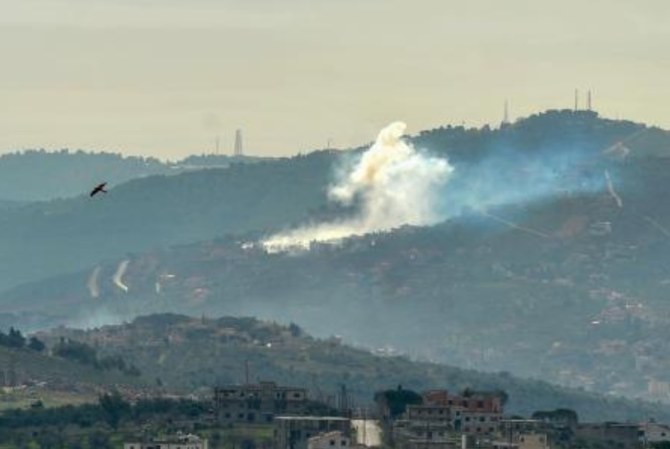
The Israel Defense Forces violated the rules of engagement as a strike targeted Birket Jabbour in the Jezzine area, which is a highland located north of the Litani River, above the village of Kfar Houneh, outside UNIFIL’s area of operations and not subject to the provisions of UN Security Council Resolution 1701.
Israeli Defense Minister Yoav Gallant had previously spoken in September of “the presence of a Hezbollah military airport in the Birket Jabbour area.”
The Israeli Public Broadcasting Corporation later confirmed that the IDF attacked Hezbollah positions, including a military landing strip 20 km north of Metula.
Northern Israeli settlements woke up to media stories, including in Yedioth Ahronoth newspaper, reporting “infiltration of three individuals from Lebanon,” prompting IDF personnel to rush to the area.
The IDF asked the residents of the Hanita settlement — on the border area with Lebanon — to barricade themselves in their homes.
Roads were closed and checkpoints set up in several border areas.
The Israeli military also declared a state of alert in nine settlements near the border with Lebanon.
Israeli Channel 13 said military helicopters carried out search operations over the Shlomi settlement while soldiers combed the border area.
In a brief statement issued later, IDF spokesperson Avichay Adraee denied any infiltration had occurred.
The IDF claimed that two drones crossed from Lebanese territory into Israel and landed in Kfar Blum with no casualties reported.
Hezbollah announced that it carried out an aerial attack with two dive bombers against an air defense system site and Iron Dome platforms near the Kfar Blum settlement, causing direct hits.
The outskirts of the Tayr Harfa, Alma Al-Shaab, and Dhahira villages were subject to concentrated artillery bombardment from early morning, following cautious calm in the western and central sectors the previous night.
At the same time, the IDF carried out a sweep operation in the surroundings of the Israeli Al-Hadeb military outpost using medium and heavy machine guns.
It also launched flares over the surrounding area and adjacent forests to protect it.
Hezbollah announced targeting Al-Radar outpost in the occupied Shebaa Farms area with missiles, causing direct hits.
Israeli reconnaissance planes continued to fly over southern Lebanon amid foggy and rainy weather.
Lebanon will likely experience a polar storm from the Black Sea on Friday, and snow is expected to fall in some areas.


![]()

Israel targets Hezbollah’s ‘landing strip north of Litani River’
Short Url
https://arab.news/4msws
Israel targets Hezbollah’s ‘landing strip north of Litani River’
- Two civilians wounded in Israeli raid on house in southern Lebanon
- The Israel Defense Forces violated the rules of engagement as a strike targeted Birket Jabbour in the Jezzine area


Latest updates


© 2026 SAUDI RESEARCH & PUBLISHING COMPANY, All Rights Reserved And subject to Terms of Use Agreement.