Biden urges US Congress to approve F-16 sale to Turkey ‘without delay’

A Turkish Air Force F-16 fighter jet lands at Incirlik air base in Adana, Turkey. (REUTERS/File Photo)
Short Url
Updated 25 January 2024
Follow

Biden urges US Congress to approve F-16 sale to Turkey ‘without delay’

  • Turkiye in October 2021 asked to buy $20 billion of F-16 jets and nearly 80 modernization kits for its existing warplanes
  • Biden's push comes after Turkiye’s parliament ratified Sweden’s NATO membership bid on Tuesday after 20 months of delay

WASHINGTON: US President Joe Biden sent a letter to leaders of key Capitol Hill committees on Wednesday informing them of his intention to begin the formal notification process for the sale of Lockheed Martin F-16 aircraft to Turkiye once Ankara completes Sweden’s NATO accession process.

In the letter to the top Republican and Democratic members of the Senate Foreign Relations and House of Representatives Foreign Affairs committees, Biden urged Congress to approve the sale “without delay,” a US official said.
Earlier on Wednesday the White House sent a letter to members of Congress urging approval of the $20 billion sale of F-16 aircraft and modernization kits to Turkiye, four sources familiar with the letter told Reuters.
Turkiye’s parliament ratified Sweden’s NATO membership bid on Tuesday, clearing a major hurdle to expanding the Western military alliance after 20 months of delay. The sources said the letter was sent on Wednesday, and that the Biden administration has not yet formally notified Congress of plans for the sale.
Turkiye’s delay in approving the ratification had been a major obstacle to winning congressional approval for the fighter jet deal. Lawmakers had said they were awaiting Turkiye’s approval of Sweden’s NATO membership- including President Tayyip Erdogan’s signature — before deciding whether to approve the sale.
The White House did not respond to a request for comment.
The US State Department also urged Ankara on Wednesday to formally finalize Sweden’s NATO ratification. To do that, Erdogan needs to sign the legislation, which then would be published in Turkiye’s Official Gazette. The instrument of accession for Sweden also needs to be sent to Washington.
The State Department declined to provide an exact timeline on the formal notification process for the F-16 sale.
“President Biden, Secretary Blinken have been very clear of our support for modernizing Turkiye’s F-16 fleet, which we view as a key investment in NATO interoperability. But beyond that ... I’m just not going to confirm or get ahead of proposed defense sales or transfers until they are formally notified to Congress,” State Department Deputy Spokesperson Vedant Patel told a news briefing, referring to Secretary of State Antony Blinken.
Turkiye in October 2021 asked to purchase $20 billion of Lockheed Martin F-16 fighters and nearly 80 modernization kits for its existing warplanes.
Leaders of the US Senate Foreign Relations and House Foreign Affairs committees review every major foreign arms sale. They regularly ask questions or raise concerns over human rights or diplomatic issues that can delay or stop such deals.
Senator Chris Van Hollen, a Democrat who sits on the Senate Foreign Relations Committee, cast some doubt on a speedy approval, saying lawmakers need assurances from the Biden administration and Turkiye first.
“For much of the time President Erdogan has been in office, Turkiye has been an unfaithful NATO ally — so this is welcome news,” Van Hollen said.
“That said, I still have questions about Erdogan’s ongoing attacks against our Syrian Kurdish allies, his aggressive actions in the Eastern Mediterranean, and the role he played in supporting Azerbaijan’s military assaults against Nagorno-Karabakh,” Van Hollen told Reuters.
Sweden and Finland applied to enter NATO after Russia invaded Ukraine in February 2022. While Finnish membership was sealed last year, Sweden’s bid had been held up by Turkiye and Hungary.
All NATO members need to approve applications from countries seeking to join the alliance. When Sweden and Finland asked to join, Turkiye raised objections over what it said was the two countries’ protection of groups it deems terrorists.
Bangladesh halts controversial relocation of Rohingya refugees to remote island

Updated 29 December 2025
Follow

Bangladesh halts controversial relocation of Rohingya refugees to remote island

  • Administration of ousted PM Sheikh Hasina spent about $350m on the project
  • Rohingya refuse to move to island and 10,000 have fled, top refugee official says

DHAKA: When Bangladesh launched a multi-million-dollar project to relocate Rohingya refugees to a remote island, it promised a better life. Five years on, the controversial plan has stalled, as authorities find it is unsustainable and refugees flee back to overcrowded mainland camps.

The Bhasan Char island emerged naturally from river sediments some 20 years ago. It lies in the Bay of Bengal, over 60 km from Bangladesh’s mainland.

Never inhabited, the 40 sq. km area was developed to accommodate 100,000 Rohingya refugees from the cramped camps of the coastal Cox’s Bazar district.

Relocation to the island started in early December 2020, despite protests from the UN and humanitarian organizations, which warned that it was vulnerable to cyclones and flooding, and that its isolation restricted access to emergency services.

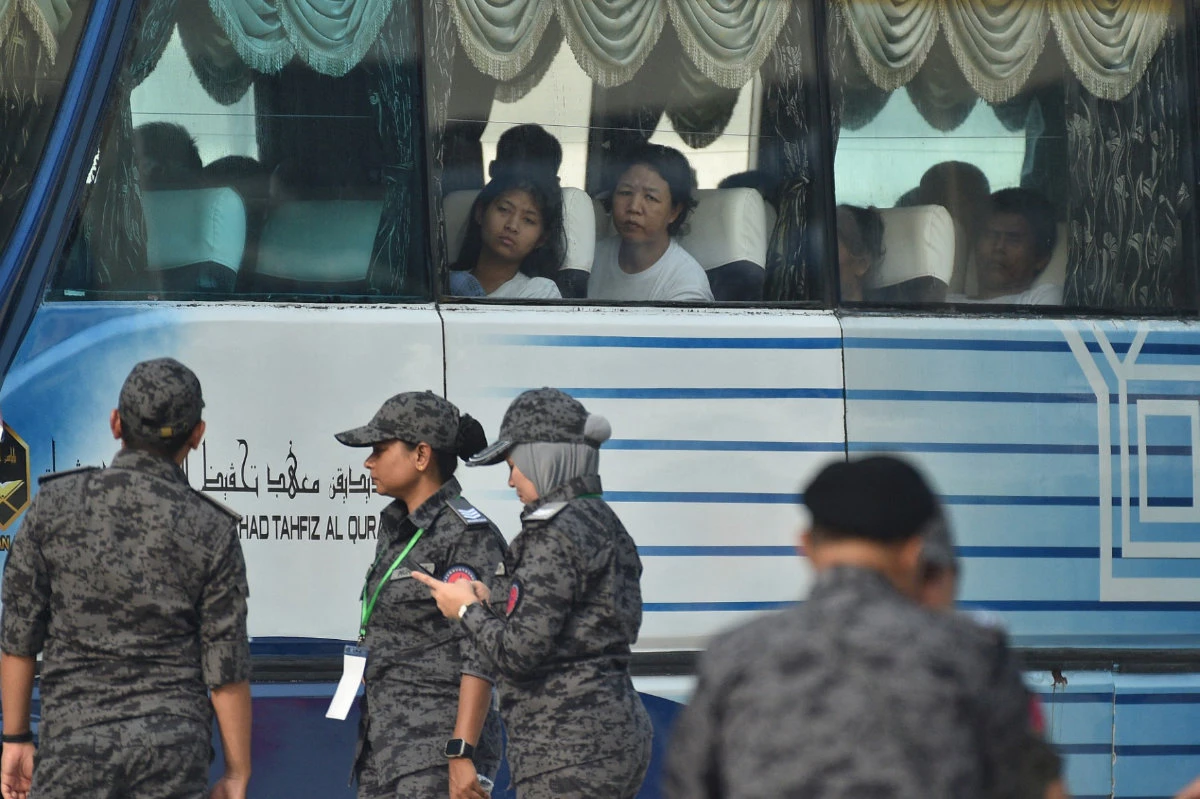
Over 1,600 people were then moved to Bhasan Char by the Bangladesh Navy, followed by another 1,800 the same month. During 25 such transfers, more than 38,000 refugees were resettled on the island by October 2024.

The relocation project was spearheaded by the government of former Prime Minister Sheikh Hasina, who was ousted last year. The new administration has since suspended it indefinitely.

“The Bangladesh government will not conduct any further relocation of the Rohingya to Bhasan Char island. The main reason is that the country’s present government considers the project not viable,” Mizanur Rahman, refugee relief and repatriation commissioner in Cox’s Bazar, told Arab News on Sunday.

The government’s decision was prompted by data from UN agencies, which showed that operations on Bhasan Char involved 30 percent higher costs compared with the mainland camps in Cox’s Bazar, Rahman said.

“On the other hand, the Rohingya are not voluntarily coming forward for relocation to the island. Many of those previously relocated have fled ... Around 29,000 are currently living on the island, while about 10,000 have returned to Cox’s Bazar on their own.”

A mostly Muslim ethnic minority, the Rohingya have lived for centuries in Myanmar’s western Rakhine state but were stripped of their citizenship in the 1980s and have faced systemic persecution ever since.

In 2017 alone, some 750,000 of them crossed to neighboring Bangladesh, fleeing a deadly crackdown by Myanmar’s military. Today, about 1.3 million of them shelter in 33 camps in the coastal Cox’s Bazar district, making it the world’s largest refugee settlement.

Bhasan Char, where the Bangladeshi government spent an estimated $350 million to construct concrete residential buildings, cyclone shelters, roads, freshwater systems, and other infrastructure, offered better living conditions than the squalid camps.

But there was no regular transport service to the island, its inhabitants were not allowed to travel freely, and livelihood opportunities were few and dependent on aid coming from the mainland.

Rahman said: “Considering all aspects, we can say that Rohingya relocation to Bhasan Char is currently halted. Following the fall of Sheikh Hasina’s regime, only one batch of Rohingya was relocated to the island.

“The relocation was conducted with government funding, but the government is no longer allowing any funds for this purpose.”

“The Bangladeshi government has spent around $350 million on it from its own funds ... It seems the project has not turned out to be successful.”