PARIS: The execution of the ninth man to be hanged over protests that swept Iran in 2022 marks a new stage in Tehran’s rampant use of the death penalty, rights groups say.
The groups argue that Mohammad Ghobadlou had mental health issues and that his original death sentence had been overturned.
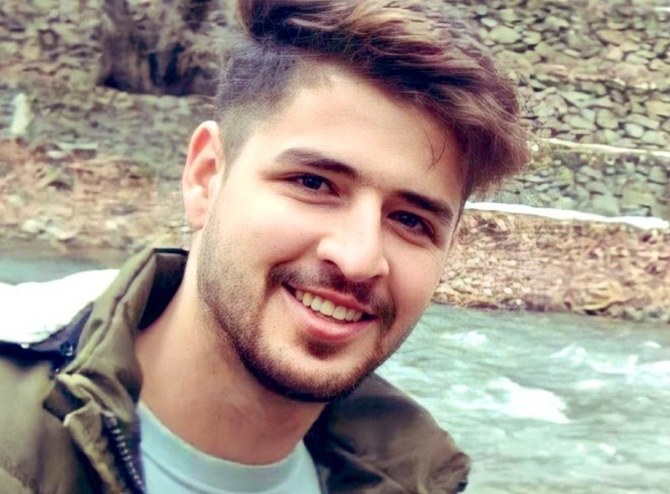
Ghobadlou, 23, was put to death early Tuesday in Ghezel Hesar prison in the city of Karaj outside Tehran.
He had been convicted over the death of a police officer who the authorities say was run over by a car during the protests in September 2022.
“The killing of Mohammad Ghobadlou in Iran, who struggled with mental illness, stands as a glaring injustice, a murder carried out under the guise of a judicial process that lacks any semblance of fairness,” said Hadi Ghaemi, executive director of the New York-based Center for Human Rights in Iran.
The Instagram account of 2023 Nobel Peace Prize winner Narges Mohammadi, who is in Tehran’s Evin prison, said 61 women political prisoners there would go on hunger strike on Thursday to protest against executions in Iran.
Ghobadlou’s hanging took place “under circumstances where even a final verdict for execution did not exist,” the post said. It was not immediately clear how long the hunger strike would last.
There has been a surge in executions in Iran in recent months, which activists say is aimed at instilling fear in the population.
According to the Norway-based Iran Human Rights (IHR) group, 51 people have been executed in the first weeks of 2024 alone. IHR and other groups say Ghobadlou was the ninth man to be executed over the demonstrations.
The protests erupted in September 2022 following the death in custody of 22-year-old Iranian Kurd Mahsa Amini after her arrest for allegedly flouting the strict dress code for women, and were seen as one of the biggest challenges to the clerical leadership in decades.
Rights groups expressed particular shock at the hanging given that the death sentence for Ghobadlou had been essentially overturned in February 2023, when the Supreme Court granted a stay of execution and later referred his case to a new jurisdiction to deal with issues relating to his mental health.
“Mohammad Ghobadlou’s execution is an extrajudicial killing according to international law and the Islamic Republic’s own laws,” said the executive director of IHR, Mahmood Amiry-Moghaddam.
It said his lawyers had only been notified after office hours on Monday that the execution would take place on Tuesday morning.
Harrowing footage posted on social media showed his family wailing with grief at the gates of the prison when his execution was confirmed, and hours later lying prostrate on his grave.
“The arbitrary execution of Mohammad Ghobadlou dumbfounded his loved ones and lawyer, who were awaiting his retrial” said Diana Eltahawy, Amnesty International’s deputy director for the Middle East and North Africa.
Amnesty said documents published by Iranian media show judiciary chief Gholamhossein Mohseni Ejei had personally intervened to annul the order for a retrial and allow the execution to go ahead.
According to Amnesty, Ghobadlou had been under the supervision of a psychiatric hospital for bipolar disorder since the age of 15, and had stopped taking his medication ahead of the incident.
Before Ghobadlou’s hanging Iran had already executed eight men in cases related to the protests, with rights groups accusing Tehran of using capital punishment as a way to instil fear into the people.
Also executed at the same prison on Wednesday was Kurdish-Iranian Farhad Salimi, one of seven men sentenced to death and held in prison for one-and-a-half decades in a case linked to a Muslim cleric’s killing in 2008.
Salimi is the fourth of the men to be hanged in the case in recent months, with rights groups warning that the lives of the other three are now at imminent risk.
The executions of Ghobadlou and Salimi “after egregiously unfair trials mark a harrowing descent into new realms of cruelty,” Amnesty said.
UN human rights chief Volker Turk said he was “alarmed by the sharp spike in the use of the death penalty in Iran.”
“This practice must be stopped immediately,” he said.


![]()

Activists decry ‘glaring injustice’ of Iran protester’s execution
Short Url
https://arab.news/6jjs7
Activists decry ‘glaring injustice’ of Iran protester’s execution
- The groups argue that Mohammad Ghobadlou had mental health issues and that his original death sentence had been overturned
- 61 women political prisoners at Evin prison would go on hunger strike on Thursday to protest against executions in Iran


Latest updates


© 2026 SAUDI RESEARCH & PUBLISHING COMPANY, All Rights Reserved And subject to Terms of Use Agreement.