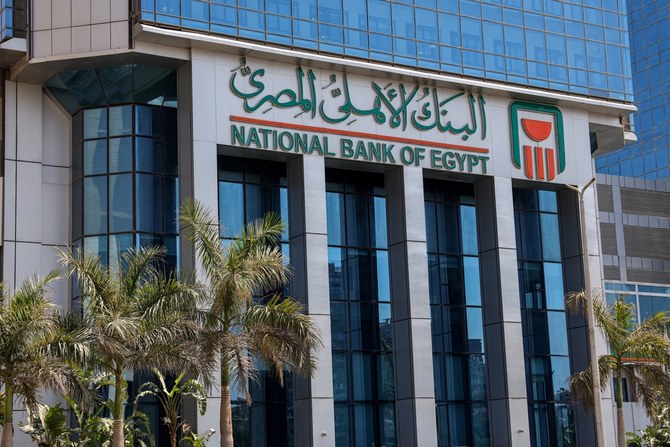

Egypt’s weakening credit profile has prompted Moody’s to affirm ratings for all five banks while downgrading their long-term deposit scores to negative from stable.
The rating agency attributed the adverse outlook to the significant holdings of sovereign debt securities by the affected banks, including National Bank of Egypt, Banque Misr, and Banque du Caire, as well as Commercial International Bank, and Bank of Alexandria.
RIYADH: Egypt’s outlook shift reflects concerns about the potential weakening of the country’s credit profile amid challenging macroeconomic conditions and ongoing efforts for fiscal consolidation. This connection constrains the standalone financial profile of these banks.
Additionally, the negative outlook considers broader challenges such as foreign currency shortages, difficult operating conditions, high asset risks, and potential impacts on earnings, asset quality, and foreign currency liquidity metrics.
Despite these challenges, Moody’s acknowledged the banks’ resilient financial profiles, including deposit-based funding, strong local currency liquidity, stable profitability, adequate capital adequacy ratios, and reported non-performing loans at 3.3 percent of gross loans.
The bank-specific rating drivers highlighted the unique challenges and strengths of each institution.
For example, NBE’s ratings are influenced by its substantial holdings of sovereign debt securities, while BM’s ratings are impacted by its sizable holdings of sovereign debt securities and elevated foreign currency liquidity pressures.
BdC’s ratings align with its high exposure to the Government of Egypt, and CIB’s ratings are constrained by its high exposure to the body despite maintaining strong capital buffers and resilient profitability.
BoA’s ratings reflect its stable funding, high liquidity, capital buffers, and resilient profitability, with potential parental support from Intesa Sanpaolo.
The negative outlook implies limited upward pressure on the bank’s ratings, requiring a substantial improvement in the operating environment and the government’s credit profile, coupled with maintaining resilient financial performance and adequate foreign currency liquidity.
Downward pressure could arise from a sovereign rating downgrade, acute foreign currency liquidity pressures, or increased problem loans and funding costs impacting profitability and capital metrics.
Moody’s revised its outlook on Egypt to “negative” from “stable” last week, citing increasing risks that the country’s credit profile will continue to weaken amid difficult macroeconomic and exchange rate rebalancing.