

Why South Africa feels a deep connection to the Palestinian cause amid Gaza war

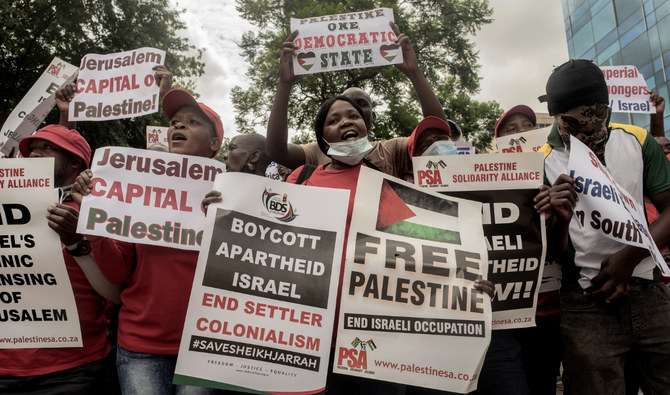
Members of General Industrial Workers Union of South Africa (GIWUSA), civil associations and political parties hold anti-Israel banners during a pro-Palestine demonstration in front of the Israeli Trade and Economic Office in Sandton, Johannesburg, on January 27, 2022. (AFP)
Short Url
Updated 23 January 2024
Follow

Why South Africa feels a deep connection to the Palestinian cause amid Gaza war

  • South Africa has lodged a case at the International Court of Justice accusing Israel of committing genocide in Gaza
  • The ruling ANC has long acknowledged parallels between the Palestinian struggle and its own fight against apartheid

DUBAI: On Jan. 11 South Africa asked the International Court of Justice at The Hague to rule on whether Israel’s ongoing military campaign in Gaza amounted to genocide. Israel responded by accusing the country of “functioning as the legal arm” of Hamas. 

But South African support for the Palestinians is not a new phenomenon. For years its government and civil society have shown unwavering support for the Palestinian cause, despite considerable geographical and cultural differences.
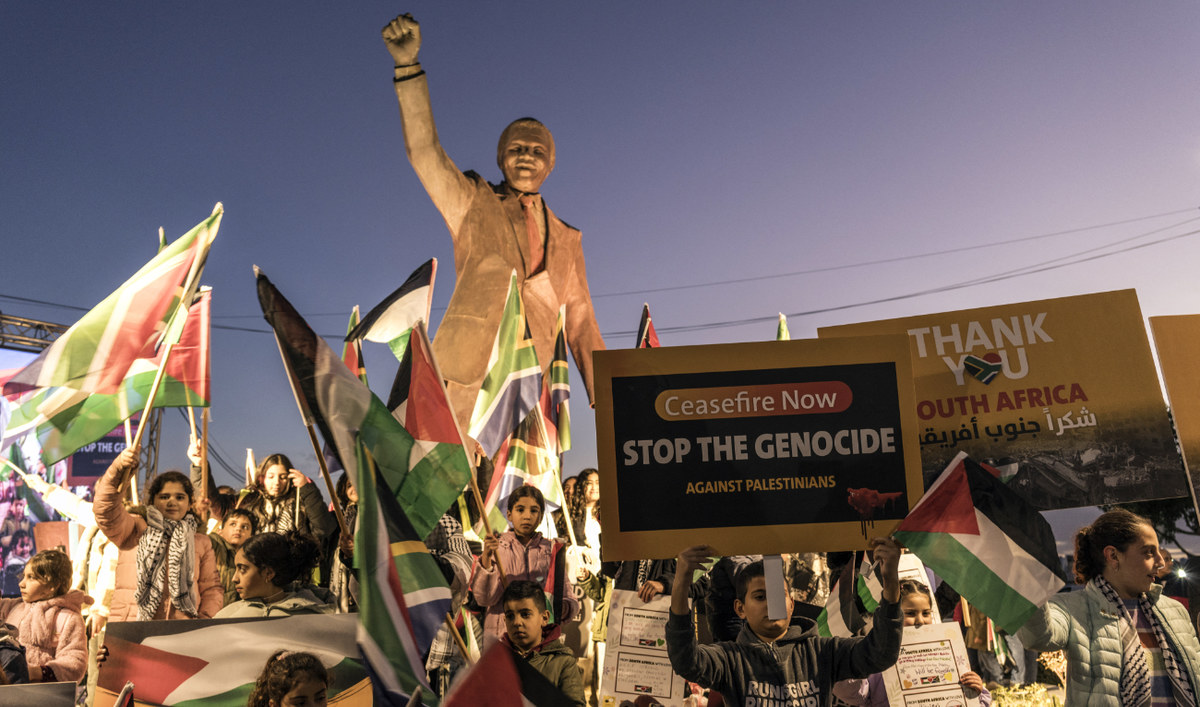


People raise flags and placards as they gather around a statue of late South African president Nelson Mandela to celebrate a landmark genocide case filed by South Africa against Israel at the International Court of Justice, in the occupied West Bank city of Ramallah on January 10, 2024.

South Africa’s ruling African National Congress has long compared Israel’s policies in Gaza and the West Bank to its own history under the apartheid regime of white minority rule, which until 1994 forced Blacks to live in specially designated “homelands.” 

“Today we join the world in expressing horror at the war crimes being committed in Palestine through the targeting of civilians, civilian infrastructure, UN premises and other vulnerable targets,” Naledi Pandor, South Africa’s minister of international relations and cooperation, said in a statement on Nov. 7.

“These actions remind us of our experiences as Black South Africans living under apartheid. This is one of the key reasons South Africans, like people in cities all over the world, have taken to the streets to express their anger and concern at what is taking place in Gaza and the West Bank.”
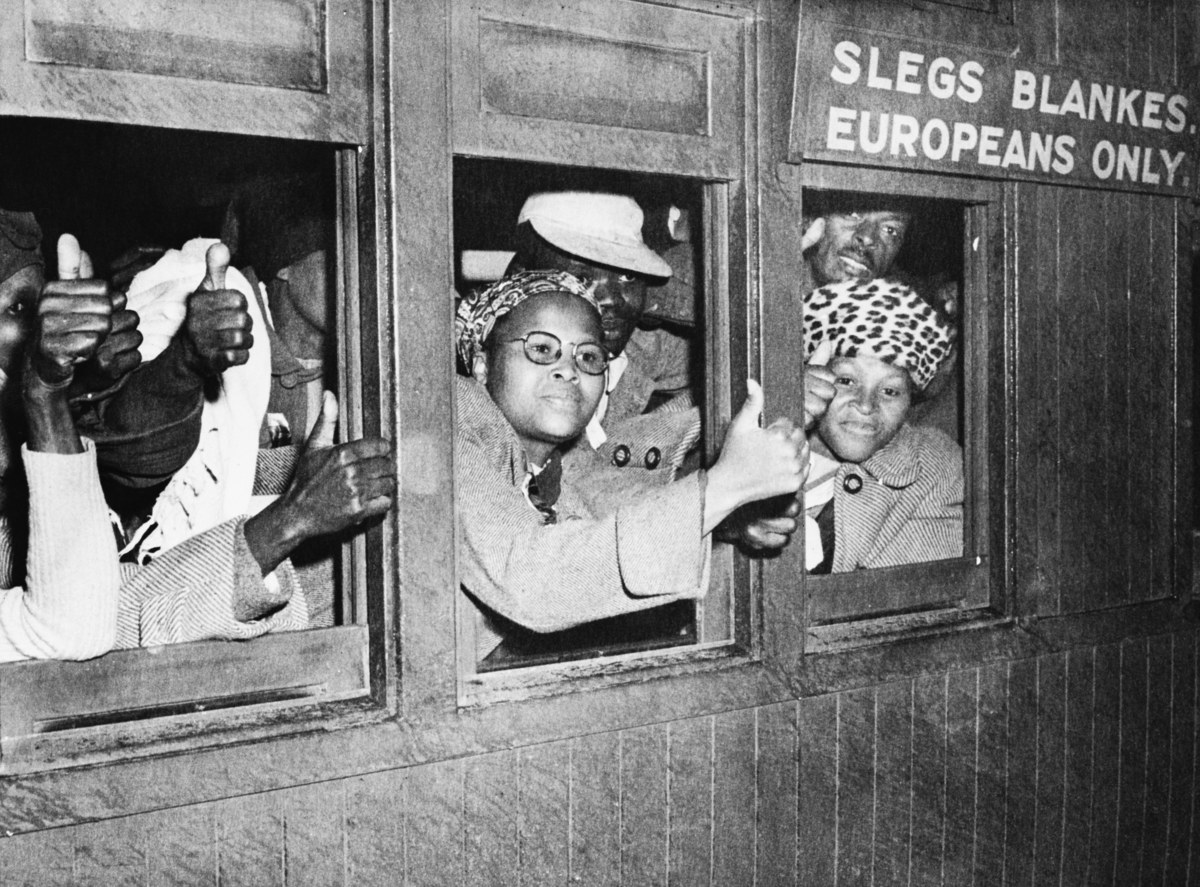


South Africa’s ruling African National Congress has long compared Israel’s policies in Gaza and the West Bank to its own history under the apartheid regime of white minority rule. (AFP)

Israel launched its military campaign in response to the Oct. 7 Hamas attack on southern Israel, which saw Palestinian militants kill some 1,200 people, mostly civilians, and take 240 hostage, including many non-Israeli foreign nationals.

Since then, the Israel Defense Forces have waged a ferocious air and ground campaign against Hamas, which has controlled the Gaza Strip since 2007, killing more than 25,000 Palestinans, according to the Hamas-run health ministry.

Since the war began, symbols of solidarity have sprung up across South Africa. Street artists have painted murals of the Palestinian flag, billboards have been erected accusing Israel of genocide, and stickers featuring slogans like “Genocide IsREAL” and “#FreeGaza” have been distributed.

“As a South African, one knows oppression, resistance and apartheid,” Leila Samira Khan, a South African lawyer and activist, told Arab News.

“Palestine is intertwined with South Africa’s fight for freedom. I was born in the Netherlands to South African parents in the ’70s and was named after Leila Khaled,” she said, referring to the famed Palestinian activist.
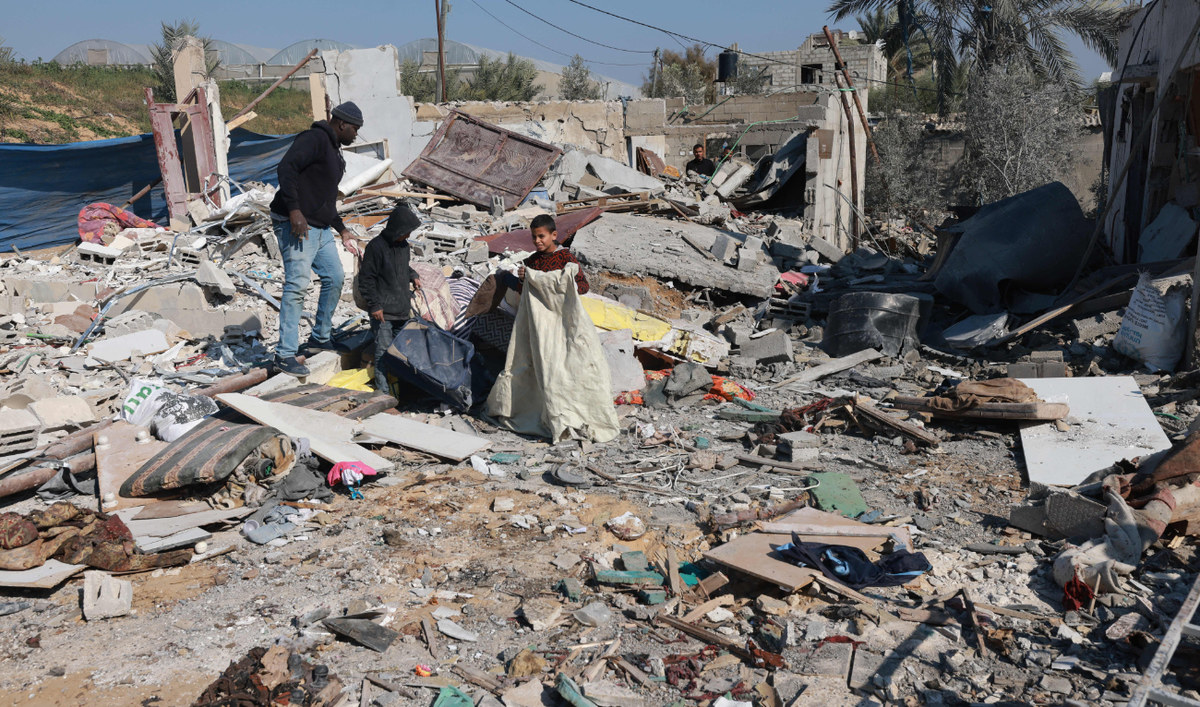


Palestinian children look for salvageable items amid the destruction on the southern outskirts of Khan Yunis in the war-battered Gaza Strip on January 16, 2024. (AFP)

South Africa recalled its diplomats from Tel Aviv in early November. Later that month, its parliament voted to suspend all diplomatic ties with Israel and to close the Israeli Embassy in Pretoria. Israel has since recalled its ambassador.

Then, in December, in a move which thrust South Africa into the international spotlight, it filed its suit against Israel at the ICJ, accusing it of breaching the Genocide Convention. 

“The scale of destruction in Gaza, the targeting of family homes and civilians, the war being a war on children, all make clear that genocidal intent is both understood and has been put into practice,” Tembeka Ngcukaitobi, a member of the South African legal team, said in the ICJ.

“The articulated intent is the destruction of Palestinian life in all its manifestations.”
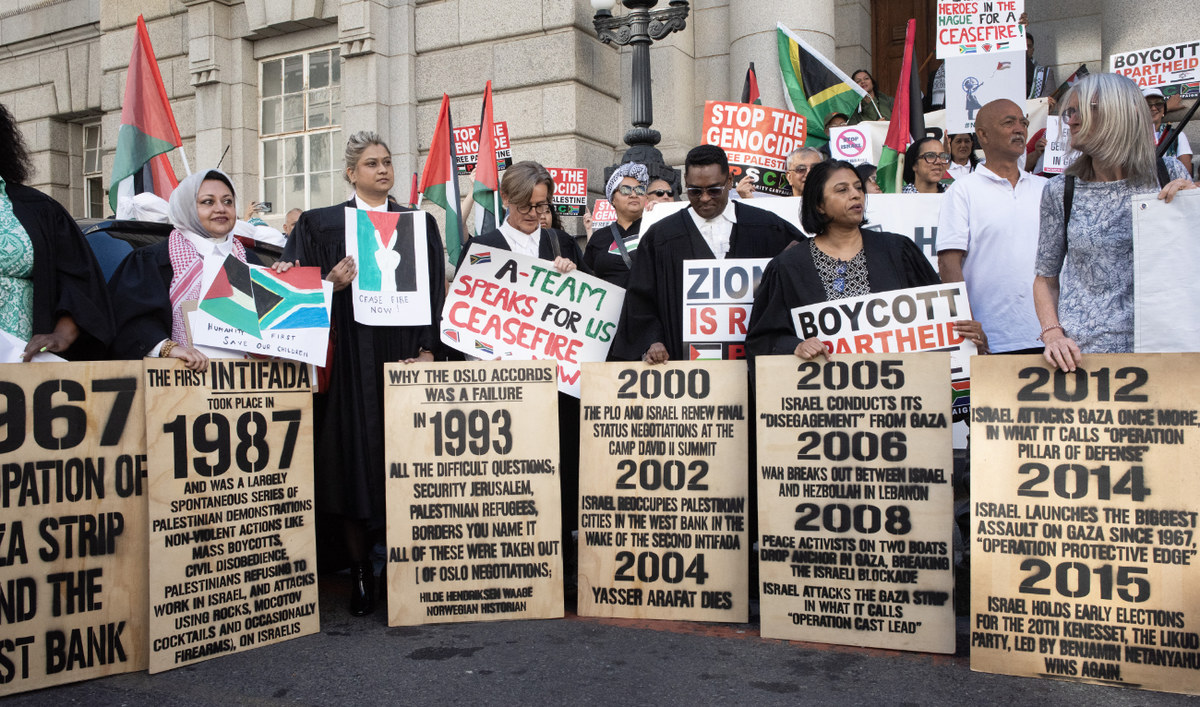


A group of lawyers and advocates hold placards as they take part in an interfaith protest in solidarity with Palestinian people outside the High Court in Cape Town on January 11, 2024. (AFP)

While the case has irked many Western governments, it has won South Africa praise from nations like Turkiye and Malaysia and groupings like the Organization of Islamic Cooperation, which have joined the case. 

This championing of the Palestinian cause in South Africa has deep roots that date back to the days when the ANC was waging its own decades-long campaign against apartheid, a system that prevailed from 1948 until the early 1990s. 

Under apartheid, the white minority dominated politics, business, land ownership, and all facets of civic life, while enforcing a system of harsh racial segregation and discrimination that deemed the races “separate but equal.” 

In reality, Black South Africans who lived through that period recall feeling marginalized and like second-class citizens in their own land — feelings not dissimilar to those felt by the Palestinians in the occupied territories.
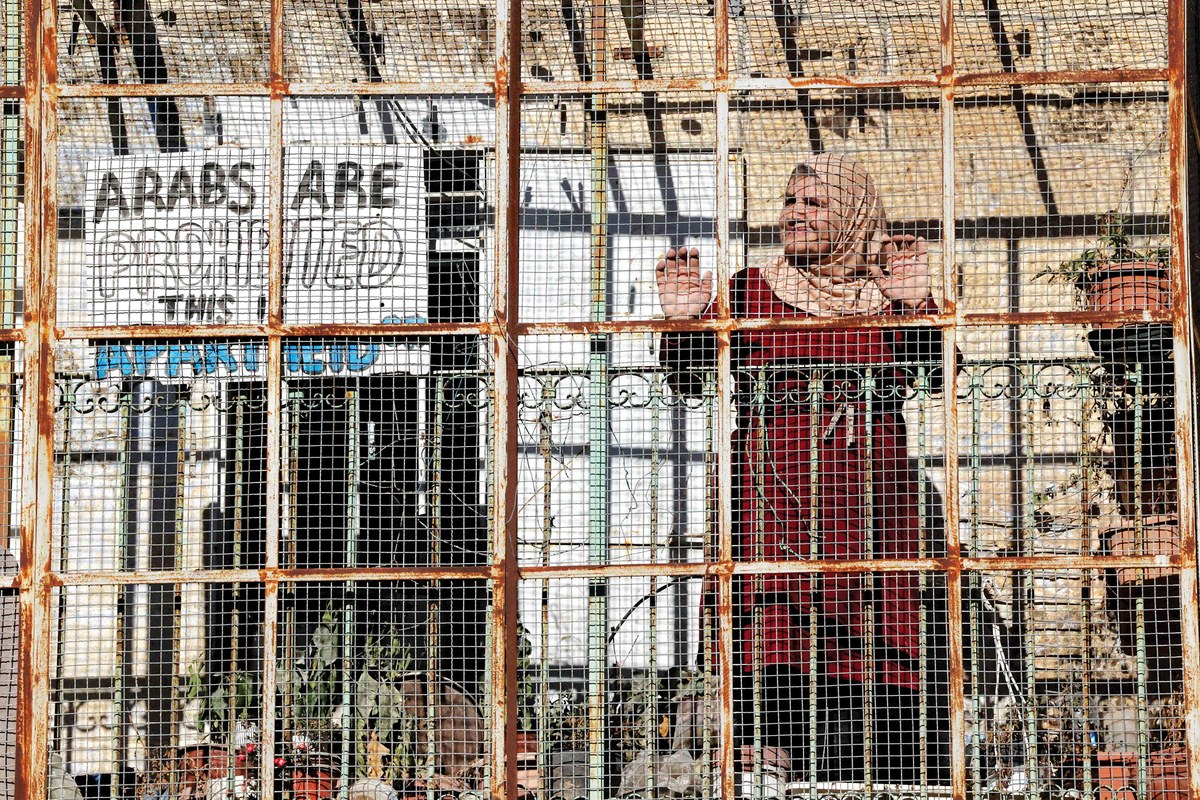


Black South Africans who lived through apartheid recall feeling marginalized and like second-class citizens in their own land — feelings not dissimilar to those felt by the Palestinians in the occupied territories. (AFP)

“As South Africans we feel deeply connected to the Palestinian struggle,” Thania Petersen, a South African artist based in Cape Town, told Arab News. 

“We understand and recognize apartheid as well as the devastation which comes with dealing and living in a post-apartheid society.”

Meanwhile, even as much of the international community introduced sanctions against apartheid South Africa for its increasingly unpopular policies, Israel continued to supply the white-minority government with weapons and technology.

The ANC’s solidarity with Palestine dates back to the 1950s and ’60s when several African nations were gaining independence after centuries under European colonial rule.

During its struggle against apartheid, and later once in power, the ANC fostered close ties with the Palestine Liberation Organization. 
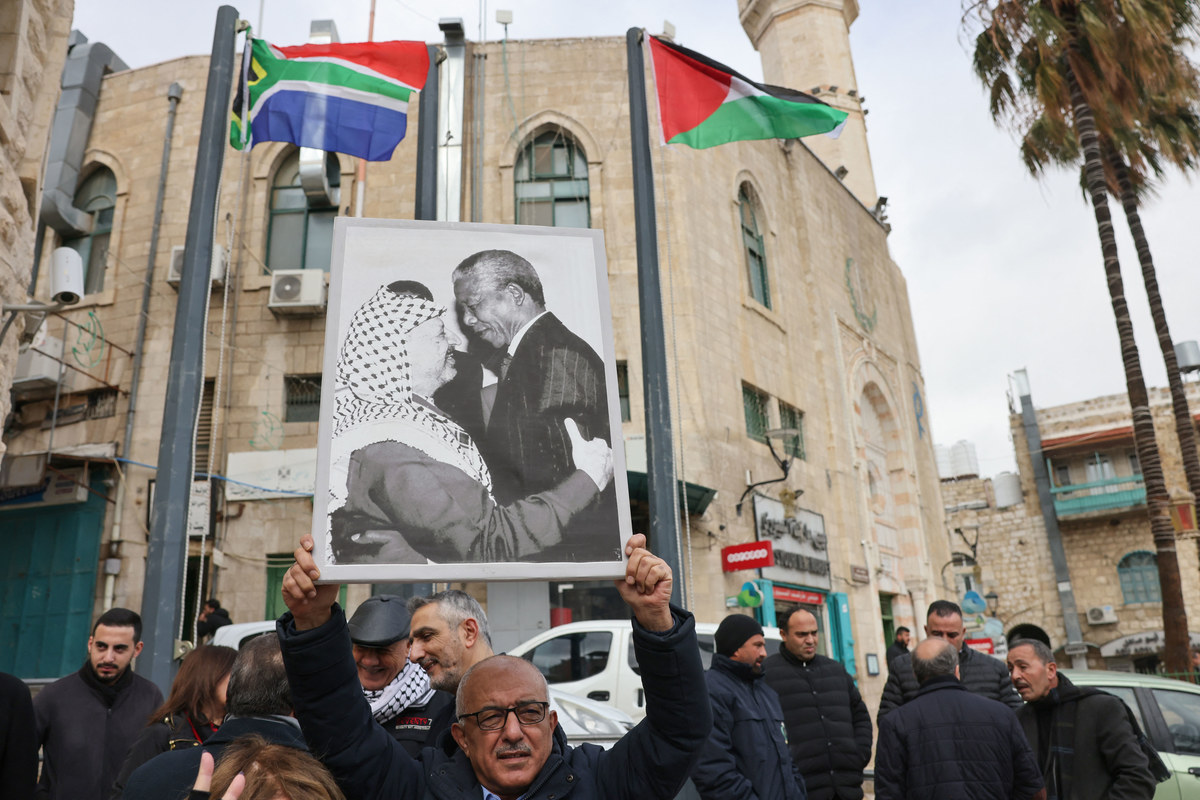


A Palestinian man holds a portrait of late Palestine Liberation Organisation (PLO) leader Yasser Arafat and South Africa’s anti-apartheid icon Nelson Mandela as the national flags of both nations flutter outside the municipality building in Bethlehem in the occupied West Bank on January 12, 2024. (AFP)

Nelson Mandela, South Africa’s first post-apartheid president, who spent 27 years in jail for his fight against white minority rule, was even on friendly terms with PLO Chairman Yasser Arafat.

On Feb. 15, 1995, a year after South Africa’s first non-racial elections, which propelled Mandela to power, the newly-minted “rainbow nation” established formal diplomatic ties with the State of Palestine. 

For years, the ANC and the PLO supported each other’s anti-colonial campaigns, trading weapons and consulting on strategies to do away with colonization.

A significant moment that solidified South Africa’s ties and commitment to Palestine was when Arafat met Mandela in Zambia in 1990, barely two weeks after the latter had been released from prison. 

Mandela subsequently visited both Israel and Palestine and called for peace between both nations.
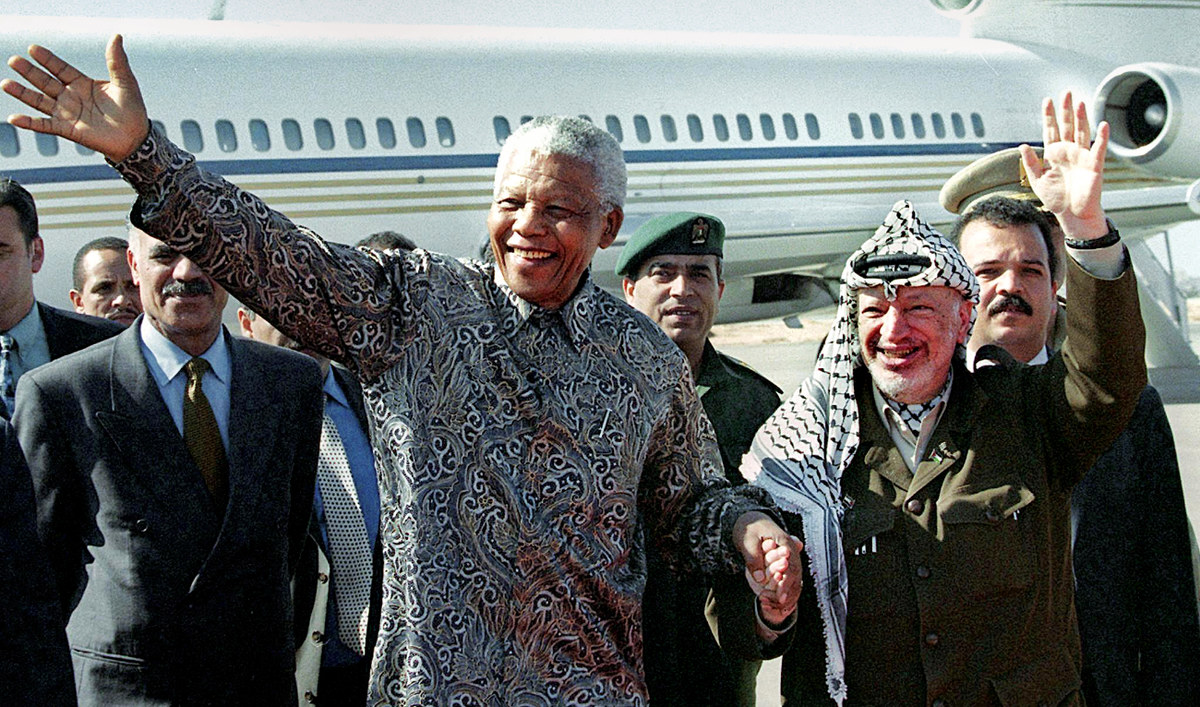


Yasser Arafat, right, greeted Nelson Mandela when the latter arrived at Gaza airport in 1999 for an official visit to Palestine. (AFP/File)

“We know too well that our freedom is incomplete without the freedom of the Palestinians,” Mandela said in 1997 during a speech marking International Day of Solidarity with the Palestinian People in South Africa’s capital, Pretoria.

“The temptation in our situation is to speak in muffled tones about an issue such as the right of the people of Palestine to a state of their own. We can easily be enticed to read reconciliation and fairness as meaning parity between justice and injustice. 

“Having achieved our own freedom, we can fall into the trap of washing our hands of difficulties that others face. Yet we would be less than human if we did so.”
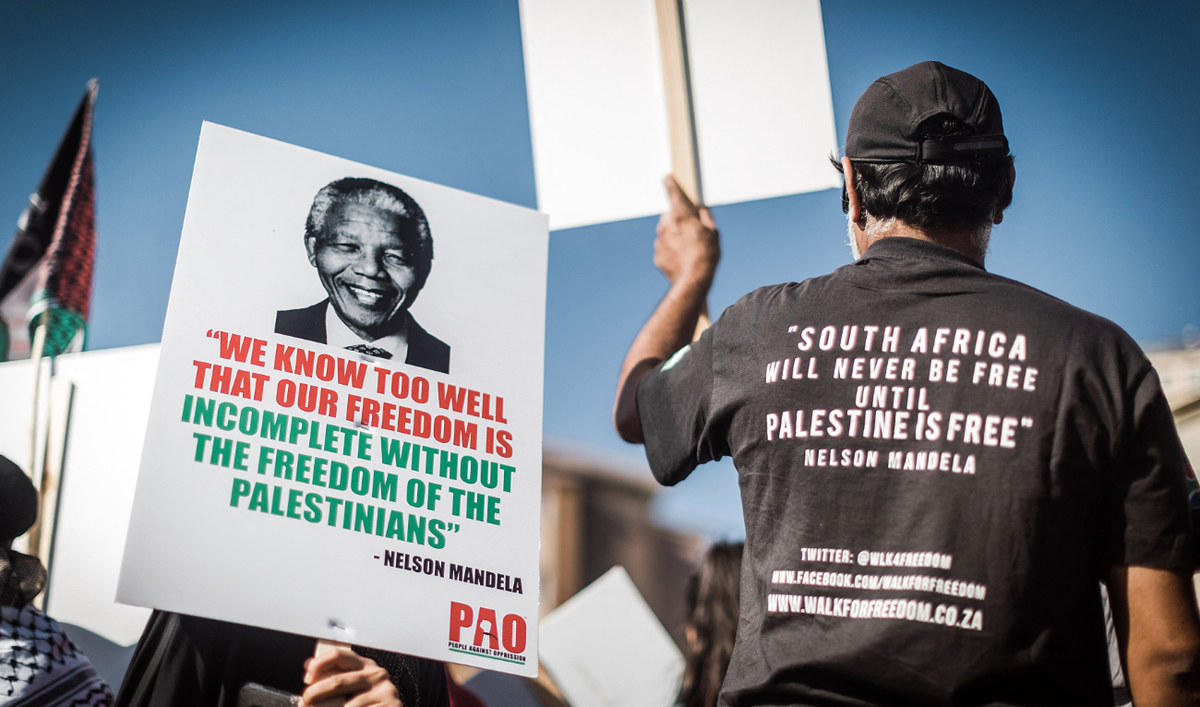


Pro-Palestinian groups and other civil society organizations demonstrate, in Durban on June 2, 2018 to protest against the killing of Palestinians by Israeli forces in Gaza. (AFP/File)

South Africa’s support for the Palestinian cause continues fervently to this day. In the ANC’s latest policy document, published in late 2022, the ruling party emphasized South Africa’s historical ties to Palestine. 

“South Africa and Palestine share a common history of struggle,” the document said, describing Israel as an “apartheid state” and declaring its intention to loosen South Africa’s diplomatic ties with Israel.

“As individuals we feel deeply for Palestinians because we know apartheid, we know what it looks like and we live with the ongoing violence of its legacy,” Petersen told Arab News. 

“We have an obligation to humanity to fight what we know is wrong. As South Africans we will always fight against apartheid and colonialism. Our leaders have always uttered the words that our freedom is incomplete without the freedom of Palestine.”

In a recent piece for The Economist, Suraya Dadoo, a South African writer and activist, said: “South Africa’s voice has been the loudest, mainly due to the fact that our liberation history and struggle is most recent, and that the system of apartheid that Israel practices against the Palestinians is eerily similar.

“Settler colonial societies can only exist with the absolute annihilation of the indigenous people or by the complete subjugation of the people and their land. There is no other way they can sustain their existence but through violence.”

While South Africa’s championing of the Palestinian cause is understandable given its own struggle against apartheid, it has been harder to reconcile its support for Hamas. 

After the Oct. 7 attacks, many Arab countries that were sympathetic to the Palestinian cause sought to distance themselves from the militant group. Although it condemned the atrocities, South Africa was slower to do so than other nations.

By contrast, it rushed to condemn the mounting Palestinian death toll in Gaza after Israel launched its retaliatory campaign.

South Africa is one of just a handful of countries that has formal diplomatic relations with Hamas — a group that many nations consider a terrorist organization.

Its openness to relations with Hamas is partly informed by its own history. Indeed, the ANC was itself often considered a terrorist organization before the country made its largely peaceful transition to multi-racial democracy.
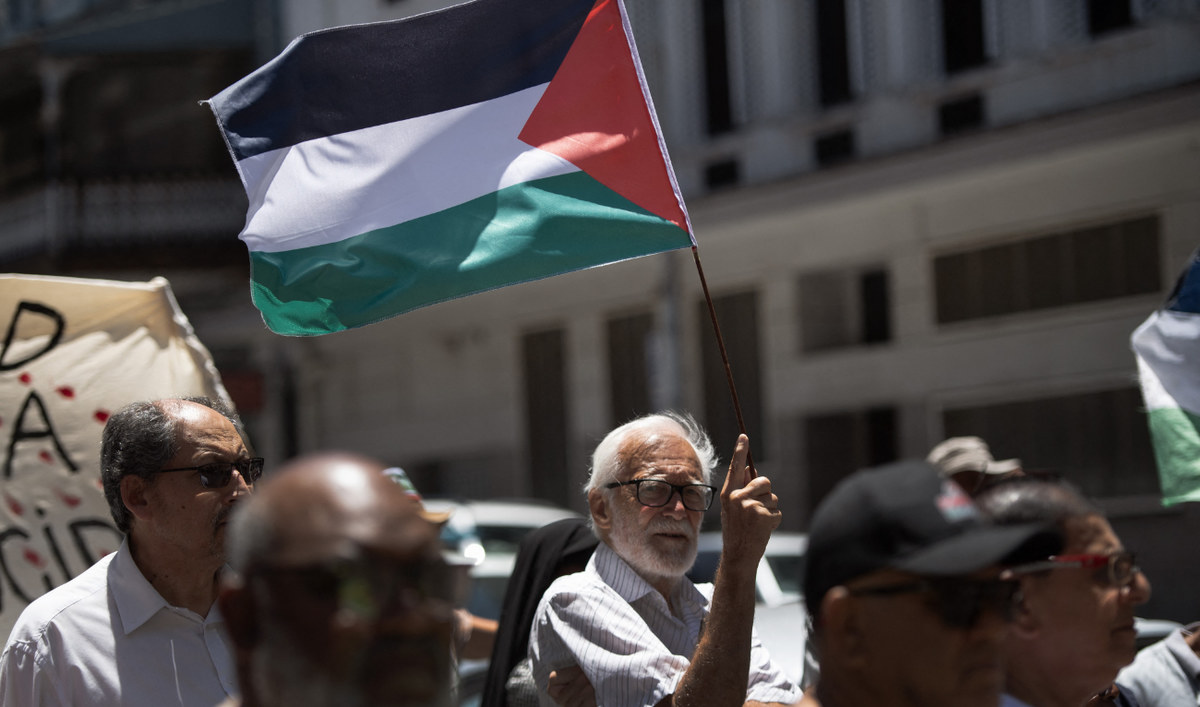


A man holds a Palestinian flag as they take part in a pro-Palestinian demonstration outside the High Court in Cape Town on January 11, 2024. (AFP)

South Africa’s claim that Israel is committing acts of genocide against the Palestinians has also exposed it to accusations of double standards, particularly as its government appears to take a softer stance on the misdeeds of other armed actors.

Just a week before making its case at The Hague, South Africa’s President Cyril Ramaphosa hosted Mohammed Hamdan Dagalo, a Sudanese warlord known as Hemedti, whose Janjaweed militia and its successor, the Rapid Support Forces, is accused of committing acts of genocide in Darfur. 

The RSF paramilitary group has been locked in battle with the Sudanese Armed Forces since April last year, sparking one of the world’s worst humanitarian disasters, which many fear could destabilize the wider region.

However, Petersen says public opposition to Israel in particular runs far deeper for South Africans, mindful of its past support for apartheid. 

“Palestinians and South Africans are fighting the same fight,” she said. “It is not (a) separate (issue that) Israel was involved with the apartheid government in South Africa and it is not surprising that the Zionist lobby in South Africa benefited from apartheid.”


How 1,000 days of war pushed Sudan’s health system to the brink of collapse

Updated 23 min 43 sec ago
Follow

How 1,000 days of war pushed Sudan’s health system to the brink of collapse

  • After nearly three years of fighting, attacks on hospitals, mass displacement and disease outbreaks are crippling care nationwide
  • As humanitarian needs soar, doctors and aid agencies warn Sudan’s health system cannot survive without peace and access

LONDON: After more than 1,000 days of war, Sudan’s health system is buckling under the combined weight of violence, displacement, disease and hunger, pushing millions of civilians toward a crisis with few historical parallels.

What began as a power struggle between the Sudanese Armed Forces and the paramilitary Rapid Support Forces has evolved into what UN agencies now describe as the world’s largest humanitarian and health emergency.

According to the World Health Organization, more than 20 million people in Sudan now require health assistance, while an estimated 33.7 million — roughly two-thirds of the population — are expected to need humanitarian aid this year.

(AFP/File)

At least 21 million people face acute food insecurity, with famine already confirmed in parts of North Darfur and South Kordofan.

“One thousand days of conflict in Sudan have driven the health system to the brink of collapse,” Dr. Shible Sahbani, WHO’s representative in Sudan, said in a statement. “Under the strain of disease, hunger and a lack of access to basic services, people face a devastating situation.”

The health system’s deterioration has been swift and severe. Since the war began in April 2023, WHO has verified 201 attacks on health care, resulting in 1,858 deaths and 490 injuries.

More than one third of health facilities nationwide — 37 percent — are now non-functional, depriving millions of people of essential and lifesaving care.

“Healthcare facilities are being attacked, there is a shortage of medicines and supplies, and a lack of financial and human resources to operate health services,” Sahbani said. “This means that the system is on the verge of collapse.”

In the hardest-hit regions, particularly Darfur and Kordofan, the picture is even bleaker.

Aid groups estimate that in some areas up to 80 percent of health facilities are no longer operational, leaving overstretched clinics struggling to cope with outbreaks of cholera, malaria, dengue and measles.

“The weather and conditions in Sudan are conducive to the spread of malaria and dengue fever by mosquitoes,” Sahbani said. “Outbreaks of vaccine-preventable diseases, such as measles and polio, are also being reported in many states right now.”

A view of the burnt Khartoum Teaching Hospital building. (Reuters/File)

Sudan is now the world’s largest displacement crisis. An estimated 13.6 million people have been forced from their homes — around 9.3 million internally displaced and a further 4.3 million seeking refuge in neighboring countries.

Overcrowded displacement sites, poor sanitation and the collapse of routine health and water services have created ideal conditions for disease outbreaks. Cholera has now been reported in all 18 states, dengue in 14 states, and malaria in 16.

“As the relentless conflict renders some areas inaccessible, particularly in the Darfur and Kordofan regions, the population’s health needs continue to increase,” Sahbani said.

“To meet these mounting needs and prevent the crisis from spiraling out of hand, WHO and humanitarian partners require safe and unimpeded access to all areas of Sudan, and increased financial resources.”

Children are bearing the heaviest burden of Sudan’s collapse. According to the UN children’s agency, UNICEF, roughly half of those expected to need humanitarian assistance in 2026 are children.

“For the children of Sudan, the world is 1,000 days late,” Edouard Beigbeder, UNICEF’s regional director for the Middle East and North Africa, said in a statement.

Patients suffering from cholera receive treatment at a rural isolation centre in Wad Al-Hilu in Kassala state in eastern Sudan. (AFP/File)

“Since fighting erupted in April 2023, Sudan has become one of the largest and most devastating humanitarian crises in the world, pushing millions of children to the brink of survival.”

More than 5 million children have been displaced — the equivalent of 5,000 children displaced every day — often repeatedly, as violence follows families from one location to another.

“Millions of children in Sudan are at risk of rape and other forms of sexual violence, which is being used as a tactic of war, with children as young as one reported among survivors,” Beigbeder said.

Malnutrition is compounding the crisis. In North Darfur alone, nearly 85,000 children suffering from severe acute malnutrition were treated between January and November 2025 — “equivalent to one child every six minutes.”

“The collapse of health systems, critical water shortages and the breakdown of basic services are compounding the crisis, fueling deadly disease outbreaks and placing an estimated 3.4 million children under five at risk,” Beigbeder said.

Hunger is worsening Sudan’s health crisis.

“Sudan was once considered to be the food basket of the entire region,” Sahbani said. “Today, it is facing one of the most serious food crises in the world: more than 21 million people face high levels of acute malnutrition and food insecurity.”

Children under five and pregnant or breastfeeding women are particularly vulnerable. “We estimate that nearly 800,000 children under the age of five will have suffered severe acute malnutrition in 2025,” Sahbani added.

People walk past on the grounds of a damaged hospital in Khartoum. (AFP/File)

UNICEF warns that the breakdown of maternal and child health services has turned childbirth into a life-threatening event, particularly in displacement camps where access to skilled care and surgical facilities is limited or nonexistent.

A Port Sudan-based doctor, who asked to remain anonymous, said the cumulative impact of the war had shattered the country’s health system, with facilities, staff and infrastructure systematically dismantled.

“After a thousand days of awful war, the health system in Sudan remains in a dire situation,” the doctor told Arab News.

“The health system and of course the infrastructure have seen direct attack, where 75 percent of the hospitals and health facilities sustained damage, either via direct shelling or looting of their equipment.”

The conflict has also hollowed out Sudan’s medical workforce. “Many of the health personnel and workforce had to flee, as they were targeted themselves,” the doctor said, warning that the loss of staff has sharply reduced the country’s ability to deliver even basic care.

A hospital director shows the bullet and shell holes on one of the internal walls of the Saudi hospital in Khartoum's twin-city Omdurman. (AFP/File)

The collapse of routine services has accelerated the spread of disease, particularly among children. “We started to see the emergence of outbreaks of vaccine-preventable diseases like diphtheria and measles — many outbreaks that we are seeing among children,” the doctor said.

Damage to water infrastructure has further compounded the crisis. “Attacks on water stations led to outbreaks like cholera and hepatitis E with high fatalities among pregnant women,” the doctor added.

Reversing the damage will require far more than short-term emergency aid, the doctor said.

“Sudan’s health system requires huge rehabilitation and rebuilding,” they said, stressing that the consequences of inaction extend well beyond Sudan’s borders. “Health is now global health — whenever there is an outbreak somewhere, there is a risk of it spreading all over.”

The doctor called for urgent international support to stabilize services and rebuild infrastructure.

“There is a need for urgent donations to fill the huge gap in life-saving health services to the people and also to rebuild the health infrastructure,” they said, adding that support must focus on areas of greatest need, “especially conflict areas as well as areas that have been freed of the RSF where now people are returning.”

As international access remains constrained and funding dwindles, much of the burden of care has fallen on Sudanese communities themselves — including diaspora-funded initiatives and volunteer-run clinics and the Emergency Response Rooms

“The conflict has exacerbated all the vulnerabilities Sudan’s health system faced before the war,” Dr. Majdi Osman, a University of Cambridge scientist and founder of Nubia Health, a diaspora-funded clinic in Wadi Halfa in Sudan’s Northern State, told Arab News.

A cholera patient sits on his bed at an isolation unit outside the Bashayer Hospital, south of Khartoum. (AFP/File)

“Decades of under-investment, especially outside of Khartoum, left the health system fragile, but the current violence has pushed it into a state of collapse.”

Supply chains have fragmented, driving up costs and limiting access to essential medicines. “Getting basic medicines has become a challenge but somehow health workers in Sudan are adapting and have been able to get medicines to communities in need,” Osman said.

“For patients with chronic diseases, the war has forced an impossible choice. Stay in a collapsing system or flee across dangerous routes to reach Egypt just to access life-saving treatment that should be a basic right.

“We are seeing families separated and lives risked on these journeys because the local medical infrastructure can no longer sustain the continuous care required for conditions like kidney disease or cancer.”

Despite the devastation, Sudan’s medical workforce has not disappeared. “Sudan does not lack medical expertise; it lacks the infrastructure and stability,” Osman said.

In Wadi Halfa, displaced doctors have arrived from Khartoum, Blue Nile and other conflict-affected regions. “At Nubia Health we are trying to provide them with the resources they need to support health in their communities,” Osman added.

A Doctors Without Borders (MSF) medical team urgently evacuates a Sudanese refugee from Touloum camp to the Iriba hospital at the Touloum refugee camp in the Wadi Fira province, Chad. (AFP/File)

Some organizations are attempting to restore fragments of the national health system. The Sudanese American Physicians Association, a leading humanitarian medical group, has sent a large delegation to Sudan to assess conditions and reopen facilities.

“Our delegation is on the ground to help reopen and restore essential hospital services disrupted by war — starting with the most critical hospitals across the health system’s resiliency, not only in Khartoum but also across the country,” Dr. Anmar Homeida, SAPA’s strategic adviser, told Arab News.

On Wednesday, SAPA announced the reopening of Bahri Teaching Hospital, one of the state’s largest referral facilities, “which represents a lifeline for children, mothers, and people with chronic and hard-to-treat conditions,” said Homeida.

“The impact we’re aiming for is simple: reduce preventable deaths, help local medical providers and humanitarian personnel deliver quality care to people in need, and support families returning home and those still displaced across the country, especially from Darfur and Kordofan, to have quality access to healthcare.

“With Sudan’s health system severely damaged and outbreaks spreading, reopening functional referral hospitals in Khartoum and supporting frontline services across other states is a practical step toward stabilizing communities and enabling recovery.”

Despite insecurity and access constraints, WHO says it continues to deliver lifesaving assistance wherever possible.

Members of Sudanese armed forces sit on an army vehicle in Omdurman. (Reuters/File)

Since April 2023, the agency has delivered more than 3,300 metric tons of medicines and medical supplies worth around $40 million, including treatments for cholera, malaria, dengue and severe malnutrition.

About 24 million people have received cholera vaccinations, while more than 3.3 million have accessed care at WHO-supported hospitals, primary health facilities and mobile clinics.

More than 112,400 children with severe acute malnutrition have received treatment at WHO-supported stabilization centers.

“WHO is doing what we can, where we can, and we know we are saving lives and rebuilding the health system,” Sahbani said. “Despite the challenges, we are also working on recovery of the health system.”

Aid agencies are clear that humanitarian action alone cannot resolve Sudan’s crisis. “Humanitarian action can save lives, but it cannot replace the protection that only peace can provide,” Beigbeder said.

WHO, UNICEF and Sudanese doctors are united in their call for an end to the fighting and unimpeded humanitarian access.

“All parties must uphold their obligations under international humanitarian law: protect civilians, stop attacks on infrastructure, and allow safe, sustained and unimpeded humanitarian access across Sudan,” Beigbeder said.

For Osman, the message to donors is equally stark.

A doctor visits a cholera patient at an isolation unit outside the Bashayer Hospital, south of Khartoum. (AFP/File)

“Firstly, the international community needs to move quickly and support Sudanese, community-led efforts that are delivering care today,” he said.

“When I recently visited Sudan, I was expecting to see a global response to the world’s largest humanitarian crisis. I found almost nothing.

“Secondly, the best cure for Sudan’s health crisis is peace. We can’t allow children in Sudan to go through another 1,000 days of conflict to pass otherwise we risk the health of a whole generation growing up in this pointless war.”