


RIYADH: Saudi travel company Almosafer has become the inaugural partner of the Kingdom’s new flag carrier, Riyadh Air, according to a senior executive.
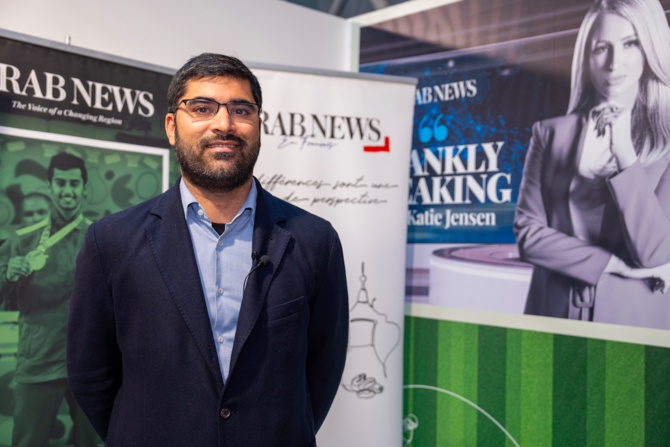
Speaking to Arab News on the sidelines of the second Saudi Tourism Forum in Riyadh, the CEO of Almosafer – which is part of Seera Group – Muzzammil Ahussain noted that the companies will work together to merge their technologies.
The integration aims to ensure that Riyadh Air’s content will be available for customers on the company’s platform.
“Today, we just finalized our collaboration with Riyadh Air. We are the first Saudi travel company to partner with Riyadh Air. We’ll be working very closely as they prepare for launch to test to integrate our technologies and make sure that Riyadh air content will be available on Almosafer for our customers,” Ahussain said.
He added: “We want to work very early on with them to use and partner and make sure our technology works together. They will be using new technology to distribute their flights to customers around the world. We want to work with them to promote Saudi as a destination, to provide Almosafer services to the Riyadh Air guest.”
The firm also renewed its partnership with Al Rajhi Bank, which is a significant loyalty partner, particularly with the Mokafaa program.
The collaboration facilitates users in earning and spending their Mokafaa points on Almosafer.
Additionally, Ahussain highlighted the newly unveiled domestic travel trends report released by his company during the event, which uncovered a strong desire among Saudi travelers for various tourism experiences within the Kingdom in 2023.
Utilizing data insights compiled from the firm’s consumer platforms throughout 2023, the report reveals that more than 40 percent of the overall booking share comes from the domestic sector, with 83.3 percent of local travelers preferring luxury accommodations.
“This is double pre-COVID levels. So pre-COVID, the domestic travel used to be around 20 percent of our bookings. Now it’s about 40 percent. Additionally, we’re seeing a lot of great insights into what people do,” Ahussain commented.
He added: “So what people are actually spending more on the hotel, staying in four- and five-star properties. But if you notice in the last two, three years see a lot of growth in low-cost carriers for flying. People are saving on the flight and spending more on the hotel and destination, which is good for the overall ecosystem.”
The top-visited domestic destinations were Makkah, Jeddah, and Riyadh, followed by Dammam, Madinah and the Red Sea.
“We’re seeing a lot of growth, and as the hotel supply increases in these new projects, we’re seeing a lot more demand,” he stated.
Ahussain continued: “That’s the purpose of creating the new routes from flyadeal or Flynas to bring price down, create ease of travel, but then allow people to spend more in the destination.”
Furthermore, the company’s CEO offered perspectives on what he anticipates in terms of the Kingdom’s tourism performance in 2024. This included discussions on the influx of visitors for Umrah and Hajj, leisure travel from Asia or Europe, and Saudi citizens’ traveling abroad.
“All elements of our business are growing. We’re going to invest heavily in technology and human capabilities, in training, as well as in our corporate business, because corporate is a new growing sector in Saudi Arabia for corporate travel,” Ahussain stated.
Aligning with Saudi Arabia’s Vision 2030 from a tourism perspective, Almosafer’s role as a travel company is to connect supply with demand, as it “focuses on providing technology and services to ensure demand can be seamlessly booked, generate demand, but also seamlessly book that demand and making a good experience.”


