

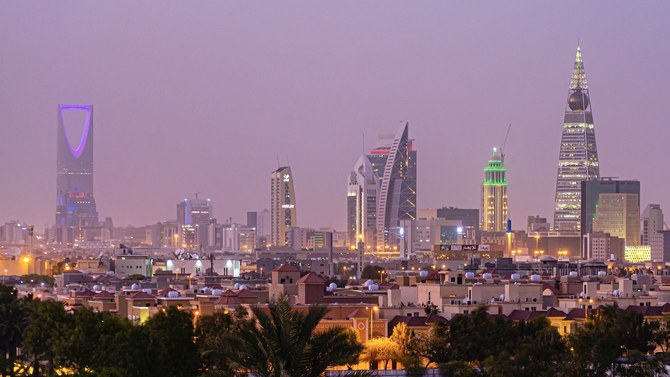
Riyadh to undergo palpable change every year until 2030: Diriyah CEO 

According to the World Tourism Organization, Saudi Arabia was the most visited country by travelers in the Arab world in 2022.
Short Url
Updated 22 January 2024
Follow

Riyadh to undergo palpable change every year until 2030: Diriyah CEO 

RIYADH: The Saudi capital will be undergoing consistent transformative change “every year” that will allow visitors and residents to feel a palpable difference, says the CEO of Diriyah Co.

Speaking to Arab News on the sidelines of the second edition of the Saudi Tourism Forum in Riyadh, Jerry Inzerillo affirmed that visitors of the Kingdom’s capital do not need to look forward to 2030 to begin to witness the changes that the area is undergoing. Instead, they are already experiencing the transformation that will continue throughout the coming years. 

The executive cited the last quarter, which was filled with “great victories,” spanning from Saudi Arabia’s winning of the Expo 2030 bid to the World Cup.

He highlighted that the forum is “really critical” as it aids in highlighting the Kingdom’s dynamic transformation, a feat considered impossible just a few years ago.

He said: “Riyadh is now going to have a big transformative change every year. What I love now is that the public, our community will see great physical changes each year now. So we’ll open hotels will open restaurants, we’ll open retail, you know, we just finished 9 km of parks, so that people don’t have to wait 2030 to feel the change.”


Jerry Inzerillo, CEO of Diriyah Co.

He added: “With this tourism forum, it’s really, really critical because now, just five years ago, we really had to convince people to come to the Kingdom. It wasn’t easy to overcome certain image issues, because people didn’t know the Kingdom. They didn’t know Saudi hospitality. They didn’t even know what the Kingdom looked like. So they were stuck in stereotypes.” 

Inzerillo applauded the efforts of the Ministry of Tourism and the Saudi Tourism Authority that have catalyzed the sector’s revolution within the Kingdom and have allowed the country to position itself as a major attraction both on the regional and global scales. 

The result of these efforts can be exemplified by the significant 156 percent increase in the number of tourists arriving in 2023 compared to 2019. A recent UN World Tourism Barometer report denotes that Saudi Arabia’s great success is paving the way for the Middle East to lead the global tourism recovery.

According to the World Tourism Organization, Saudi Arabia was the most visited country by travelers in the Arab world in 2022, welcoming 18 million passengers, compared to 14.8 million traveling to the UAE.

As the nation continues to undergo its transformative journey to fulfill Vision 2030, the CEO noted that “some of that’s going to be interrupted, because we have to put a spectacular infrastructure and that’s not going to be easy, but we’ll do it. We have a habit of getting things done in the Kingdom, as you know.”


Saudi-French cooperation to localize veterinary vaccine manufacturing

Updated 17 February 2026
Follow

Saudi-French cooperation to localize veterinary vaccine manufacturing

RIYADH: In the presence of sector leaders, the National Livestock and Fisheries Development Program signed a memorandum of understanding with French company Ceva under the patronage of Minister of Environment, Water and Agriculture Abdulrahman bin Abdulmohsen Al-Fadhli, who also chairs the program’s board.

The agreement aims to localize vaccine manufacturing, transfer technology and technical expertise, and expand the industrial and commercial production of veterinary vaccines across the Kingdom.

According to the MoU, the two parties will work to achieve high efficiency in mass production scale-up and establish a clear path for sustainable commercial operation that meets the needs of the local and national market, as well as strengthen the biosecurity and food security system.

The MoU also includes the development and modernization of messenger RNA vaccine technologies, along with joint research and development of a Middle East Respiratory Syndrome vaccine for camels. This involves designing, evaluating, and developing vaccines specifically tailored to combat the virus.

The agreement also covers the development of a rabies vaccine and related solutions, as well as supporting national efforts to control the disease through vaccine provision, capacity building, and the implementation of integrated prevention strategies.

The collaboration between the program and Ceva aims to meet the needs of the poultry vaccine market in the Kingdom, currently estimated at around SR750 million ($199 million).

The company will work to cover approximately 30 percent of this market with an initial investment of around SR250 million.

With continued government support for poultry projects and increased production in the sector, the market is expected to grow at a rate exceeding 10 percent annually, reaching approximately SR1.25 billion by 2030.

The addition of the world’s leading poultry vaccine manufacturer to Biotech Park highlights the program’s key role in developing new industries within the livestock and fisheries sector.

It also highlights the program’s commitment to building international partnerships with global companies, organizations, research centers, and universities to support advanced biotechnology industries and attract high-quality investments. It also seeks to create new economic sectors based on biotechnology, enhance veterinary health security, and support the sustainable economic development of the livestock sector, as well as empower national and emerging companies and provide advanced research and industrial infrastructure.

This will solidify the Kingdom’s position as a global hub for biotechnology industries and the development of national capabilities.

Ceva is the first international partner to join Biotech Park, the future veterinary biotechnology city launched by the program in Dhurma Governorate. The city is the world’s first specialized and fully integrated hub for veterinary biotechnology, serving as a benchmark for sector development and a platform supporting markets across the Kingdom, the Gulf, the Middle East, Africa and beyond.

The signing of Ceva is a significant step, given its position as the world’s leading manufacturer of poultry vaccines and medicines, and one of the most prominent international companies in the field of biotechnology.

The MoU aims to localize the veterinary vaccine industry, ensuring its compatibility with the strains of poultry diseases prevalent in Saudi Arabia. This includes the transfer of technology and technical expertise from Ceva, along with the implementation of specialized training programs to guarantee that manufacturing facilities comply with international Good Manufacturing Practice standards.