ISLAMABAD: Pakistan’s top civilian and military leaders will carry out a security review on Friday on the standoff with Iran, the information minister said, after the neighbors carried out drone and missile strikes on militant bases in each other’s territory.
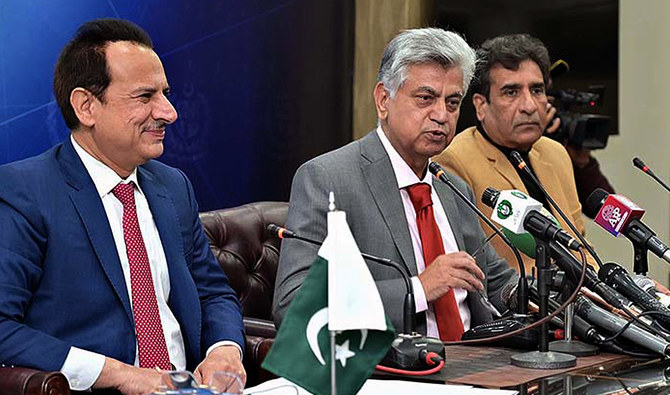
Caretaker Prime Minister Anwaar ul Haq Kakar will chair a meeting of the National Security Committee, with all the military services chiefs in attendance, the minister, Murtaza Solangi, told Reuters by telephone.
It aims at a “broad national security review in the aftermath of the Iran-Pakistan incidents,” Solangi said. Kakar cut short a visit to the World Economic Forum in Davos and flew home on Thursday.
The tit-for-tat strikes by the two countries are the highest-profile cross-border intrusions in recent years and have raised alarm about wider instability in the Middle East since the war between Israel and Hamas erupted on Oct. 7.
However, both sides have already signalled a desire to cool tensions, the highest in years, although they have had a history of rocky relations.
Iran said Thursday’s strikes killed nine people in a border village on its territory, including four children. Pakistan said the Iranian attack on Tuesday killed two children.
United Nations Secretary-General Antonio Guterres urged the two nations to exercise maximum restraint. The US also urged restraint although President Joe Biden said the clashes showed that Iran is not well liked in the region.
Islamabad said it hit bases of the separatist Baloch Liberation Front and Baloch Liberation Army, while Tehran said its drones and missiles targeted militants from the Jaish al Adl (JAA), a third group.
The targeted militant groups operate in an area that includes Pakistan’s southwestern province of Balochistan and Iran’s southeastern Sistan-Baluchestan province. Both are restive, mineral-rich and largely underdeveloped.
The groups which Islamabad targeted inside Iran have been waging an armed insurgency for decades against the Pakistani state, including attacks against Chinese citizens and investments in Balochistan.
The JAA, which Iran targeted, is also an ethnic militant group, but with Sunni Islamist leanings that primarily Shiite Iran sees as a threat.
The group, which has had links to Islamic State, has carried out attacks in Iran against its powerful Revolutionary Guard Corps.
Against the backdrop of the war in Gaza, Iran and its allies had been flexing their muscles in the region, even before its cross-border incursion into Pakistan.
Iran launched strikes on Syria against what Tehran said were Islamic State sites, and Iraq, where it said it had struck an Israeli espionage center.
The Iran-backed Houthi militia in Yemen have targeted shipping in the Red Sea since November, saying they are acting in solidarity with Palestinians.


![]()

Pakistan’s civil, military leaders to review Iran standoff — minister
Short Url
https://arab.news/4tc8a
Pakistan’s civil, military leaders to review Iran standoff — minister
- Neighbours carried out drone and missile strikes on militant bases in each other’s territory this week
- PM Kakar cut short a visit to the World Economic Forum in Davos and flew home on Thursday
Latest updates


© 2026 SAUDI RESEARCH & PUBLISHING COMPANY, All Rights Reserved And subject to Terms of Use Agreement.