ISLAMABAD: The Pakistan Tehreek-e-Insaf (PTI) party of former Pakistani prime minister Imran Khan has said it would utilize its strong social media network to educate voters about candidates after it was stripped of its traditional electoral symbol of a cricket bat in a court ruling last week.
The Election Commission of Pakistan stripped the PTI of the symbol on the grounds that it had not held intra-party elections, a prerequisite for any party to take part in the Feb. 8 vote. The ruling was challenged in the Supreme Court, where it was upheld on Jan. 13.
As things stand, Khan’s party now no longer has a single electoral symbol to rally behind and instead, each of his hundreds of candidates has been given separate symbols from an independent symbol list. The symbols appear on ballot papers, with voters able to put a stamp on their symbol of choice. The ballot paper also has names, but over 40 percent of Pakistan’s 241 million population are illiterate, making the pictures extra important for recognition. Separate symbols for each PTI candidate will also mean extra costs to produce separate campaign material for each candidate.
Pakistan’s election process involves thousands of candidates and dozens of political parties and symbols. A single ballot paper has a long list of options for voters. A total of 150 symbols have been assigned to political parties and another 174 will be given to independent candidates for this election.
“Yes, we have lost the election symbol, but it doesn’t mean we are out of the election race,” senior PTI leader Sayed Zulfikar Bukhari, told Arab News.
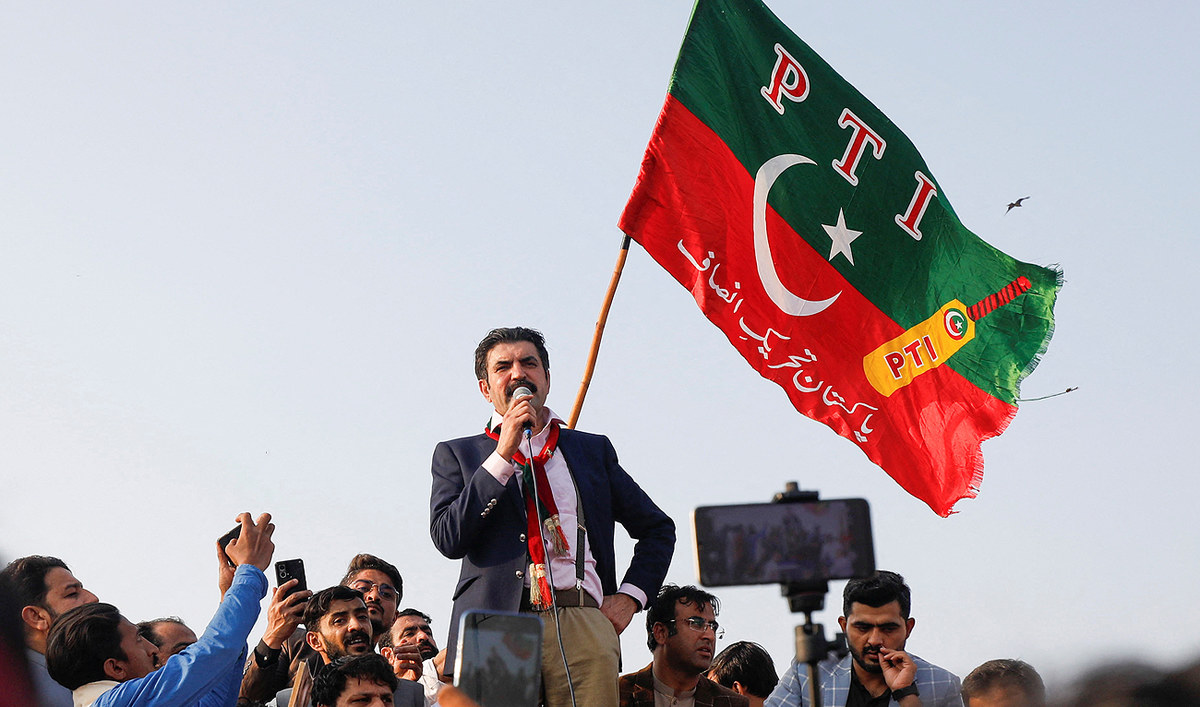
Leader Pakistan Tehreek-e-Insaf (PTI) and former prime minister Imran Khan's lawyer Sher Afzal Khan Marwat speaks to supporters after the Election Commission of Pakistan (ECP) had stripped the party's electoral symbol of a cricket bat on technical grounds, during a rally ahead of general elections in Karachi on January 14, 2024. (REUTERS)
“Our social media team has been actively working on different strategies to let the people in each constituency know about the PTI candidates for national and provincial assemblies’ seats. We will overcome all the obstacles in our way with the help of our voters and win the election.”
Khan, currently serving a three-year jail sentence in a graft case, is arguably Pakistan’s most popular politician and his PTI uses social media as a key weapon in its political activities. A dedicated election trends search engine launched by Google on Tuesday showed the PTI was ahead by a large margin compared to rival political parties in online searches. In the last election, the party used a vast database of voters and social media apps to conduct electioneering, from pre-poll targeting of voters to on-the-day mobilization of supporters.
But losing the bat symbol may turn out to be a decisive blow for Khan’s party, already at odds with powerful army generals and grappling with what it calls a military-backed crackdown that has gathered pace ahead of the Feb. 8 vote. The army denies targeting the party.
With all PTI candidates contesting independently with various symbols such as the kettle, brinjal, tongs, etc, there are concerns the party would not get reserved seats as these are allocated for political parties.
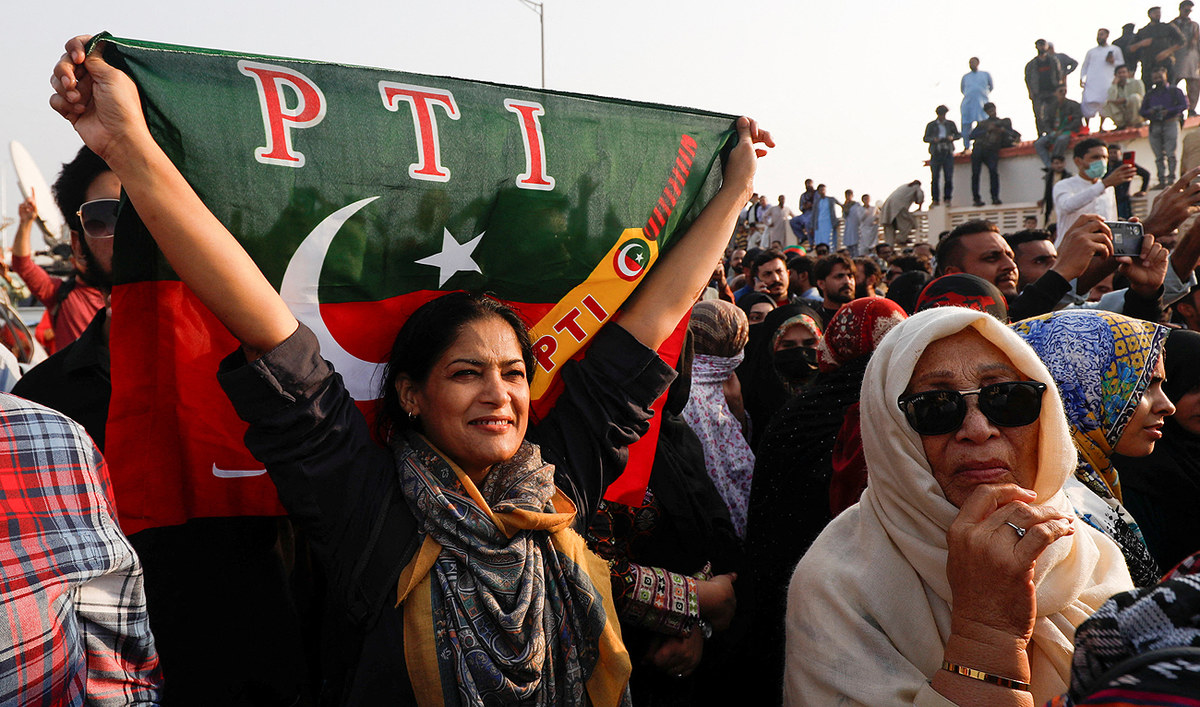
A supporter of Pakistan Tehreek-e-Insaf (PTI) waves the party flag during a rally ahead of the general elections in Karachi on January 14, 2024. (REUTERS)
All political parties contesting elections are required to submit lists of their candidates for reserved seats of women and minorities with the Election Commission of Pakistan before the election. After the vote, parliamentary parties are awarded reserved seats on the basis of the general seats a party wins. Without a unified symbol and with its candidates contesting as independents, the PTI candidates’ bloc may not be eligible for reserved seats handed out to political parties.
There are a total of 266 reserved seats in the parliament, including 70 in the National Assembly, which provide a boost to party positions in parliament.
Rashid Chaudhry, a national coordinator for the election observer group, the Free and Fair Election Network (FAFEN), said there were “grave political implications” for the PTI of not having a unified electoral symbol in the elections.
“The party won’t get the reserved seats which is a major setback for it in the parliament,” he said, adding that the party could also face difficulties in getting its candidates elected to the Senate in elections due in March this year.
Advocate Burhan Moazzam Malik said a majority of voters in Pakistan identified their political parties and respective candidates through election symbols.
“The denial of an electoral symbol to the party is a disaster for democracy,” he said, adding that PTI candidates would now have separate symbols for each national and provincial constituency, which would confuse voters.
“This will open a way for corruption and horse trading in the parliament after the elections as PTI would not have any constitutional control over its lawmakers,” he told Arab News.
“This denial of an electoral symbol to the PTI will not augur well for democracy and rule of law in the country.”