

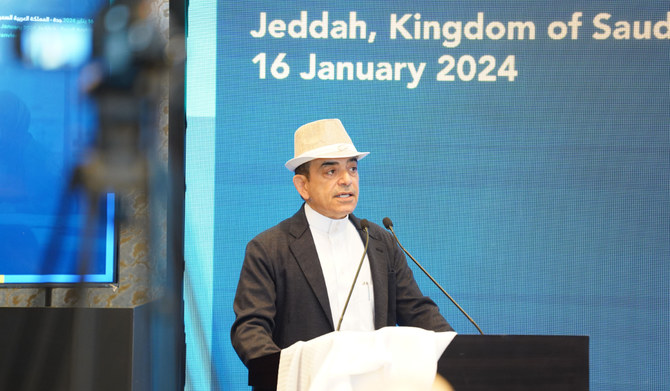
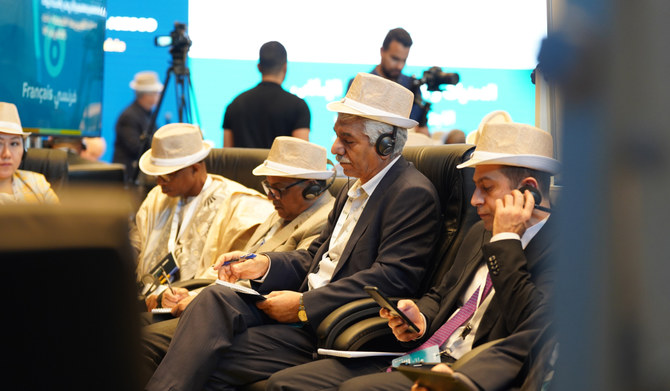


JEDDAH: The 44th session of the Executive Council of the Islamic World Educational, Scientific and Cultural Organization began in Jeddah on Tuesday.
Hosted by Saudi Arabia’s National Commission for Education, Culture and Science, the three-day event is being attended by the 54 member states of ICESCO.
The Saudi commission spoke of the Kingdom’s role in driving educational, cultural, and scientific development both regionally and globally.

The Executive Council session’s outcomes are to be endorsed by ICESCO’s General Conference, which is considered the organization’s main legislative authority. (Supplied)
Prince Badr bin Abdullah bin Farhan, the minister of culture and chairman of the Saudi commission, said: “The event will cement the Kingdom’s efforts aiming at creating spheres of cultural communication and exchange as well as scientific and social development. These sectors are considered to be cornerstones for developed human societies.”
ICESCO Director General Dr. Salim Al-Malik emphasized the organization’s ongoing efforts in education, science, and culture, as well as its program for the improvement of water, sanitation, and hygiene services in rural areas.
HIGHLIGHT
Participants discussed ways to enhance societal resilience, promote inclusion for all in the field of science, and build capacities in the realm of climate action to preserve heritage sites.
Al-Malik provided an overview of the organization’s key focus areas, including ethical leadership, human resource investment, good governance, innovation culture, stakeholder centrism, smart services, idea development, information exchange, establishment of standards, and cooperation mechanisms in policy-making and capacity development.
Participants also discussed ways to enhance societal resilience, promote inclusion for all in the field of science, and build capacities in the realm of climate action to preserve heritage sites.

Mohamed Ayman Ashour
Egypt’s Minister of Higher Education and Scientific Research Mohamed Ayman Ashour delivered a presentation on the challenges and opportunities in the Islamic world.
He discussed the roles, global rankings, and qualitative initiatives of ICESCO member state universities, emphasizing their impact on achieving Sustainable Development Goals.
Ashour also highlighted the significance of the Islamic world, representing 25 percent of the global population, with some 60 percent being young people.
Representatives from various ICESCO member states brainstormed means and tools to promote innovation in a discussion session called “Let’s Chart the Future of ICESCO: The ICESCO We Want.”
Ahmed Said Bah, adviser to ICESCO’s director general for partnerships and international cooperation, outlined the organization’s new vision and action plans to support diverse beneficiaries in Islamic world countries, with particular focus on education, science, culture, and environmental protection.
The ICESCO session will continue on Wednesday and Thursday and discuss the organization’s work and plans, while identifying future action and strategies in light of current achievements. It will be concluded by the drafting of a final report outlining future recommendations related to plans and budgets.
The Executive Council session’s outcomes are to be endorsed by ICESCO’s General Conference, which is considered the organization’s main legislative authority.


