

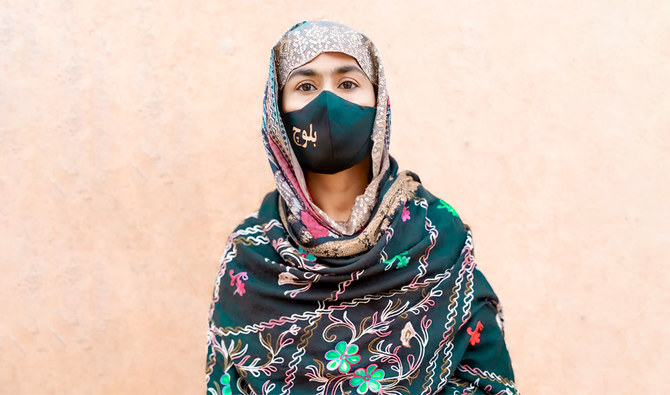

QUETTA: In the heart of a remote district in Pakistan’s southwestern Balochistan province, a woman has boldly entered the male-dominated political arena, challenging a powerful tribal chief whose family has been in power for decades and represented the area in both national and provincial assemblies.
Rihana Bibi Magsi hails from an ethnic Baloch tribe based in the remote provincial constituency PB-11 in Jhal Magsi district. She said her ambition was to contest for a general seat in the February 8 elections from a local political platform known as Jamot Qaumi Movement.
“No one has ever defeated these powerful tribal chiefs. This is the first time a woman is contesting elections against them in order to bring about change in this area,” she told Arab News over the phone from her native Sargani village.
Jhal Magsi presents a stark example of underdevelopment despite the influential political legacy of Nawab Zulfiqar Ali Magsi who has served both as the governor and chief minister of the province. The district grapples with the challenges typical of many areas in Balochistan, including inadequate infrastructure, limited access to health care and scarce economic opportunities.
The 35-year-old provincial assembly candidate said her quest to oppose her own tribal chieftains was not without challenges and risks, yet she added that her objective was to create awareness among her community members to empower themselves and secure their rights.
“The family of the tribal chief has been ruling the people of the area for the last four decades,” she continued. “But the residents of Jhal Magsi are deprived of education, health, water and other basic facilities.”
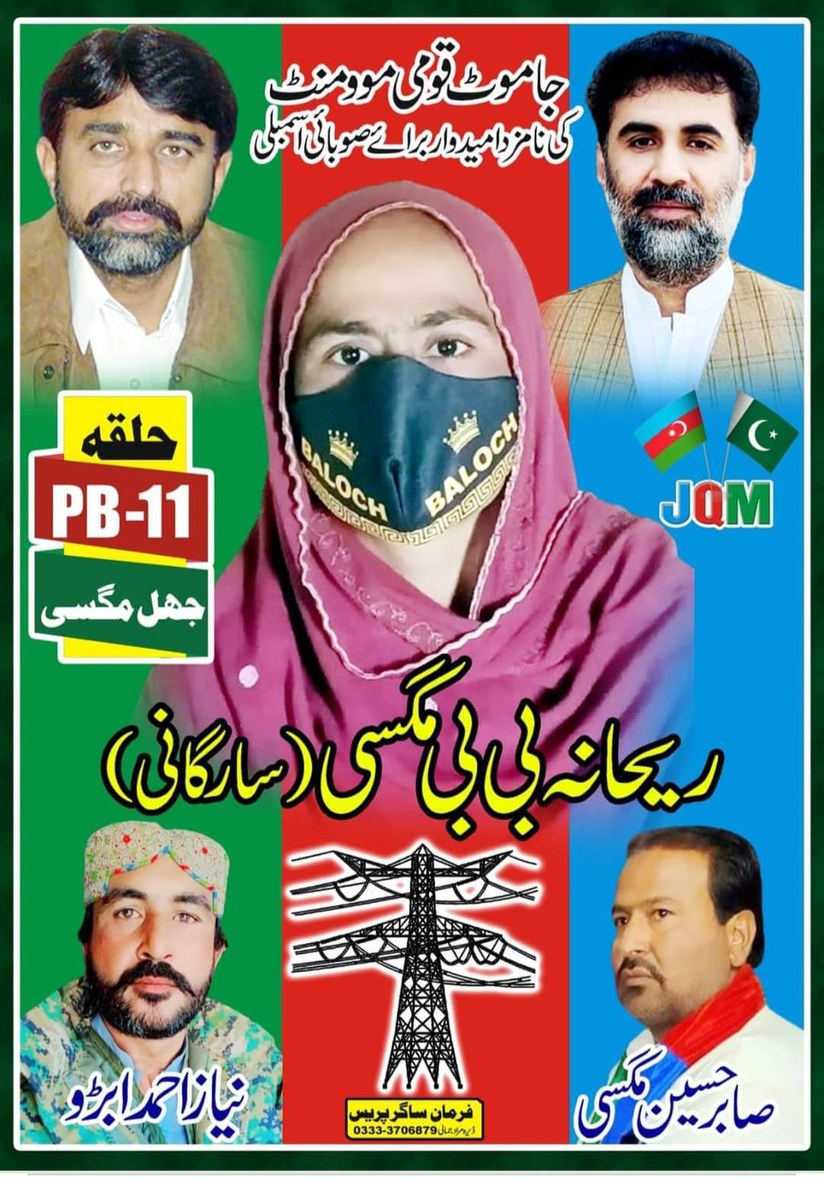
The picture shared on January 6, 2024, shows an election posture of Rihana Bibi Magsi, who hails from an ethnic Baloch tribe based in the remote provincial constituency PB-11 in Jhal Magsi district, Pakistan. (Rihana Bibi Magsi)
According to the Election Commission of Pakistan, the area has a total of 74,092 registered voters, including over 33,000 female voters, who are expected to cast their ballots on polling day.
Magsi is the only woman among 16 male candidates, and she has been traveling from one village to another on the back of motorbikes with her brother and husband who have been supporting her election campaign.
She said that she has been working 14 hours a day, focusing on the female population to convince them about the power of vote.
“I have received many job offers and other proposals from my opponent candidates who want me to step down from the elections, but I will continue to strive for the rights of my people,” she added.
“The oppression, injustices and deprivation by the powerful feudal masters in district Jhal Magsi forced me to contest elections because without coming into power we can’t change the society,” she told Arab News.
According to her 41-year-old brother, Sabir Hussain, Magsi is deeply inspired by Dr. Mahrang Baloch who is leading a campaign against enforced disappearances and extrajudicial killings in Islamabad.
“Local residents of the area have been encouraging my sister since she has taken a bold step to bring about change in the district without thinking about the consequences,” he added.
Abdul Hameed, a journalist from the same district who has covered elections for the last 15 years, said Magsi was right about the lack of awareness among people regarding their own interests due to a flawed education system.
“It is good that a female candidate has come forward to take on powerful politicians in the area,” he told Arab News. “But she is not holding any public rallies or corner meetings but going door-to-door to run her campaign.”
However, he pointed out people needed political awareness before change would arrive in this rural area of the province, adding it was going to be a long-drawn process.


