Trailblazing non-Muslim woman vies for provincial assembly seat in Pakistan

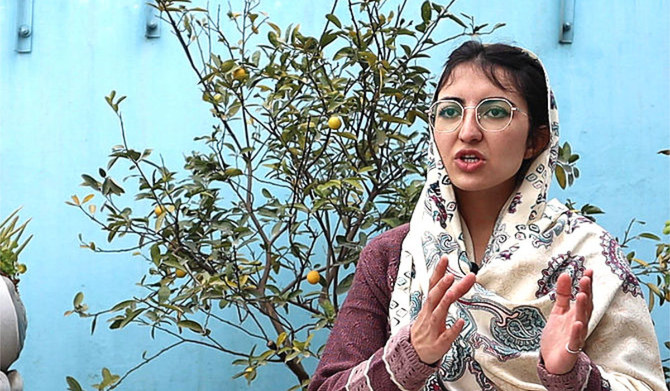
Dr. Saveera Parkash who will contest on Pakistan Peoples Party ticket says the change of career path from a doctor to a politician won’t make a difference since she will continue to serve people. (Supplied)
Short Url
Updated 13 January 2024
Follow

Trailblazing non-Muslim woman vies for provincial assembly seat in Pakistan

ISLAMABAD: A 25-year-old medical professional in Pakistan’s northwest, Dr. Saveera Parkash, has become the first female candidate from a minority community to run for a provincial assembly constituency from Buner district on an election ticket awarded by the Pakistan Peoples Party.
Parkash confirmed to Arab News her candidacy for the Khyber Pakhtunkhwa Assembly’s PK-25 constituency on Wednesday, saying she had already initiated her campaign.
Buner, part of the Malakand Division, was under militant control after the Pakistani Taliban extended their outreach to the area, which was later reclaimed by security forces in a 2009 military operation.
The region adheres to Pashtunwali, a strict tribal code that restricts women’s roles in various domains traditionally dominated by men, including national and provincial politics. However, this did not deter Parkash from jumping into the fray, challenging the norms by filing her nomination for the February 8 national polls.

FASTFACTS

• Asked about her inspiration to join politics, the young doctor named her father, Om Parkash, who remained active in the field for over 30 years.

• Parkash confirmed her candidacy for the Khyber Pakhtunkhwa Assembly’s PK-25 constituency, saying she had already initiated her campaign.

“I am thankful to the PPP for putting its trust in me and giving me the opportunity to participate in the elections,” she told Arab News shortly after receiving her nomination officially. “I am sure that people of Buner will cast their vote in my favor and I will be able to represent them better in the assembly.”
Asked about her inspiration to join politics, the young doctor named her father, Om Parkash, who remained active in the field for over 30 years, having dedicated himself as a PPP worker since student life. He was also the cofounder of the People Doctors Forum which strengthened the party’s overall political position.
However, her father never participated in any election since he was a government employee who worked as a medical officer at Buner’s District Headquarters Hospital before retiring last year in January.
Aziz Buneri, a local journalist with an interest in provincial politics, said it was unprecedented for a woman belonging to a minority religious community to submit her nomination papers to contest elections.
He noted women were criticized in Khyber Pakhtunkhwa for filing nomination papers in the past due to the tribal outlook of people, though he maintained Parkash’s case was different.
“Civil societies members, political parties and the youth have all appreciated Dr. Saveera Parkash and have shown immense admiration for her decision to submit nomination papers,” Buneri added.
The PPP candidate concurred with the assessment herself, saying she had an edge over others since many people were supporting her for being a woman from a minority community.
“They have accepted me quite openly,” she said. “Many of them call me ‘Daughter of Buner’ and have been supporting me like their own daughter or sister.”
Parkash said she personally did not consider herself to be a member of a minority community since she was born in a culturally and religiously diverse family, adding that her father identified himself as Sikh while her mother was a Christian from Kazakhstan. “My parents have taught me to serve humanity,” she continued. “I don’t want to be categorized as part of a specific religion. I respect every faith.”
While the PPP has not won any seat from Buner since the mid-1990s, the 25-year-old said people around her were so enthusiastic about her decision to contest the polls that she felt she had already won the elections.


Trump insists he struck Iran on his own terms

Updated 04 March 2026
Follow

Trump insists he struck Iran on his own terms

  • “We are now a nation divided between those who want to fight wars for Israel and those who just want peace and to be able to afford their bills and health insurance,” Marjorie Taylor Greene posted on X.
  • Rubio himself doubled down on Tuesday after meeting with US House and Senate members, while insisting that “No, I told you this had to happen anyway”

WASHINGTON, United States: President Donald Trump and his team scrambled Tuesday to reclaim the narrative on why he decided to attack Iran, after his top diplomat suggested the US struck only after learning of an imminent Israeli strike.
Secretary of State Marco Rubio alarmed Democrats — who say only Congress can declare war — as well as many of Trump’s MAGA supporters on Monday when he said: “We knew that there was going to be an Israeli action.”
“We knew that that would precipitate an attack against American forces, and we knew that if we didn’t pre-emptively go after them before they launched those attacks, we would suffer higher casualties,” Rubio told reporters.
Administration officials quickly backpedalled, insisting Trump authorized the strikes because Tehran was not seriously negotiating an accord on limiting its nuclear ambitions, and the United States needed to destroy Iran’s missile capabilities.
“No, Marco Rubio Didn’t Claim That Israel Dragged Trump into War with Iran,” White House Press Secretary Karoline Leavitt posted Tuesday on X.
At an Oval Office meeting later with Germany’s chancellor, Trump went further, saying that “Based on the way the negotiation was going, I think they (Iran) were going to attack first. And I didn’t want that to happen.”
“So, if anything, I might have forced Israel’s hand.”

- Had to happen? -

Rubio himself doubled down on Tuesday after meeting with US House and Senate members, while insisting that “No, I told you this had to happen anyway.”
“The president made a decision. The decision he made was that Iran was not going to be allowed to hide... behind this ability to conduct an attack.”
Critics seized on the muddied messaging to accuse Trump of precipitating the country into a war without a clear rationale, without informing Congress — and without a clear idea of how it might end.
They noted that just two weeks ago, Israel Prime Minister Benjamin Netanyahu pressed Trump again in Washington to take a hard line, in their seventh meeting since Trump’s return to power last year.
Some Republican allies rallied behind the president, with Senator Tom Cotton, chairman of the Senate Intelligence Committee, insisting that “No one pushes or drags Donald Trump anywhere.”
“He acts in the vital national security interest of the United States,” Cotton told the “Fox & Friends” morning show.
But as crucial US midterm elections approach that could see Republicans lose their congressional majority, Trump risks shedding supporters who had welcomed his pledge to end foreign military interventions.
“We are now a nation divided between those who want to fight wars for Israel and those who just want peace and to be able to afford their bills and health insurance,” Marjorie Taylor Greene, a top former Trump ally and a major figure in the populist and isolationist hard right, posted on X.