

Riyadh fuels 13% surge in spending, with hospitality, food as main drivers

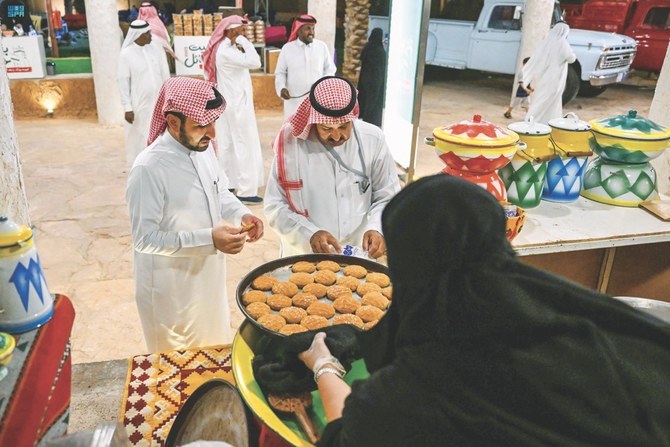
The sectors benefiting the most from Saudi spending through POS transactions were restaurants and cafes, and food and beverages, which both contributed around 15 percent to the overall total. (SPA)
Short Url
Updated 12 January 2024
Follow

Riyadh fuels 13% surge in spending, with hospitality, food as main drivers

  • Point of sale transactions constituted 80 percent of the total, amounting to SR52.37 billion

RIYADH:Cafe and restaurant visits by Saudis helped fuel a 13.35 percent annual spending increase across the Kingdom in November, according to. the central bank.

Data released by the institution, also known as SAMA, showed the total of transactions in the penultimate month of 2023 came in at SR65.85 billion ($17.56 billion) — up from the SR58.1 billion registered in November 2022.
Point of sale transactions constituted 80 percent of the total, amounting to SR52.37 billion, with e-commerce experiencing the most significant growth.
Online payments, specifically using Mada cards, reached SR13.48 billion, reflecting a notable 20 percent increase during this period.
The sectors benefiting the most from Saudi spending through POS transactions were restaurants and cafes, and food and beverages, which both contributed around 15 percent to the overall total.
Spending for restaurants and cafes totaled SR7.87 billion, while food and beverages transactions came in at SR8.06 billion.
Riyadh stood out as the city where a significant portion of this spending occurred.
Spending on miscellaneous goods and services, including personal care and supplies, maintenance and cleanings contributed 12 percent to the total totaling SR6.07 billion.
The education sector experienced the highest growth in POS spending, surging by 62.37 percent during this period and reaching SR740 million. This includes diverse transactions, including tuition fees, educational materials, or other related services.
As per a 2021 national payment study released by the Saudi central bank, the saying “Cash is no longer King” holds true, as it is not the preferred method of payment for consumers.
The statistics for ATMs in November underscore this shift. Despite the issuance of over 5.25 million cards, cash withdrawals using both banks and Mada cards increased by only 0.96 percent over the period, reaching SR45.6 billion.
Spending on public utilities using POS transactions ranked second, experiencing a 42.23 percent growth and reaching a total of SR523.8 million.
This suggests a transition to electronic and convenient payment methods for essential services in Saudi Arabia, potentially signaling an enhanced focus on digitalization, convenience, and efficiency in financial transactions.
Survey results from a SAMA study in 2021 confirm that government agencies almost all completely shifted to cashless methods across the spending categories.
Another sector that witnessed increased growth in POS spending was recreation and culture, growing by 23 percent during this period to reach SR1.35 billion. This typically includes spending related to entertainment, leisure activities and participation in cultural events.
The entertainment sector stands out as a testament to the profound transformation of Saudi Arabia over the past six years.
According to the International Trade Administration report from January this year, the General Entertainment Authority issued a total of 11,400 licenses and permits for the entertainment sector, attracting over 120 million attendees by the end of 2022.
Furthermore, the industry created over 100,000 job opportunities, with more than 1,000 companies actively operating within this sector, as highlighted in the report.
In this context, spending on hotels experienced significant growth, increasing by nearly 19 percent during this period and reaching SR1.37 billion.
Riyadh accounted for 34 percent of these transactions, with POS sales totaling SR17.66 billion. This constitutes 17 percent rise and reflects the highest growth rate among  Saudi Arabia’s major cities.
As per Saudi Invest, the national investment promotion platform of Saudi Arabia, the Riyadh region, recognized as the economic powerhouse of the country and a prominent hub in the Middle East, is undergoing substantial transformation and experiencing industry growth.
Government initiatives, such as the national regional headquarter program, have attracted premier multinational organizations, positioning Riyadh as a leading global destination.
The region’s competitive investment environment is synonymous with prosperity and an enhanced quality of life.
Notably, large-scale initiatives focused on healthcare, life sciences, and collaboration with international academic institutions are further improving services and fostering development in the region.


Saudi Maaden reports 156% profit surge to $2bn on strong commodity prices, record production

Updated 05 March 2026
Follow

Saudi Maaden reports 156% profit surge to $2bn on strong commodity prices, record production

RIYADH: Saudi mining and metals company Maaden has reported a 156 percent jump in its net profit attributable to shareholders for 2025, driven by higher commodity prices, record production volumes, and a one-off bargain purchase gain.

The state-backed giant posted a net profit of SR7.35 billion ($1.95 billion) for the full year 2025, an increase from SR2.87 billion in the previous year. The firm’s revenue surged by 19 percent to SR38.58 billion, up from SR32.55 billion in 2024.

This comes as Saudi Arabia steps up efforts to expand its mining sector as a pillar of economic diversification, encouraging international participation and private investment to unlock the Kingdom’s estimated $2.5 trillion in untapped mineral resources under Vision 2030.    

In a statement on Tadawul, the company said: “Performance was led by record phosphate production, near record aluminum production, an increase in all three of Maaden’s main output commodity prices.”

The performance was also fueled by a 60 percent increase in gross profit, which reached SR14.79 billion. In its annual results announcement, Maaden attributed the top-line growth to “higher commodity market prices for phosphate, aluminum and gold business units,” as well as increased sales volumes in its phosphate and aluminum segments. This was partially offset by slightly lower sales volume in the gold unit.

Maaden’s CEO, Bob Wilt, hailed 2025 as a transformative year for the company, marked by strategic growth and operational excellence. “This was a great year for Maaden’s strategic growth. We delivered strong financial results and sustained operational excellence across the business,” he said in a statement.

“This was driven by growth in production across all businesses, including record-breaking DAP (di-ammonium phosphatevolumes), disciplined cost control across and a clear commitment to our role as a cornerstone of the Saudi economy,” Wilt added.

Profitability was further bolstered by an increased share of net profit from joint ventures and an associate. This included a one-off bargain purchase gain of SR768 million related to Maaden’s investment in Aluminium Bahrain B.S.C. The company also benefited from lower finance costs.

The fourth quarter of 2025 was strong, with Maaden swinging to a net profit of SR1.67 billion, compared to a loss of SR106 million in the same period of the prior year. Quarterly revenue rose 7 percent to SR10.64 billion.

The firm achieved record production of di-ammonium phosphate, reaching 6.72 million tonnes for the year, a 9 percent increase. Aluminum production remained near-record levels, while the company added a net 7.8 million ounces to its reportable gold mineral resources through discovery and resource development.

The phosphate division saw sales jump 17 percent to SR20.77 billion, with the earnings before interest, taxes, depreciation, and amortization margin expanding to 47 percent. The aluminum business reported a 9 percent increase in sales to SR10.99 billion, with EBITDA more than doubling in the fourth quarter.

Looking ahead, Wilt emphasized that the pace of growth will accelerate as the company advances key initiatives, including the Phosphate 3 Phase 1 and Ar Rjum projects, which remain on budget and schedule. Maaden has also secured a gas supply for its future Phosphate 4 project.

“This pace of growth will only accelerate. Not only as we advance projects and increase the scale of our exploration program, but as we continue to grow production and implement technology that will further modernize, streamline and unlock value,” Wilt added.

Earnings per share for the year rose sharply to SR1.91, up from SR0.78 in 2024. Total shareholders’ equity increased by 18.7 percent to SR61.59 billion.