

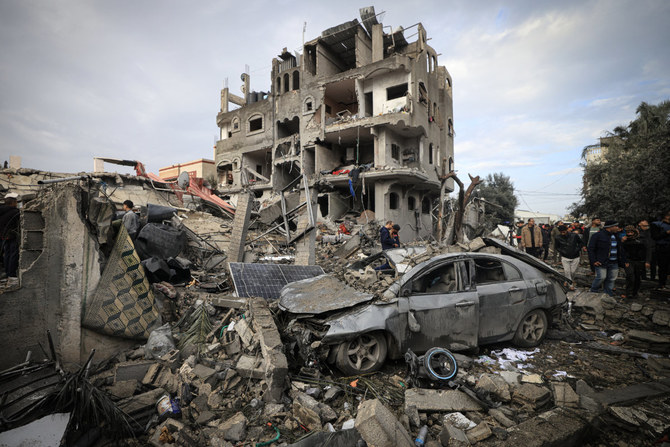

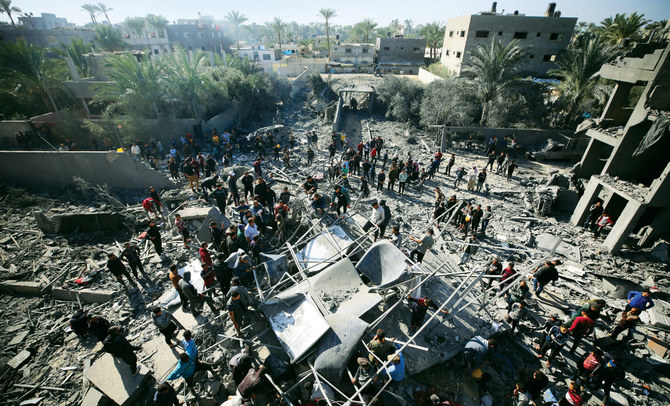
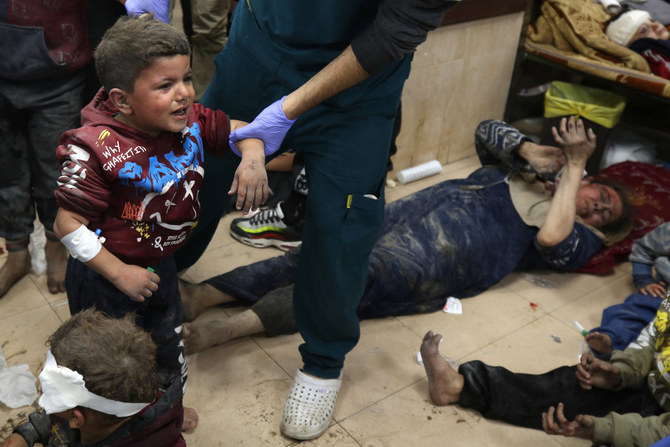
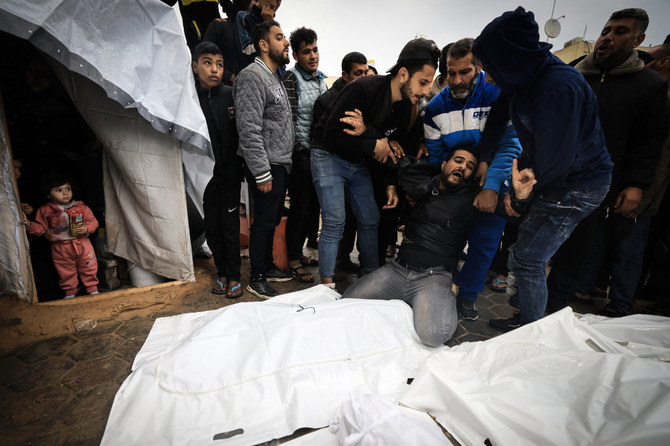

LONDON: Just hours before midnight on Christmas Eve, an Israeli airstrike on Maghazi refugee camp, east of Deir Al-Balah in the central Gaza Strip, killed more than 70 people, including 12 women and seven children, according to figures from the nearby Al-Aqsa Hospital.
The UN estimates the strike killed at least 86, making it one of the single most deadly strikes of the entire war, devastating an overcrowded residential area and burying whole families under tons of rubble.
The Palestinian Red Crescent said that the work of rescue teams was further hindered by damage to roads between the camps of Bureij, Maghazi and Nuseirat. Shortages of fuel to power machinery also meant that rescuers had to search for survivors with their bare hands.
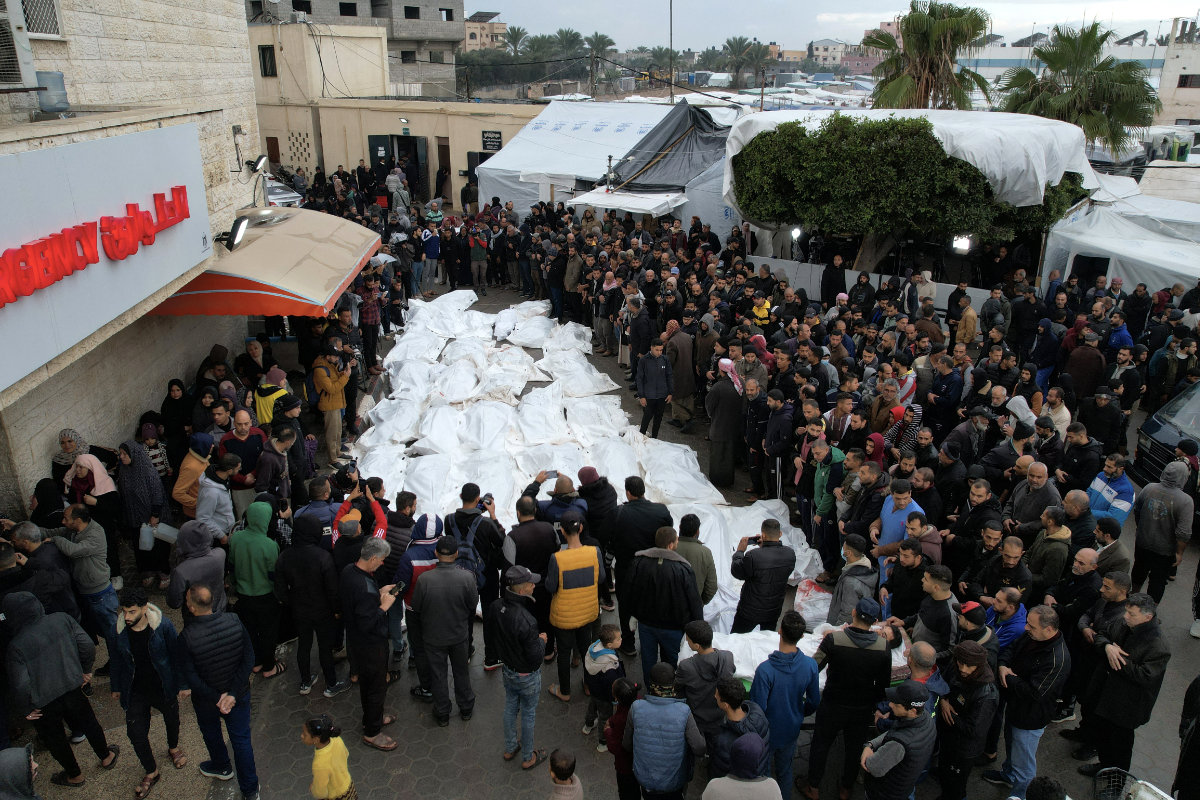
Palestinians mourn their relatives, killed in an overnight Israeli strike on the Al-Maghazi refugee camp, during a mass funeral at the Al-Aqsa hospital in Deir Al-Balah, central Gaza Strip, on December 25, 2023. (AFP)
Medecins Sans Frontieres tweeted on Dec. 25 that Deir Al-Balah’s Al-Aqsa Hospital had admitted 209 injured and 131 dead following Christmas Eve strikes on both Maghazi and Bureij.
Hamas, the Palestinian group that has controlled the Gaza Strip since 2007, described the attack as “a horrific massacre” and “a new war crime.” For its part, the Israeli government has called the bombing a “regrettable mistake” due to the use of “an incorrect munition.”
In a statement on Dec. 28, the Israel Defense Forces said that a preliminary investigation by a special committee revealed that the bombing had destroyed buildings that were not military targets, killing and injuring dozens of civilians.

Men recover the body of a victim killed in the aftermath of an overnight Israeli strike at al-Maghazi refugee camp on December 25, 2023. (AFP)
The Israeli military added that the “extensive collateral damage that could have been avoided” in Maghazi was due to the use of improper ordnance. “The type of munition did not match the nature of the attack,” an Israeli military official told the state-owned broadcaster Kan.
The IDF vowed “to draw lessons from the incident.” However, in an interview with Sky News on Dec. 29, Eylon Levy, an official Israeli spokesperson, said that his government refused to apologize for “waging this campaign to bring the Hamas terror regime to justice.”
He stressed that the “war against Hamas” would continue until the militant group surrendered and released the remaining hostages it took on Oct. 7, when it carried out brutal massacres and a series of kidnappings across southern Israel.
Hamas killed an estimated 1,200 people, most of them civilians, and took 240 hostages, including many foreign nationals, 110 of whom were subsequently released in a series of hostage and prisoner swaps.
INNUMBERS
86 Number of people killed in the attack on Maghazi, with some estimates as high as 106.
33K People living in Maghazi refugee camp prior to the conflict, according to the UN.
0.6% Area of the densely populated Maghazi refugee camp
22K+ Death toll in Gaza since Oct. 7, according to the Hamas-run health ministry.
Levy described the killing of civilians in Maghazi as a “regrettable mistake,” adding that “mistakes” are “inevitable” in war.
Tahani Mustafa, a senior Palestine analyst at International Crisis Group, believes official statements like these are part of Israel’s preferred public relations strategy.
“It is the usual Israeli defense of ‘we made mistakes but didn’t mean to’ in order to mitigate the negative publicity Israel is increasingly receiving that is becoming harder to justify and cover up,” she told Arab News.
“They did what they did when they thought they could get away with it, and when they couldn’t, they made futile statements like this to mitigate any PR fallout.”
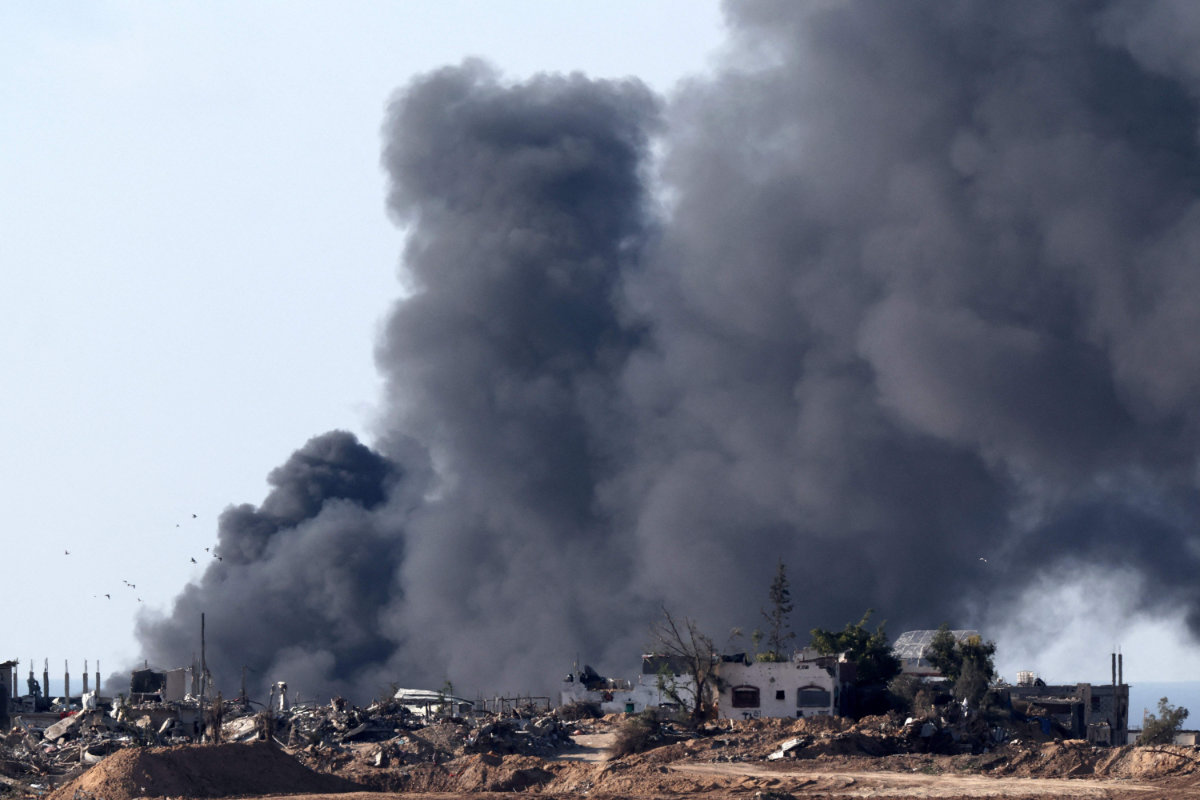
A picture taken from a position in southern Israel along the border with the Gaza Strip, shows smoke billowing over the Palestinian territory during Israeli bombardment on January 5, 2024. (AFP)
She added: “If previous experience is anything to go by, any internal investigation will be immediately dropped once public interest wanes.”
Furthermore, Maghazi is not the only refugee camp in Gaza to have suffered Israeli bombardment in recent weeks, with Bureij and Nuseirat also coming under fire. On Dec. 29 alone, Israeli bombing in central Gaza killed at least 100 Palestinians and injured 150 others.
Such attacks indicate that the mistakes acknowledged by the Israeli military and government officials are either commonplace, or that the IDF takes a cavalier approach to the lives of civilians and the potential for collateral damage.
The Office of the UN High Commissioner for Human Rights has voiced concerns about the bombardment of central Gaza and its densely populated camps.
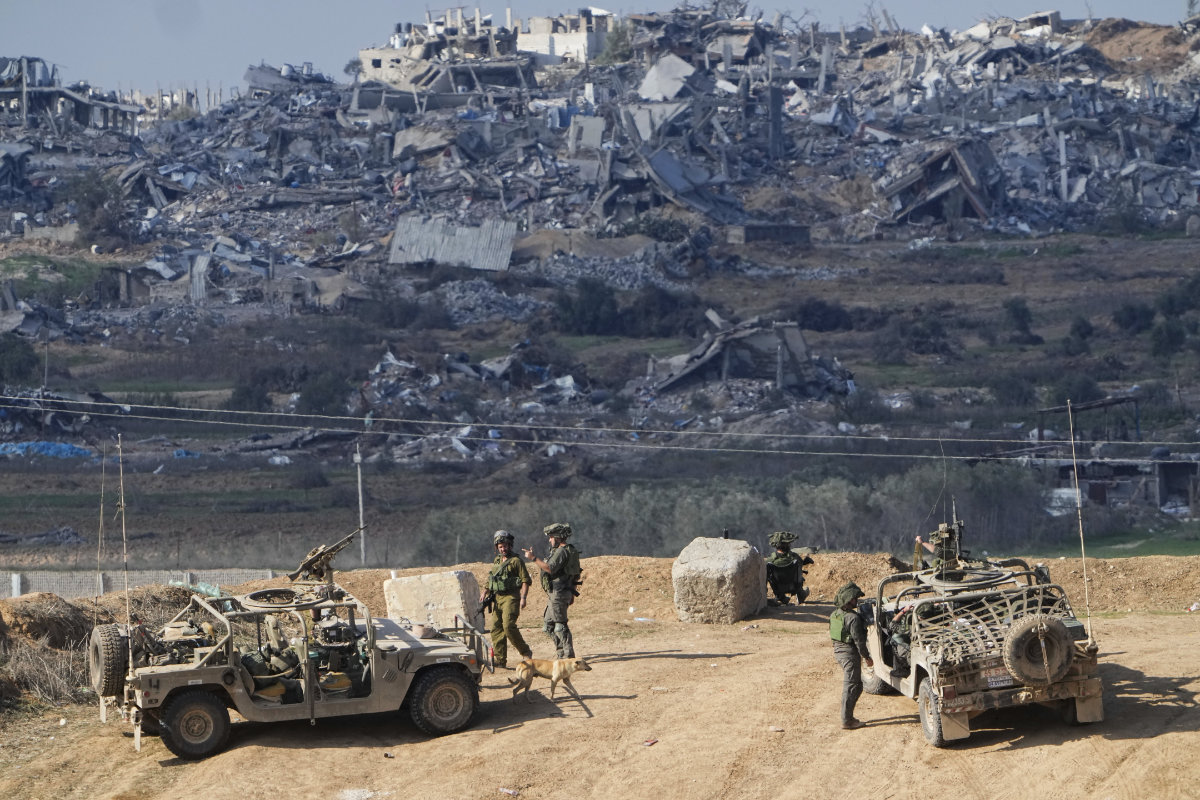
Israeli soldiers take up positions near the Gaza Strip border on Dec. 29, 2023, amid ongoing battles with the Palestinian Hamas movement. (AP Photo)
Founded in 1949, Maghazi originally had a population of about 2,500, which later grew to around 30,000, according to statistics from the UN Relief and Works Agency, UNRWA.
Today, owing to the displacement of Gazan families fleeing Israel’s assault, which has killed more than 22,000 people since Oct. 7, according to the Hamas-run Health Ministry, the camp’s population has climbed to about 100,000.
While the Christmas Eve strike was the deadliest in Maghazi’s history, it was by no means the first. Airstrikes on Oct. 17, Nov. 5 and Dec. 6 also pummeled the densely populated camp — once again testing the veracity of Israeli claims that the Dec. 24 strike was a one-off mistake.

In an earlier Israeli airstrike on the Maghazi refugee camp on December 6, 2023, most of the 18 Palestinians who died and 20 injured were children. (AFP photos)
The first strike in October hit an UNRWA-operated school, killing six people. The Hamas-run Health Ministry also reported that the November strikes killed at least 45 people. Reports from the Guardian and Al Jazeera said that the camp’s only bakery was also destroyed.
The Israeli military is continuing its ground offensive, despite international pleas for an immediate and lasting ceasefire. Calls from Washington to scale back its onslaught, or at least prioritize the preservation of civilian life, also appear to have been disregarded.
US President Joe Biden warned on Dec. 12 that owing to its “indiscriminate bombing” of Gaza, Israel was losing international support. Two days later, he told reporters that Israeli forces must “be focused on how to save civilian lives — not stop going after Hamas, but be more careful.”
The day after Christmas, IDF spokesman Rear Adm. Daniel Hagari announced that Israeli forces had “expanded the combat to the area known as the Central Camps.”

Humanitarian organizations, UN agencies and many Western media outlets have confirmed that the Israeli military has been attacking areas that it had previously encouraged displaced Gazans to flee to and had designated as “safe.”
An analysis by CNN found that the IDF had carried out strikes in Rafah, which Israel had previously labeled as a safe zone for refugees.
The Dec. 21 report also showed that Israeli statements identifying “safe zones” or “danger zones” are often contradictory and confusing.
Given the disruption to electricity and telecommunications caused by the conflict, many Palestinians are unable to view maps delineating these zones, which can only be accessed using QR codes printed on leaflets.
Criticism of the IDF’s conduct in Gaza has not been reserved to the intensity of its air and ground raids but also its choice of weapons and ordnance.
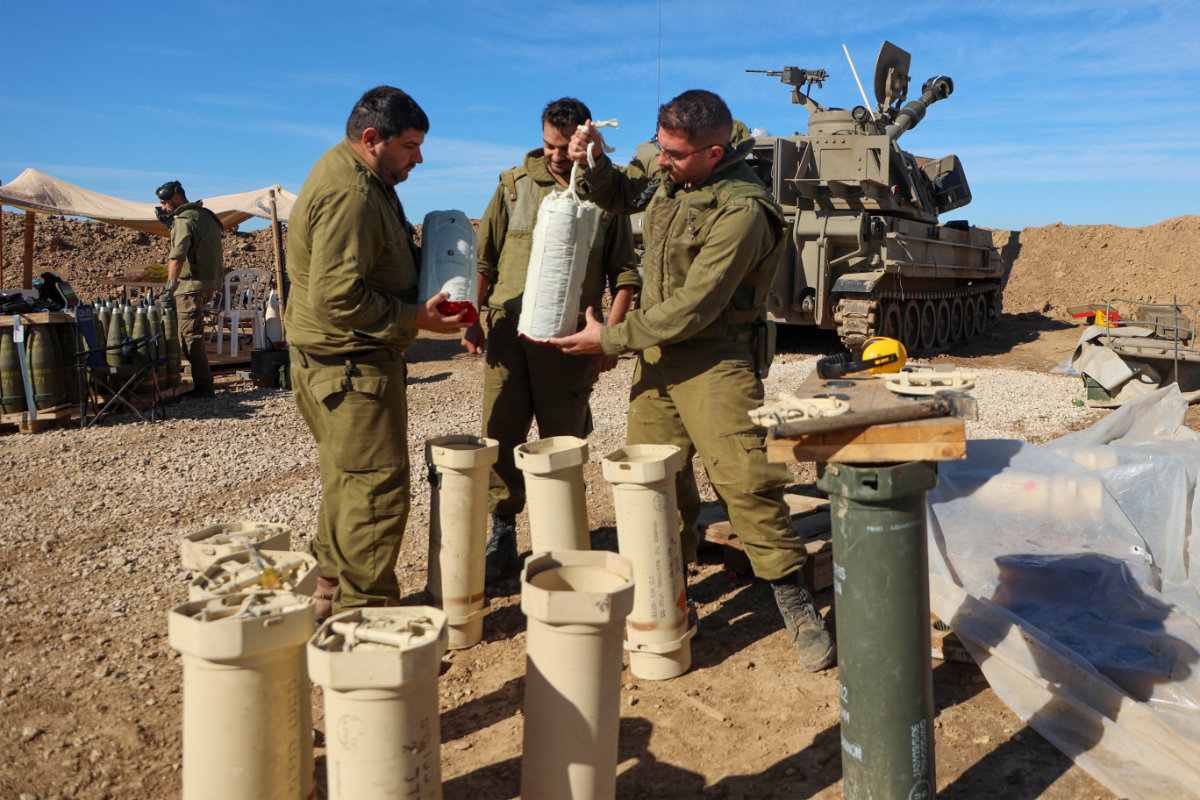
Israeli soldiers prepare munitions near a self-propelled artillery howitzer in southern Israel near the border with the Gaza Strip on December 16, 2023. (AFP)
An investigation by The New York Times published on Dec. 21 found that the IDF has used US-supplied 2,000-pound bombs, which munitions experts say are unsuitable for use on densely populated areas.
These bombs were dropped in an area of southern Gaza where Israel had ordered civilians to move for their “safety,” the investigation revealed.
Those living in Maghazi can only hope for a pause in the fighting that will allow aid to enter the camp, which has been cut off from the surrounding region due to regular bombardment.
However, Herzi Halevi, the IDF’s chief of staff, has said that the offensive in Gaza will last “many more months.”


