

Saudi Arabia’s venture ecosystem boosts MENA funding

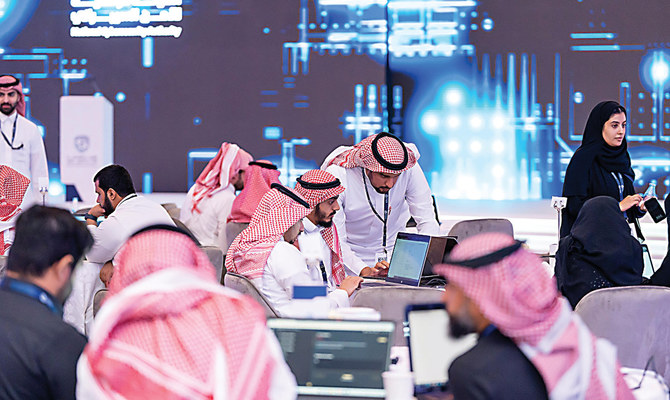
Saudi Arabia has maintained its lead as the top destination for venture capital funding for the second consecutive month with its large-sized transactions. (SPA)
Short Url
Updated 06 January 2024
Follow

Saudi Arabia’s venture ecosystem boosts MENA funding

  • MENA startups raised $2.2 billion across 488 deals in 2023

CAIRO: Saudi Arabia has solidified its position as a top destination for venture capital funding in the Middle East and North Africa thanks to a record-breaking end to 2023.

In December, the region witnessed an unprecedented influx of startup funding, amounting to $1.15 billion, according to Wamda’s monthly report in collaboration with Digital Digest.

This figure marks an 825 percent increase year-on-year and a 55 percent rise month-on-month. Significantly, $700 million of this sum was attributed to the debt round raised by the UAE-founded and now Saudi-headquartered fintech, Tabby.  

Excluding this substantial debt round, MENA startups raised $456 million in December alone, an 18 percent increase on November and a 253 percent rise on the same month of 2023.  

Overall, 2023 saw startups in the region secure $3.98 billion across 498 deals.

While this represents a marginal increase of less than 1 percent from 2022’s $3.95 billion raised over 802 deals, the picture changes when debt rounds are discounted.  

Excluding these, MENA startups raised $2.2 billion across 488 deals in 2023, compared to $3.45 billion across 786 deals in 2022, showing a significant 36 percent fall in deal value and a 38 percent drop in transactions.

The year 2023 also saw a 256 percent increase in the amount of debt raised compared to the previous year, totaling $1.77 billion.  

December’s deal-making activity demonstrated growth with 60 transactions recorded, a jump from November’s 49 deals.  

This increase was driven largely by an upswing in grants concentrated in the UAE, Saudi Arabia, and Lebanon, and the graduation of 19 startups from the Sanabil 500 Startup accelerator program and Techstars Riyadh. 

Saudi Arabia maintained its lead as the top destination for venture capital funding for the second consecutive month, primarily due to large-sized transactions by Tamra and Tabby. Egypt was a distant second, and the UAE came in third. 
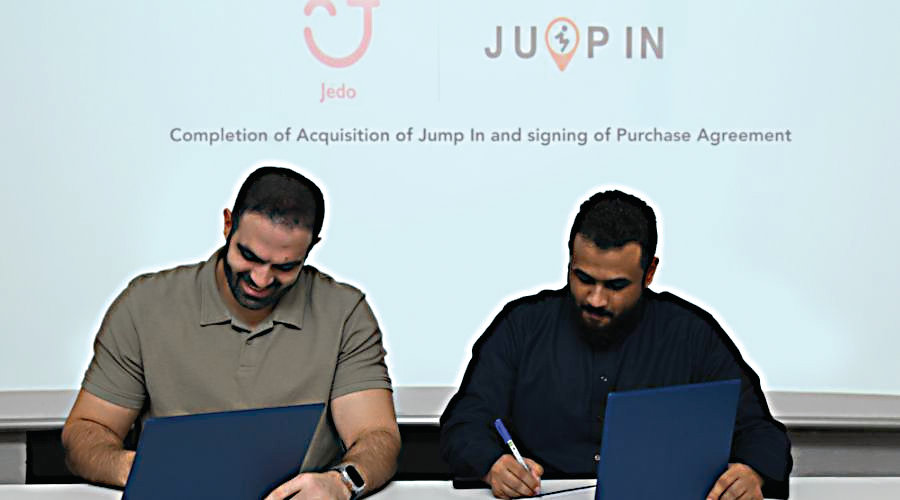


Dutch travel tech company Jedo has acquired the Jump-in app, bolstering its market presence in the Kingdom and expanding its user base. (Supplied)

Fintech emerged as the dominant sector, with 25 deals exceeding $1 billion in funding, including Tabby’s debt round. Clean tech followed, with substantial funding rounds for Saudi Arabia-based secondhand e-commerce marketplace Soum and UAE’s Zeroe.  

Other sectors like health tech, educational tech, logistics, and mobility also attracted significant investor interest. Early-stage deals, primarily from accelerators, dominated the deal volume.  

Funding was notably skewed towards male-led startups, with less than 1 percent of deal value going to mixed founding teams or female-founded startups.

Key developments in December included four acquisition and merger deals, such as Pure Harvest’s acquisition of Red Sea’s production facility in Saudi Arabia and Maxab’s merger with Wasoko.  

In light of the UN climate change conference, COP28, held in Dubai, clean tech-focused initiatives gained momentum, including an accelerator program by PepsiCo, SABIC, AstroLabs, and a substantial climate tech fund from Investcorp.

As the MENA region continues to grow as a hub for innovative startups, Saudi Arabia’s leading role in this surge of investment activity is clear.  

The Kingdom’s thriving startup ecosystem and its ability to attract large-scale funding are pivotal in shaping the future of entrepreneurship and technology in the region.

Dutch travel tech Jedo expands to Saudi Arabia  

In a significant step towards global expansion, Dutch travel tech company Jedo has acquired the Jump-in app, marking its strategic entry into the Saudi market.  

The acquisition is a pivotal move for Jedo, significantly bolstering its market presence in the Kingdom and expanding its user base.  

By integrating Jump-in app’s unique capabilities, Jedo plans to digitize trip planning by embedding artificial intelligence technologies. This approach aims to offer more personalized and engaging travel experiences to users.

Jedo’s strategy involves close collaboration with key stakeholders, including Plug and Play and local tourism authorities in Saudi Arabia.  

This partnership is set to leverage technologies’ potential in reshaping the country’s tourism sector, catering to both local and international travelers with authentic and tailored experiences.

The Jump-in team is expected to play an instrumental role in shaping Jedo’s operational strategies in the Kingdom, as well as forging new partnerships and alliances.

With a dual focus on enabling Saudi residents to explore their own country and providing international visitors with genuine Saudi experiences, Jedo is dedicated to adapting and refining its platform to align with the cultural and consumer preferences of the Saudi audience.

The Jedo team is currently concentrating on customizing the platform to resonate more closely with the distinct characteristics of the Saudi market.  

UAE’s Phoenix Group acquires 25 percent of Lyvely

Phoenix Group PLC, a UAE-based firm specializing in cryptocurrency mining and blockchain, has expanded its portfolio by acquiring a 25 percent stake in Lyvely, a platform focused on social networking and content monetization.  

Founded in 2016 by Bijan Al-Izadehfard and Munaf Ali, Phoenix has been actively pursuing opportunities to diversify and enhance its presence in the digital landscape.  

The acquisition of a stake in Lyvely is aligned with this vision, offering a new avenue for growth.  

Lyvely, established in 2020 by Farah Zafar and Dave Catudal, is a UAE-born platform that has carved a niche in assisting content creators to monetize their online presence effectively.  

It also offers consumers unique and personalized experiences, bridging the gap between creators and their audiences.

Lyvely received an undisclosed amount in seed funding from Cypher Capital in August. This investment is earmarked for the development of a cryptocurrency token, signaling the company’s foray into the world of digital currencies and further expansion in the online content sphere.  

The partnership between Lyvely and Phoenix Group opens new areas of collaboration for both companies, offering new opportunities for growth in the digital content market.


How AI and financial literacy are redefining the Saudi workforce

Updated 40 min 48 sec ago
Follow

How AI and financial literacy are redefining the Saudi workforce

  • Preparing people capable of navigating money and machines with confidence

ALKHOBAR: Saudi Arabia’s workforce is entering a transformative phase where digital fluency meets financial empowerment. 

As Vision 2030 drives economic diversification, experts emphasize that the Kingdom’s most valuable asset is not just technology—but people capable of navigating both money and machines with confidence.

For Shereen Tawfiq, co-founder and CEO of Balinca, financial literacy is far from a soft skill. It is a cornerstone of national growth. Her company trains individuals and organizations through gamified simulations that teach financial logic, risk assessment, and strategic decision-making—skills she calls “the true language of empowerment.”

An AI-driven interface showing advanced data insights, highlighting the increasing demand for leaders who can navigate both technology and strategy. (creativecommons.org)

“Our projection builds on the untapped potential of Saudi women as entrepreneurs and investors,” she said. “If even 10–15 percent of women-led SMEs evolve into growth ventures over the next five years, this could inject $50–$70 billion into GDP through new job creation, capital flows, and innovation.”

Tawfiq, one of the first Saudi women to work in banking and later an adviser to the Ministry of Economy and Planning on private sector development, helped design early frameworks for the Kingdom’s venture-capital ecosystem—a transformation she describes as “a national case study in ambition.”

“Back in 2015, I proposed a 15-year roadmap to build the PE and VC market,” she recalled. “The minister told me, ‘you’re not ambitious enough, make it happen in five.’” Within years, Saudi Arabia had a thriving investment ecosystem supporting startups and non-oil growth.

Opinion

This section contains relevant reference points, placed in (Opinion field)

At Balinca, Tawfiq replaces theory with immersion. Participants make business decisions in interactive simulations and immediately see their financial impact.

“Balinca teaches finance by hacking the brain, not just feeding information,” she said. “Our simulations create what we call a ‘business gut feeling’—an intuitive grasp of finance that traditional training or even AI platforms can’t replicate.”

While AI can personalize lessons, she believes behavioral learning still requires human experience.

Saudi women take part in a financial skills workshop, reflecting the growing role of financial literacy in shaping the Kingdom’s emerging leadership landscape. (AN File)

“AI can democratize access,” she said, “but judgment, ethics, and financial reasoning still depend on people. We train learners to use AI as a co-pilot, not a crutch.”

Her work aligns with a broader national agenda. The Financial Sector Development Program and Al Tamayyuz Academy are part of Vision 2030’s effort to elevate financial acumen across industries. “In Saudi Arabia, financial literacy is a national project,” she said. “When every sector thinks like a business, the nation gains stability.”

Jonathan Holmes, managing director for Korn Ferry Middle East, sees Saudi Arabia’s digital transformation producing a new generation of leaders—agile, data-literate, and unafraid of disruption.

“What we’re seeing in the Saudi market is that AI is tied directly to the nation’s economic growth story,” Holmes told Arab News. “Unlike in many Western markets where AI is viewed as a threat, here it’s seen as a catalyst for progress.”

Saudi Arabia's Vision 2030 and the national AI strategy are producing “younger, more dynamic, and more tech-fluent” executives who lead with speed and adaptability. (SPA photo)

Holmes noted that Vision 2030 and the national AI strategy are producing “younger, more dynamic, and more tech-fluent” executives who lead with speed and adaptability. Korn Ferry’s CEO Tracker Report highlighted a notable rise in first-time CEO appointments in Saudi Arabia’s listed firms, signaling deliberate generational renewal.

Korn Ferry research identifies six traits for AI-ready leadership: sustaining vision, decisive action, scaling for impact, continuous learning, addressing fear, and pushing beyond early success.

“Leading in an AI-driven world is ultimately about leading people,” Holmes said. “The most effective leaders create clarity amid ambiguity and show that AI’s true power lies in partnership, not replacement.”

He believes Saudi Arabia’s young workforce is uniquely positioned to model that balance. “The organizations that succeed are those that anchor AI initiatives to business outcomes, invest in upskiling, and move quickly from pilots to enterprise-wide adoption,” he added.

DID YOU KNOW?

• Saudi women-led SMEs could add $50–$70 billion to GDP over five years if 10–15% evolve into growth ventures.

• AI in Saudi Arabia is seen as a catalyst for progress, unlike in many Western markets where it is often viewed as a threat.

• Saudi Arabia is adopting skills-based models, matching employees to projects rather than fixed roles, making flexibility the new currency of success.

The convergence of Tawfiq’s financial empowerment approach and Holmes’s AI leadership vision points to one central truth: the Kingdom’s greatest strategic advantage lies in human capital that can think analytically and act ethically.

“Financial literacy builds confidence and credibility,” Tawfiq said. “It transforms participants from operators into leaders.” Holmes echoes this sentiment: “Technical skills matter, but the ability to learn, unlearn, and scale impact is what defines true readiness.”

Saudi women in the transportation sector represent the expanding presence of female talent across high-impact industries under Vision 2030. (AN File)

As organizations adopt skills-based models that match employees to projects rather than fixed job titles, flexibility is becoming the new currency of success. Saudi Arabia’s workforce revolution is as much cultural as it is technological, proving that progress moves fastest when inclusion and innovation advance together.

Holmes sees this as the Kingdom’s defining opportunity. “Saudi Arabia can lead global workforce transformation by showing how technology and people thrive together,” he said.

Tawfiq applies the same principle to finance. “Financial confidence grows from dialogue,” she said. “The more women talk about money, valuations, and investment, the more they’ll see themselves as decision-makers shaping the economy.”

Together, their visions outline a future where leaders are inclusive, data-literate, and AI-confident—a model that may soon define the global standard for workforce transformation under Vision 2030.