

Oil Updates – prices hold steady amid economic concerns despite Red Sea worries 

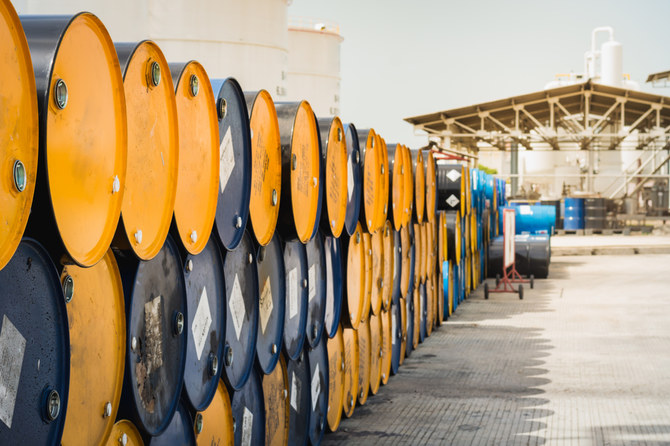
Brent crude slipped 1 cent, or 0.01 percent, to $75.88 a barrel by 6:00 a.m. Saudi time. Shutterstock.
Short Url
Updated 03 January 2024
Follow

Oil Updates – prices hold steady amid economic concerns despite Red Sea worries 

LONDON: Oil prices stabilized in early Asian trade on Wednesday after sharp moves earlier in the week, as markets weighed concerns about the US economy and potential supply disruptions from ongoing tensions in the Red Sea, according to Reuters.

Brent crude slipped 1 cent, or 0.01 percent, to $75.88 a barrel by 6:00 a.m. Saudi time, while US West Texas Intermediate crude futures rose 4 cents, or 0.06 percent, to $70.42 a barrel. 

Oil prices had climbed around $2 earlier in the week following attacks on vessels in the Red Sea by Houthi rebels over the weekend and the reported arrival of an Iranian warship on Monday. A wider conflict could close crucial waterways for oil transportation and disrupt trade flows. 

However, the market fell in the previous session as market optimism about early and aggressive US interest rate cuts ebbed ahead of the release of Federal Reserve minutes and jobs data. 

“Energy markets were unable to escape the broader pressure seen on risk assets with equity markets also weaker. The weakness in oil comes despite a ratcheting up in tensions in the Middle East,” said ING analysts in a client note. 

Expectations of ample supply in the first half of 2024 have kept a lid on prices ahead of the Organization of the Petroleum Exporting Countries and its allies, known as OPEC+, plans to hold a meeting of its Joint Ministerial Monitoring Committee in early February. An exact date has not been decided, three sources from the alliance told Reuters.. 

“While the geopolitical situation is a concern for the oil market, a fairly comfortable oil balance over the first half of 2024 does help to ease some of these worries,” said ING analysts. 

“Given the scale of cuts we are already seeing, it will be increasingly difficult for the group to cut more if needed over the course of 2024,” they said, pointing to the fact that recent cuts have been driven by voluntary reductions, rather than group-wide cuts. 

Ahead of weekly US crude and product inventory reports, analysts polled by Reuters expected crude stockpiles fell last week, while distillate and gasoline stocks likely rose. 

Data from the American Petroleum Institute industry group is due at 12:30 a.m. Saudi time on Thursday, and data from the Energy Information Administration, the statistical arm of the US Department of Energy, is due at 7:00 p.m. on the same day, delayed by a day due to the New Year’s holiday on Monday.


Saudi POS spending jumps 28% in final week of Jan: SAMA

Updated 06 February 2026
Follow

Saudi POS spending jumps 28% in final week of Jan: SAMA

RIYADH: Saudi Arabia’s point-of-sale spending climbed sharply in the final week of January, rising nearly 28 percent from the previous week as consumer outlays increased across almost all sectors. 

POS transactions reached SR16 billion ($4.27 billion) in the week ending Jan. 31, up 27.8 percent week on week, according to the Saudi Central Bank. Transaction volumes rose 16.5 percent to 248.8 million, reflecting stronger retail and service activity. 

Spending on jewelry saw the biggest uptick at 55.5 percent to SR613.69 million, followed by laundry services which saw a 44.4 percent increase to SR62.83 million. 

Expenditure on personal care rose 29.1 percent, while outlays on books and stationery increased 5.1 percent. Hotel spending climbed 7.4 percent to SR377.1 million. 

Further gains were recorded across other categories. Spending in pharmacies and medical supplies rose 33.4 percent to SR259.19 million, while medical services increased 13.7 percent to SR515.44 million. 

Food and beverage spending surged 38.6 percent to SR2.6 billion, accounting for the largest share of total POS value. Restaurants and cafes followed with a 20.4 percent increase to SR1.81 billion. Apparel and clothing spending rose 35.4 percent to SR1.33 billion, representing the third-largest share during the week. 

The Kingdom’s key urban centers mirrored the national surge. Riyadh, which accounted for the largest share of total POS spending, saw a 22 percent rise to SR5.44 billion from SR4.46 billion the previous week. The number of transactions in the capital reached 78.6 million, up 13.8 percent week on week. 

In Jeddah, transaction values increased 23.7 percent to SR2.16 billion, while Dammam reported a 22.2 percent rise to SR783.06 million. 

POS data, tracked weekly by SAMA, provides an indicator of consumer spending trends and the ongoing growth of digital payments in Saudi Arabia.  

The data also highlights the expanding reach of POS infrastructure, extending beyond major retail hubs to smaller cities and service sectors, supporting broader digital inclusion initiatives.  

The growth of digital payment technologies aligns with Saudi Arabia’s Vision 2030 objectives, promoting electronic transactions and contributing to the Kingdom’s broader digital economy.