

Saudi industrial cities authority signs $133m deals to boost efficiency

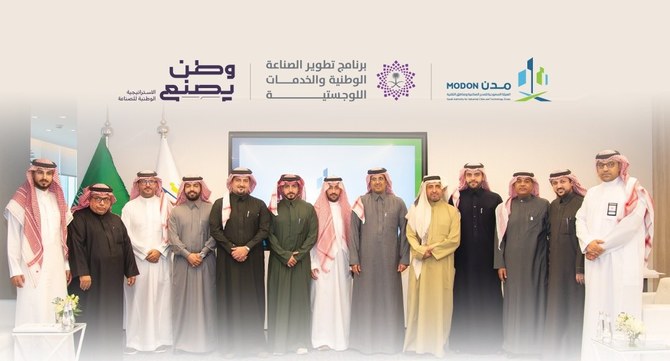
The Saudi Authority for Industrial Cities and Technology Zones, known as MODON, announced the inking of 10 agreements with various private sector entities to raise operational efficiency in several cities in the region. Supplied
Short Url
Updated 31 December 2023
Follow

Saudi industrial cities authority signs $133m deals to boost efficiency

RIYADH: Saudi Arabia’s National Industry Strategy continues to make strides, with the signing of contracts worth SR538 million ($133 million).

The Saudi Authority for Industrial Cities and Technology Zones, known as MODON, announced the inking of 10 agreements with various private sector entities to raise operational efficiency in several cities in the region.

The Kingdom’s comprehensive roadmap for accelerating the diversification of this sector aims to increase non-oil exports, promote privatization, attract more foreign investment, and generate local employment.

According to a release by the body, the agreements were funded by the National Industry Strategy, as well as the National Industrial Development and Logistics Program.

Among the deals signed was an agreement with Bena Al-Jazeerah Contracting Co. for the establishment of 20 ready-to-operate factories in the MODON Oasis in Al-Ahsa.

The Al-Ahsa region will also see the facilitation of 40 support units in its industrial city through a contract signed between the body and Consulting for Building Technology.

Further deals were inked between MODON and Bingarbee Contracting for the completion of the road linking the Third Industrial City in Dammam with King Salman Energy Park. 

The body also partnered with Labenat Al-Bena Contracting Co. to establish a civil defense station in the industrial city of Hail and 20 prefabricated factories in Taif.

Taif will also see the implementation of a medium and low-voltage network through a contract inked with Jeddah-based Al-Assail Contracting Co.  

Through a partnership with Shibh Al-Jazira Contracting Co., the organization will additionally guarantee the development of the infrastructure for the Eastern expansion in the industrial city of Hail, as well as execute the framework for blocks three and four in Madinah.

An agreement with Al-Enjaz Trading and Contracting Co. seeks to further advance Madinah’s industrial city by implementing the foundation for block number five.


Bahrain to roll out fiscal reforms to bolster public finances

Updated 30 December 2025
Follow

Bahrain to roll out fiscal reforms to bolster public finances

RIYADH: Bahrain’s government has unveiled a comprehensive package of fiscal reforms aimed at curbing public expenditure, generating new revenue streams, and safeguarding essential subsidies for citizens.

According to a report by the Bahrain News Agency, the measures include increases in fuel prices, higher electricity and water tariffs for certain categories, and greater dividend contributions from state-owned enterprises.

The Cabinet emphasized that electricity and water prices will remain unchanged for the first and second tariff bands for citizens’ primary residences, including homes accommodating extended families.

These reforms are aligned with Bahrain’s Economic Vision 2030, which seeks to reinforce fiscal discipline, diversify revenue sources beyond crude oil, and ensure long-term fiscal sustainability.

“The Cabinet confirmed that electricity and water tariffs for the first and second tariff bands for citizens’ primary residences will remain unchanged, taking into account extended families residing in a single household,” BNA reported.

The Cabinet also agreed to defer any changes to the subsidy mechanisms for electricity and water used in citizens’ primary residences until further studies are completed. At the same time, it approved amendments to electricity and water consumption tariffs for other categories, with implementation scheduled to begin in January 2026.

Under the proposed reforms, a 10 percent corporate income tax will be levied on companies with revenues exceeding 1 million Bahraini dinars ($2.6 million) or annual net profits above 200,000 dinars.

The new corporate tax framework is expected to come into force in 2027, subject to the completion of necessary legislative and regulatory approvals.

In addition, Bahrain plans to increase natural gas prices for businesses and reduce administrative government spending by 20 percent as part of broader cost-cutting efforts.

The government also aims to improve the utilization of undeveloped investment land that already has infrastructure in place by introducing a monthly fee of 100 fils per square meter, with implementation anticipated in January 2027.

The Cabinet further tasked the ministers of labor, legal affairs, and health with reviewing fees related to worker permits and health care services.

According to the report, revised fees will be phased in gradually over a four-year period starting in January 2026, with domestic workers exempt from the changes.

Authorities stressed that the reforms are designed to streamline government procedures that support investment, attract foreign capital, and strengthen the role of the private sector in driving economic growth.