ISLAMABAD: Pakistan grappled with an unprecedented surge in inflation in 2023, impacting the living standards of its citizens, some of whom acknowledged this week they considered moving abroad amid drastically reduced purchasing power.
Faced with dwindling foreign exchange reserves and a rapidly depreciating national currency, inflation in Pakistan spiked to a historic high of 38 percent earlier this year in May.
While the situation eased in subsequent months, the country’s central bank decided to retain the policy rate at 22 percent in December to mitigate the inflationary pressure.
The bank informed in a report released on Friday it aimed to prevent high inflation from becoming entrenched in the coming months and hoped to bring it down to about 20 percent in the current fiscal year.
“The monthly expense of my groceries was Rs 25,000, which is still the same, but the commodities that I’m getting are less than half,” Ahsan Baloch, a local business owner, told Arab News. “Now I’m seriously thinking about moving abroad. This is because of last year’s inflation, which was totally disastrous and completely changed my lifestyle.”
Baloch’s experience is emblematic of the broader economic crisis facing the nation, requiring structural reforms to fix outstanding issues like mounting fiscal and trade deficits, energy crisis and significant debt dependency.
Currently under a caretaker administration, Pakistan secured a $3 billion standby arrangement from the International Monetary Fund (IMF) as a critical lifeline this year, though the stringent requirements imposed by the global lender, such as an increase in fuel prices and removal of subsidies, intensified inflationary pressure.
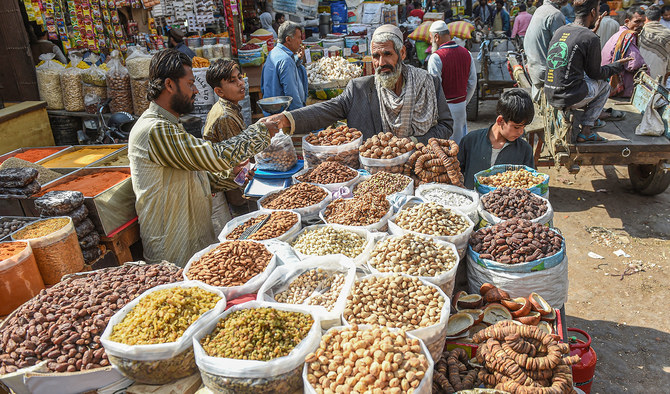
A 60-year-old woman, who refused to give her name to Arab News while buying various commodities at a local market, said her monthly grocery bill had doubled in the last couple of months.
She said it had been “a daily struggle to manage the household budget,” sometimes forcing her to cut down essential items to make ends meet.
Some people complained that small and medium enterprises had become particularly vulnerable in the ongoing economic turmoil.
“Inflation takes place but the next big issue is heavy taxation on everything,” Ikram Azeez, a 55-year-old real estate agent, said. “Taxes have been increased to such an extent that it has become difficult for the average individual to buy or sell anything. This makes life too difficult.”
Rafiq Ajani, a 40-year-old businessman, complained about the national currency’s depreciation.
“It is very important for all our Pakistanis and all the individuals over here, especially youngsters, to look for opportunities where they can earn in dollars,” he told Arab News.
Sarah Shinwari, a 19-year-old student at a roadside restaurant, argued it made sense for people to settle abroad amid the present circumstances.
“I think if you move to a different country, the opportunities will be way bigger,” she added. “They have more economic and social freedoms [in other countries] ... I think it can be beneficial.”


In Pakistan’s capital, surging inflation forces some residents to consider relocating abroad
https://arab.news/9bmd5
In Pakistan’s capital, surging inflation forces some residents to consider relocating abroad

- Inflation spiked to historic high of 38 percent this year amid dwindling forex reserves, depreciating currency
- Some people say it is vital for those who cannot settle abroad to look for opportunities to earn in dollars

Rating firm S&P says it won’t rush Iran war downgrades, sees risks for countries like Pakistan
- Agency says it is monitoring indebted energy importers as higher oil prices strain finances
- Gulf economies seen better placed to weather shock, though Bahrain flagged as vulnerable
LONDON: S&P Global said it would not make any knee-jerk sovereign rating cuts following the outbreak of war in the Middle East, but warned on Thursday that soaring oil and gas prices were putting a number of already cash-strapped countries at risk.
The firm’s top analysts said in a webinar that the conflict, which has involved US and Israeli strikes against Iran and Iranian strikes against Israel, US bases and Gulf states, was now moving from a low- to moderate-risk scenario.
Most Gulf countries had enough fiscal buffers, however, to weather the crisis for a while, with more lowly rated Bahrain the only clear exception.
Qatar’s banking sector could also struggle if there were significant deposit outflows in reaction to the conflict, although there was no evidence of such strains at the moment, they said.
“We don’t want to jump the gun and just say things are bad,” S&P’s head global sovereign analyst, Roberto Sifon-Arevalo, said.
The longer the crisis was prolonged, though, “the more difficult it is going to be,” he added.
Sifon-Arevalo said Asia was the second-most exposed region, due to many of its countries being significant Gulf oil and gas importers.
India, Thailand and Indonesia have relatively lower reserves of oil, while the region also had already heavily indebted countries such as Pakistan, Bangladesh and Sri Lanka whose finances would be further hurt by rising energy prices.
“We are closely monitoring these (countries) to see how the credit stories evolve,” Sifon-Arevalo said.