- Water from rainfall and recycling plants to be used, says NCVC
- Saudi Green Initiative’s goal is to plant 10bn trees in the country
RIYADH: The National Center for Vegetation Cover Development and Combating Desertification is preparing to plant 12 million trees and shrubs in 2024 across Saudi Arabia.
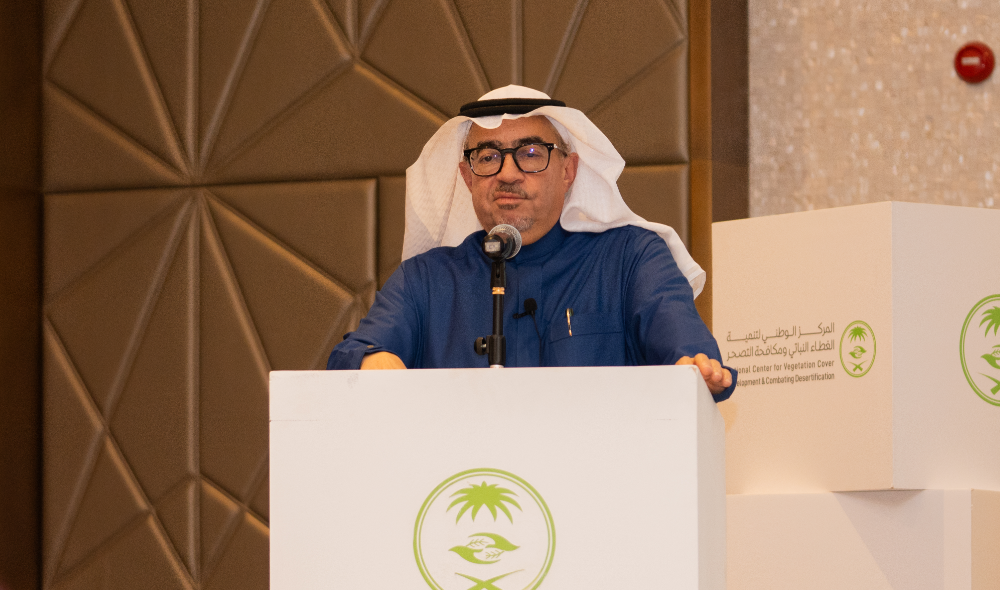
This is according to Khaled bin Abdullah Al-Abdul Qadir, CEO of the NCVC, who said that recycled water would be used for all the projects.
Al-Abdul Qadir made the comments at a ceremony in Buraidah Oasis recently to mark the completion of a 1 million tree-planting project.
“Implementation of the first phase of rehabilitation of the floodplains and meadows will witness rehabilitating 1,000 floodplains and meadows by planting 12 million trees and shrubs and scattering seeds, and the use of rainwater-harvesting techniques,” he said.
The center would be working with the nation’s royal reserves to ensure the initiative is successful, he added.
Qassim’s Governor Prince Faisal bin Mishaal, inaugurated in February 2020 the Green Oasis project in Buraidah, at a cost exceeding SR77 million ($20.5 million), over an area of 28 million square meters.
The NCVC has signed several agreements with the King Salman, King Abdulaziz, Imam Turki bin Abdullah, Imam Abdulaziz bin Muhammad, and the King Khalid royal reserve authorities.
The area targeted for rehabilitation covers 225,000 hectares of degraded lands in a single area, and 1.9 million hectares of floodplains and meadows.
These efforts are part of the Saudi Green Initiative’s goal to plant 10 billion trees in the country.
The NCVC has also implemented several other projects, including planting 1 million trees in Al-Khafs Meadow in the King Abdulaziz royal reserve, and 400,000 saplings of local trees in the Imam Turki bin Abdullah reserve.
In addition, the NVC supplied the King Salman reserve with 1.2 million seedlings, and 600,000 trees and shrubs were planted in the Imam Abdulaziz bin Mohammed reserve.
Talal Al-Harigi, CEO of the Imam Abdulaziz bin Mohammed reserve, and Al-Abdul Qadir had signed the agreement to implement the initiative.