

Saudi Environment Ministry inks deal with AgriServ to strengthen agricultural support  

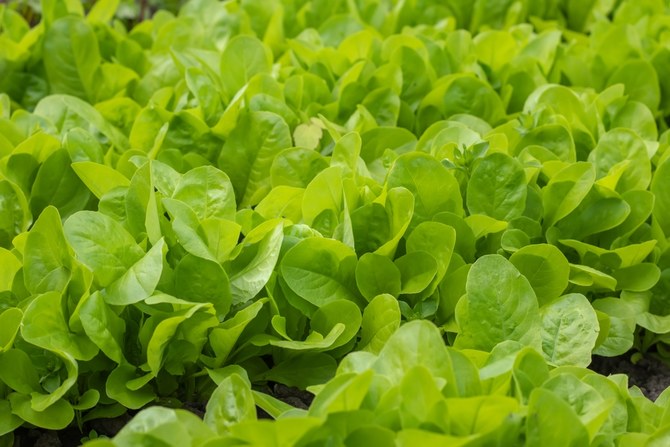
Established in 2018, AgriServ, wholly owned by the Saudi government, works to materialize the goals of the agricultural sector as outlined in Vision 2030.  Shutterstock
Short Url
Updated 27 December 2023
Follow

Saudi Environment Ministry inks deal with AgriServ to strengthen agricultural support  

RIYADH: Saudi Arabia’s agricultural sector is set to get monitoring support in improving its productivity thanks to a memorandum of understanding signed between two government agencies.  

According to the Saudi Press Agency, the Ministry of Environment, Water and Agriculture and National Co. for Agricultural Services, also known as AgriServ, signed an MoU to improve the quality of services provided to the beneficiaries of the farming sector.  

Established in 2018, AgriServ, wholly owned by the Saudi government, works to materialize the goals of the agricultural sector as outlined in Vision 2030.  

Under the agreement, the Environment Ministry will provide data, monitoring, compliance and coordination support to AgriServ’s operations.  

On the other hand, AgriServ will carry out all operational work for the services assigned to it within the agreed time plan.  

Promoting the agricultural sector is crucial for the Kingdom as it moves away from its dependence on oil and strengthens the nation’s food security.  

On Sept. 5, Saudi Arabia’s Agricultural Development Fund launched a new financial product to support sustainable rural farm operations.  

The initiative aims to develop farms by diversifying their income sources, ensuring long-term sustainability, and capitalizing on unique rural opportunities.  

The fund is also expected to preserve local ecosystems and foster environmental and rural tourism.  

The strategy of this fund also includes providing financial support to existing and productive agricultural businesses, covering their investment and operational expenses.  

In July, ADF signed financing contracts worth SR926 million ($246.8 million) in the feed industry, animal production and dairy sectors.  

These contracts aim to support importing critical agricultural products, including maize, soybeans and barley, which are vital for sustaining the country’s food supply.  

These agreements encompassed a range of projects, including initiatives such as establishing an agricultural product marketing center, cold storage facilities, and a broiler and poultry farming project.    

According to a statement, the payouts were approved for small farmers involved in greenhouse vegetable production, poultry breeding and fish and shrimp farming.    

The statement added that refrigeration warehouses, date manufacturing and marketing centers also received financial support.    

The approval of these loans underlines the fund’s objective to boost its developmental and financing role for agricultural activity.    


PIF Private Sector Forum seals 30+ deals across industries 

Updated 12 sec ago
Follow

PIF Private Sector Forum seals 30+ deals across industries 

RIYADH: Saudi Arabia’s Public Investment Fund-linked Private Sector Investment Forum generated more than 30 agreements on its second day, targeting workforce development, industrial expansion and large-scale urban projects. 

A major focus was human capital, with Azm Academy signing eight memorandums of understanding with companies, including Saudi Emaar, Masdar, and Tanatel, to provide specialized training programs tied to employment opportunities for Saudi nationals. 

In urban infrastructure, Smart Accommodation for Residential Complexes Co. and Tamimi Global signed heads of terms to develop a 4,000-bed staff accommodation village in northern Riyadh covering about 142,000 sq. meters.  

Tanatel also signed three technology-transfer agreements with JWICO, Voolcan Grupo and Michael Strads covering manufacturing capabilities in kitchens, outdoor furniture and hotel furnishings. Humain announced an MoU with ai.io alongside the acquisition of a stake in the AI-powered fitness and wellness company. 

Speaking at a panel during the event, Humain CEO Tareq Amin said the Kingdom aims to position itself as a global artificial intelligence hub, leveraging energy resources and geographic connectivity. He described Humain as an AI company operating across the full value chain, anchored by large-scale data centers with gigawatt capacity. 

Real estate activity centered on the planned King Salman International Airport, whose developer signed seven MoUs with firms including Mohamad Al Habib Real Estate, Sumou, Ajdan, Kinan and Retal. 

The agreements collectively aim to collaborate on vast real estate projects surrounding the aviation hub, including master-planned residential communities, mixed-use developments, retail, and hospitality assets — all designed to support destination and economic activation. 

Saudi Arabia’s electric vehicle ambitions featured prominently as Lucid signed agreements with Injelic and TUO PU, while Ceer partnered with AVL and FEV on technical collaborations. 

In logistics infrastructure, Pandrol and RSF Sleepers agreed to establish local production of rail fastening systems to support the Kingdom’s rail expansion.  

Saudi Coffee Co. signed five agreements to promote and distribute Saudi green coffee beans, while Aramco Digital and Tasama agreed to explore digital transformation initiatives. Red Sea Global partnered with LEAN on AI-driven wellness solutions for tourism developments. 

The forum highlights PIF’s strategy of channeling private capital toward sectors prioritized under Saudi Arabia’s economic diversification plans, including manufacturing, tourism, infrastructure and workforce development.