



JEDDAH: A Saudi film director has captivated audiences with his portrayal of Bahraini composer Khaled El-Sheikh’s luminous and unconventional career.
“Khaled El-Sheikh Between Two Fires, Art and Politics” had its international premiere on Dec. 2 during the third Red Sea International Film Festival in Jeddah.
El-Sheikh, a Bahraini composer known for his pioneering musical styles and defiance of societal norms in the Gulf region, has experienced a unique journey in the artistic community.
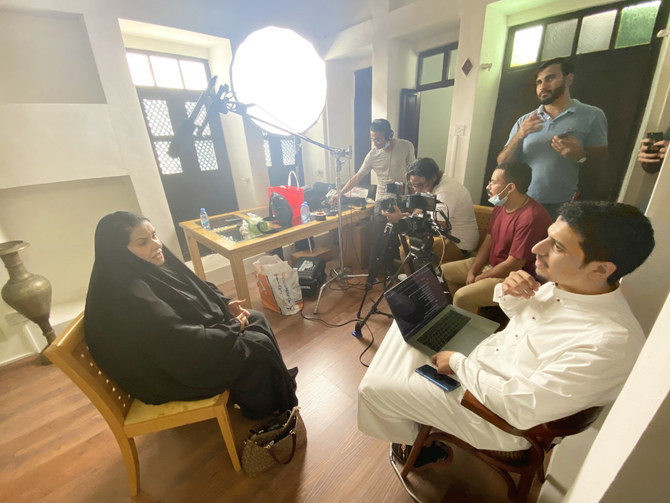
Directed by emerging Saudi filmmaker Jamal Kutbi, the documentary provides a profound insight into El-Sheikh’s personal and professional experiences. He connected the dots by interviewing various individuals who accompanied El-Sheikh on his artistic journey.
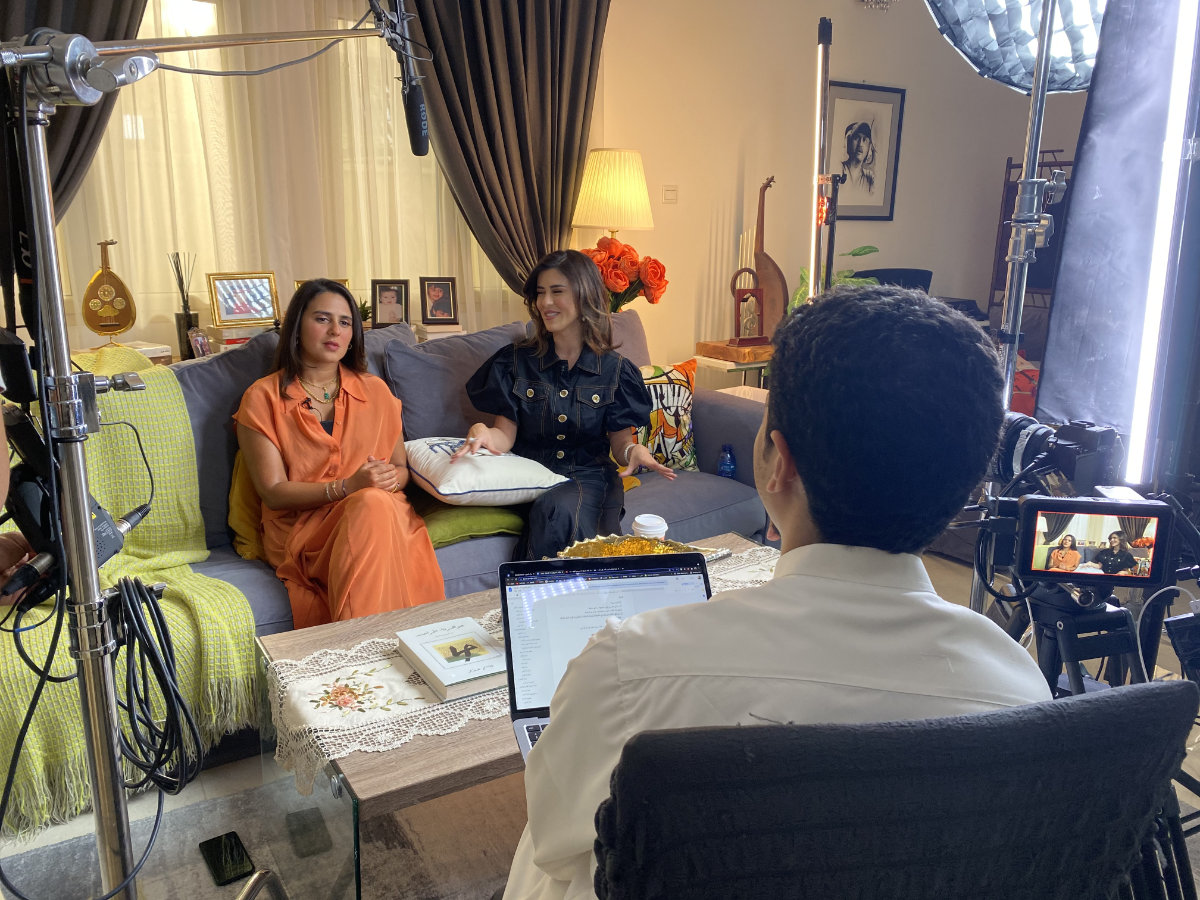
Saudi director Jamal Kutbi from behind the scenes, while interviewing daughters of Khalid El-Shaikh, Noura and Samawah. (Supplied)
He told Arab News the joy of filmmaking lay upon a deeper understanding of people, things and ideas. “It enhances reality,” he said. “The world of filmmaking is rare and magical.”
This collaboration between Saudi media company Thamaniah and the King Abdulaziz Center for World Culture has resulted in a captivating portrayal of the artist’s life.
Kutbi aimed to create an authentic documentary, showcasing El-Sheikh’s journey without excessive dramatization.
He said: “I wanted the audience to enjoy the intervals as much as the narration and the story. Visually I was interested in the realism of the shots, making it an authentic documentary, away from any Netflix-style additions or scripted scenes.”
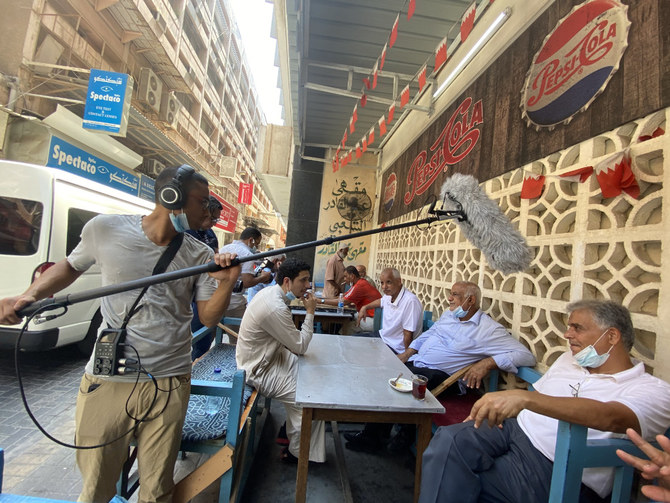
The production process spanned eight months and involved filming in various locations, including El-Sheikh’s childhood home and neighborhood in Bahrain. Kutbi’s ability to engage with the local community allowed him to gather heartfelt interviews and stories.
“Bahraini locals felt delighted and comfortable talking to me once they found out I was from Makkah,” he said. “They would reminisce about their experiences of Hajj and Umrah without any hesitation or formalities. The difference in my dialect was a conversation starter, and I took the opportunity to connect with them.”
He added: “I am grateful to them for giving me these valuable moments.”
Kutbi incorporated an entertaining journalism approach from the 1980s in the film, capturing a shared nostalgia for El-Sheikh’s era across different generations.
“Khaled is an artist hard to surpass, and this is enough reason for me to make him the protagonist of the film. He was willing to share every detail of his life, his small stories and, most importantly, he was sincere and open-hearted,” he said.
El-Sheikh’s passion for art drove him to leave politics behind, only to find himself entangled again later in life.
He opposed the incorporation of political issues into artistic frameworks, a stance that put him at odds with production companies. Despite this, El-Sheikh remained committed to his artistic integrity.
His artistic journey began after he left his political science studies in Kuwait to pursue music at the Cairo Conservatoire in Egypt. There, he created a unique musical style that blended jazz blues, symphonies and Arabic lyrics.
El-Sheikh rose to superstar status following the release of his album, “Whenever You Are Next to Me,” in 1983, gaining recognition for his composition skills and contributions to Gulf region music.
However, he faced challenges when he refused to participate in an awareness-raising concert during the invasion of Kuwait by Iraq. Misunderstood, he withdrew from the music industry.
Eventually, El-Sheikh returned with a renewed focus on Gulf music and contributed to its evolution and development. His legacy continues through his daughters, Noura and Samawah, whose talents in acting, singing and presenting contribute to the family’s artistic heritage.
Kutbi said: “I believe it’s one of those films that can unconsciously leave an impact on the viewers, it makes them connect with the protagonist, engaging with his emotions, successes, and setbacks. The impact I genuinely hope for is that influential and well-known personalities in our midst feel encouraged to share their stories, prompting us to create films about them.”
El- Shaikh and Samawah performed in front of the Saudi and international audience following the film’s premiere at the RSIFF, putting on an enchanting show.
The documentary film will be released online in the near future, enabling it to reach a wider audience.


