
UNITED NATIONS: The United Nations is seeking to verify reports that Afghanistan’s Taliban rulers are allowing girls of all ages to study at Islamic religious schools that are traditionally boys-only, the UN’s top official in the country said Wednesday.
UN special envoy Roza Otunbayeva told the UN Security Council and elaborated to reporters afterward that the United Nations is receiving “more and more anecdotal evidence” that girls can study at the schools, known as madrassas.
“It is not entirely clear, however, what constitutes a madrassa, if there is a standardized curriculum that allows modern education subjects, and how many girls are able to study in madrassas,” she said.
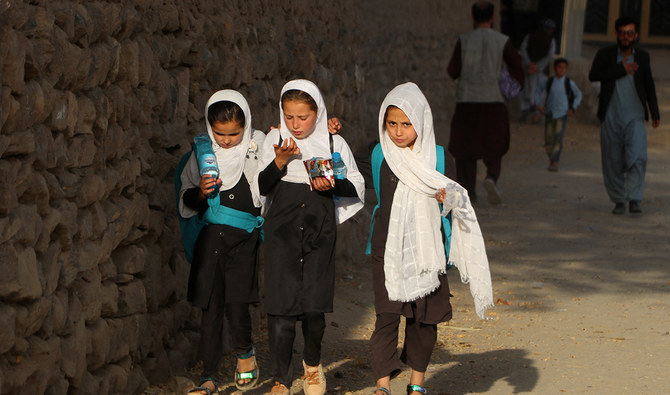
The Taliban have been globally condemned for banning girls and women from secondary school and university, and allowing girls to study only through the sixth grade.
Taliban education authorities “continue to tell us that they are working on creating conditions to allow girls to return to school. But time is passing while a generation of girls is falling behind,” Otunbayeva said.
She said that the Taliban Ministry of Education is reportedly undertaking an assessment of madrassas as well as a review of public school curriculum and warned that the quality of education in Afghanistan “is a growing concern.”
“The international community has rightly focused on the need to reverse the ban on girls’ education,” Otunbayeva said, “but the deteriorating quality of education and access to it is affecting boys as well.”
“A failure to provide a sufficiently modern curriculum with equality of access for both girls and boys will make it impossible to implement the de facto authorities’ own agenda of economic self-sufficiency,” she added.
A Human Rights Watch report earlier this month said the Taliban’s “abusive” educational policies are harming boys as well as girls.
The departure of qualified teachers, including women, regressive curriculum changes and an increase in corporal punishment have led to greater fear of going to school and falling attendance, the report said. Because the Taliban have dismissed all female teachers from boys’ schools, many boys are taught by unqualified people or sit in classrooms with no teachers at all, it said.
Turning to human rights, Otunbayeva said that the key features in Afghanistan “are a record of systemic discrimination against women and girls, repression of political dissent and free speech, a lack of meaningful representation of minorities, and ongoing instances of extrajudicial killing, arbitrary arrests and detentions, torture and ill-treatment.”
The lack of progress in resolving human rights issues is a key factor behind the current impasse between the Taliban and the international community, she said.
Otunbayeva said Afghanistan also faces a growing humanitarian crisis. With Afghans confronting winter weather, more people will depend on humanitarian aid, but with a drop in funding many of the needy will be more vulnerable than they were a year ago, she said.
UN humanitarian coordinator Ramesh Rajasingham said that “humanitarian needs continue to push record levels, with more than 29 million people requiring humanitarian assistance — one million more than in January, and a 340 percent increase in the last five years.”
Between January and October, he said, the UN and its partners provided assistance to 26.5 million people, including 14.2 million women and girls. But as the year ends, the UN appeal is still seeking to close a $1.8 billion funding gap.
Rajasingham said the humanitarian crisis has been exacerbated by three earthquakes in eight days in October in the western province of Herat that affected 275,000 people and damaged 40,000 homes.
A further problem is the return of more than 450,000 Afghans after Pakistan on Nov. 1 ordered “illegal foreigners” without documentation to leave, he said. More than 85 percent of the returnees are women and children, he said, and many have been stripped of their belongings, arrive in poor medical condition and require immediate assistance at the border as well and longer-term support.