Army chief stresses regional connectivity role for Pakistan, rejects bloc politics in US visit

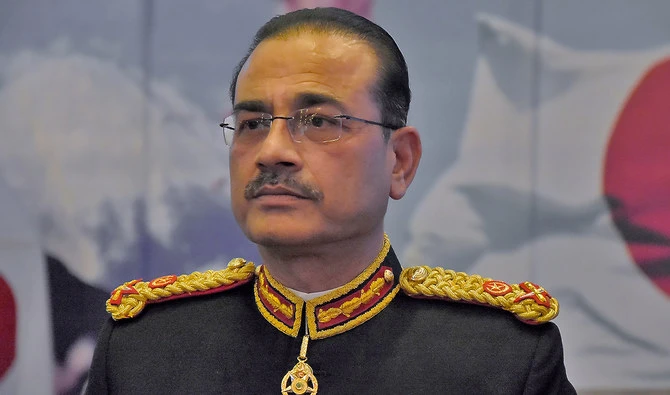
Chief of Army Staff (COAS) General Asim Munir attends a ceremony in Islamabad, Pakistan, on November 1, 2022. (AP/File)
Short Url
Updated 20 December 2023
Follow

Army chief stresses regional connectivity role for Pakistan, rejects bloc politics in US visit

  • General Asim Munir says his country wants to broaden bilateral engagements with the US in wide range of areas
  • He says Pakistan always stood as a bulwark against transnational militancy to ensure global peace and stability

ISLAMABAD: Chief of Army Staff (COAS) General Asim Munir highlighted Pakistan’s significance as a hub of regional connectivity during his visit to the United States, said an official statement on Wednesday, adding it did not want to participate in bloc politics.

The army chief started his first official visit to the US last week on Tuesday since his appointment as the top army commander in November 2022.

General Munir held meetings with Secretary of State Antony Blinken and Defense Secretary Llyod Austin along with other high-profile American security officials.

According to the army’s media wing, ISPR, he also engaged in candid discourse with prominent members of US think tanks and media organizations.

“COAS said that Pakistan is a country of consequence both from geopolitical and geo-economic perspective and wishes to develop itself as a hub of connectivity and a gateway to Central Asia and beyond,” the statement said.

“However, [it wants to] eschew Bloc Politics and believes in maintaining balanced relationships with all friendly countries,” it added.

Pakistan’s army chiefs have also visited the US in the past since the two states were strong Cold War allies and jointly worked on a wide spectrum of issues ranging from regional stability to fighting militancy.

The army chief highlighted his country’s desire to broaden bilateral engagements with Washington by strengthening long-term, multidomain partnership.

He noted that Pakistan had stood as a bulwark against transnational militancy for decades to ensure global peace and regional stability.

General Munir also presented Pakistan’s perspective on the Kashmir issue while calling for its resolution.

“Kashmir is an internationally accepted dispute and no unilateral action can alter the nature of this dispute against the wishes of millions of people of the area,” he said during his conversations.

The Supreme Court of India upheld New Delhi’s August 2019 decision to revoke the special constitutional status for the state of Jammu and Kashmir this month while setting a deadline of September 30 next year to hold local polls in the Himalayan region.

The army chief also emphasized the need for ending the suffering of innocent Palestinians in Gaza that has witnessed Israeli airstrikes and military offensive since Oct. 7.

He said it was imperative to provide humanitarian assistance to the residents of the Palestinian territory and implement two-state solution for lasting peace in the region.

Pakistan says repaid over $13.06 billion domestic debt early in last 14 months

Updated 5 sec ago
Follow

Pakistan says repaid over $13.06 billion domestic debt early in last 14 months

  • Finance adviser says repayment shows “decisive shift” toward fiscal discipline, responsible economic management
  • Says Pakistan’s total public debt has declined from over $286.6 billion in June 2025 to $284.7 billion in November 2025

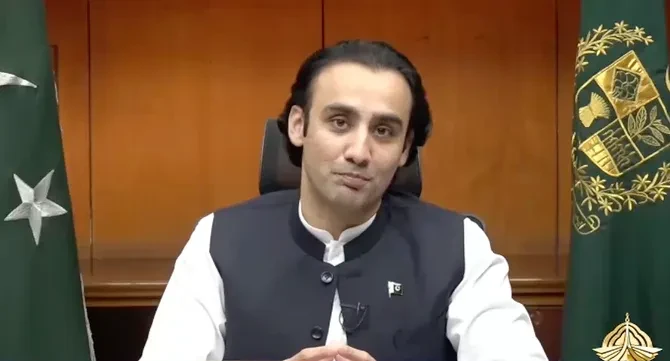
KARACHI: Pakistan has repaid Rs3,650 billion [$13.06 billion] in domestic debt before time during the last 14 months, Adviser to the Finance Minister Khurram Schehzad said on Thursday, adding that the achievement reflected a shift in the country’s approach toward fiscal discipline. 

Schehzad said Pakistan has been repaying its debt before maturity, owed to the market as well as the State Bank of Pakistan (SBP), since December 2024. He said the government had repaid the central bank Rs300 billion [$1.08 billion] in its latest repayment on Thursday. 

“This landmark achievement reflects a decisive shift toward fiscal discipline, credibility, and responsible economic management,” Schehzad wrote on social media platform X. 

Giving a breakdown of what he said was Pakistan’s “early debt retirement journey,” the finance official said Pakistan retired Rs1,000 billion [$3.576 billion] in December 2024, Rs500 billion [$1.78 billion] in June 2025, Rs1,160 billion [$4.150 billion] in August 2025, Rs200 billion [$715 million] in October 2025, Rs494 billion [$1.76 billion] in December 2025 and $1.08 billion in January 2026. 

He said with the latest debt repaid today, the July to January period of fiscal year 2026 alone recorded Rs2,150 billion [$7.69 billion] in early retirement, which was 44 percent higher than the debt retired in FY25.

He said of the total early repayments, the government has repaid 65 percent of the central bank’s debt, 30 percent of the treasury bills debt and five percent of the Pakistan Investment Bonds (PIBs) debt. 

The official said Pakistan’s total public debt has declined from over Rs 80.5 trillion [$286.6 billion] in June 2025 to Rs80 trillion [$284.7 billion] in November 2025. 

“Crucially, Pakistan’s debt-to-GDP ratio, around 74 percent in FY22, has declined to around 70 percent, reflecting a broader strengthening of fiscal fundamentals alongside disciplined debt management,” Schehzad wrote. 

Pakistan’s government has said the country’s fragile economy is on an upward trajectory. The South Asian country has been trying to navigate a tricky path to economic recovery under a $7 billion loan from the International Monetary Fund.