

Pakistan says has received nearly 60,000 applications for government Hajj scheme

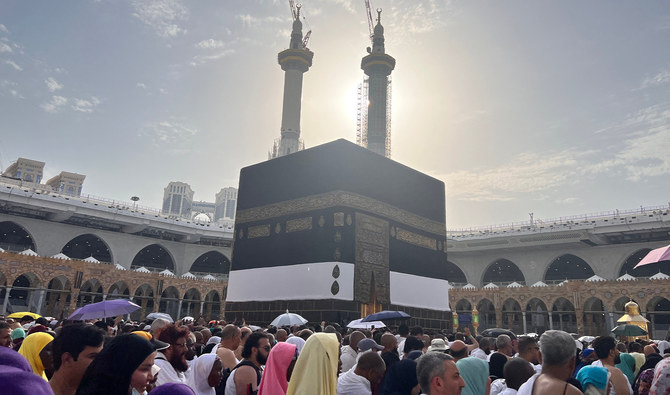
Muslim worshippers and pilgrims gather around the Kaaba, Islam's holiest shrine, at the Grand Mosque in the holy city of Makkah on June 24, 2023, as they arrive for the annual Hajj pilgrimage. (AFP/File)
Short Url
Updated 19 December 2023
Follow

Pakistan says has received nearly 60,000 applications for government Hajj scheme

  • Last week, Pakistan announced it was extending deadline for Hajj applications under government scheme by 10 days
  • Over 81,000 Pakistani pilgrims performed Hajj under government scheme in 2023 from quota of 179,210 granted by Saudi Arabia

ISLAMABAD: The Pakistani ministry of religious affairs has received a total of 59,328 Hajj applications under the government scheme, state-run APP news agency reported on Tuesday.

Last week, Pakistan announced it was extending the deadline for Hajj applications under the government scheme by 10 days as it had not received an adequate number of applications by Dec. 12, the initial deadline.

“Under the government’s scheme, the quota for Pakistanis participating in the annual Islamic pilgrimage next year is 89,605, with an anticipated cost of Rs1,075,000 [$3,769] per person,” APP reported, while announcing that nearly 60,000 applications had been received by Tuesday.

This year, Saudi Arabia restored Pakistan’s pre-coronavirus Hajj quota of 179,210 pilgrims and lifted the upper age limit of 65 years to perform the pilgrimage. More than 81,000 Pakistani pilgrims performed Hajj under the government scheme in 2023 while the rest used private tour operators.

Announcing its Hajj Policy 2024 last month, Pakistan said the Hajj package for each pilgrim had been reduced by Rs100,000 and the government was negotiating with airlines to offer cheaper airfares. 

Hajj is one of the five pillars of Islam and a once-in-a-lifetime duty for every able-bodied Muslim who can afford it.


Pakistan reports decline in polio cases in 2025

Updated 4 sec ago
Follow

Pakistan reports decline in polio cases in 2025

  • Cases drop to 30 from 74 in 2024, with no new infections recorded since September
  • Authorities plan intensified targeted drives in 2026 to halt remaining transmission

ISLAMABAD: Pakistan reported a sharp decline in polio cases in 2025, with infections falling to 30 from 74 a year earlier, as intensified vaccination campaigns and improved surveillance helped curb the spread of the virus, health authorities said on Wednesday.

No new polio cases have been recorded anywhere in the country since September, said a statement, as Pakistan carried out six polio campaigns, including five nationwide drives, trying to reach children in high-risk areas and improve monitoring of virus circulation.

Despite the decline, the authorities cautioned that poliovirus continues to circulate in some districts, requiring sustained vigilance to prevent a resurgence.

“Targeted interventions, robust community engagement, and ongoing vaccination efforts remain essential to reach every missed child and prevent any resurgence,” the official statement said.

“Frontline health workers, security personnel, and local authorities continue to work in close coordination to maintain high immunity levels and ensure that Pakistan remains on course toward becoming polio-free,” it added.

The most recent nationwide campaign, conducted from Dec. 15 to 21, achieved more than 98 percent coverage across the country, including all four provinces, Azad Jammu and Kashmir, Gilgit-Baltistan and the capital, Islamabad.

Authorities reported an 18 percent reduction in the number of missed children compared with the previous round, with notable improvements in access and operations in southern Khyber Pakhtunkhwa, a longstanding challenge area.

Pakistan’s polio eradication drive relies on close coordination between health workers, security personnel and local authorities, amid ongoing resistance in some communities and access constraints in remote or insecure regions.

Officials said district-specific interventions, including improved microplanning, better deployment of vaccination teams and enhanced community outreach, were being used to address remaining gaps, particularly in parts of southern Khyber Pakhtunkhwa.

The statement said Pakistan plans to intensify targeted efforts in 2026 to interrupt the remaining transmission chains and move closer to eliminating the disease.